
Understanding Macro in Wild Rift: The Real Difference Between Playing and Winning
You can have strong mechanics, land your combos, win your lane and still lose the game. That feels unfair, but it is exactly how Wild Rift works: the game does not only reward the player who pilots their champion well, it rewards the player who understands where the match needs to go next. Macro is the art of turning a good action into a lasting advantage. A random kill means very little if you do not convert it into plates, a drake, a tower, vision, tempo or map pressure. On the other hand, one calm decision with no highlight can win the entire game. If you do not understand macro, you may create action, but you are not truly controlling the match.
The problem is that most players reduce macro to a vague idea: watch the map, go objectives, follow the team. That is not enough. Macro is not about being everywhere. It is about understanding which decision has the highest value at a specific moment. Sometimes the correct move is to group. Sometimes it is to push a side lane. Sometimes it is to give up an impossible drake and take two towers elsewhere. Sometimes, the best play is simply not dying.
What blocks many ranked players is not a total lack of skill. It is their inability to connect actions together. They kill their opponent, then reset at the wrong time. They win a fight, then farm jungle instead of taking a tower. They ping drake while their bot wave is crashing under their own turret. As a result, they think they are doing the right things, but in the wrong order. Macro is the logical order of decisions. Until that order becomes clear, you can mechanically dominate a game without ever truly closing it.
Macro is not “playing safe”: it is playing with intention
Many players confuse macro with passivity. They think a macro player is simply someone who avoids fights and plays for objectives. Wrong. A strong macro player can be aggressive, but their aggression has a reason. They do not fight because they are bored. They fight because a wave is in a good state, because an enemy showed top, because their jungler is nearby, because an objective spawns in 35 seconds, or because an enemy flash is still unavailable.
That difference matters. A player with no macro sees a fight opportunity and jumps in. A macro player asks: what does this fight unlock? If the answer is “nothing”, the fight is often useless. If it unlocks a tower, a drake, a rotation, enemy jungle camps or pressure on the map, then it becomes valuable.
Macro starts when you stop asking “can I make this play?” and start asking “what does this play give me afterward?”.
- A kill before an objective can create a numbers advantage.
- A kill far away from any objective may only give the enemy a free reset.
- Taking a tower can open the jungle and make future objectives easier.
- A pushed wave can force an enemy to answer, creating a window elsewhere.
Tempo: the concept most players underestimate
Tempo is your availability advantage on the map. If you reset before your opponent, buy your items, push your wave and arrive first around drake, you have tempo. Even without a kill. Even without a massive gold lead. You are simply ready before the enemy team, and in Wild Rift, a few seconds can decide the entire sequence.
Most macro mistakes come from bad tempo. You stay in lane with low HP when you should reset. You walk to drake while a wave is dying under your tower. You force a fight while your carry is still in base. You contest Baron while two lanes are crashing against your turrets. These are not only mechanical mistakes. They are timing mistakes.
Good tempo is built before the visible action. It often starts 30 to 45 seconds before the objective. That is when you should push, reset, place vision, buy your key item and reposition. Arriving when the drake spawns is often already late. The team that prepared the area before you controls the bushes, river entrances and engage angles.
Many players think they lost the fight at drake. In reality, they lost it 40 seconds earlier. They arrived with no tempo, no vision, no wave, and then called it a bad teamfight.
Tempo is not a passive resource: it is a window you actively build or hand to the enemy.
- Reset before the objective, not after taking unnecessary damage in lane.
- Push your wave before moving toward river.
- Place vision 30 to 45 seconds before spawn, not when the objective appears.
- If the enemy is already set up, evaluate coldly whether contesting is still viable.
Objectives are not automatic: they must be earned
Saying “go drake” is not enough. A neutral objective is not a gift. It is a reward for proper preparation. Before starting drake, Herald or Baron, you need to read three things: waves, vision and enemy positions. If those three elements are bad, the objective becomes a trap.
The first question is simple: can your lanes move? If your bot lane is stuck under tower, your support and ADC will arrive late. If your mid has to clear a huge wave, they either lose gold or arrive after the enemy. In that situation, starting the objective invites the enemy team to collapse on you. The second question is vision control. If you do not see the river entrances, you do not know whether the enemy is contesting, flanking or looking for a steal. The third question is resources: ultimates, jungle smite, HP, mana and completed items.
A clean objective rarely looks like a coin flip. It looks like a logical sequence: push mid, place vision, force the enemy to facecheck, punish the entrance, then secure the objective. You do not take an objective because it is alive. You take it because the map gives you the right to take it.
- If the enemy arrives before you, do not force without information.
- If your jungler has no smite, slow down or give it up.
- If waves are pushing into you, fix them first.
- If you killed two enemies, convert immediately: tower, drake, Herald or Baron.

Wave management: macro often starts with minions
The wave is one of the strongest macro tools in the game, but also one of the most ignored. Many players see minions as gold. In reality, a wave is also a message sent to the map. A pushing wave forces someone to answer. A crashed wave creates a rotation window. An abandoned wave can cost more than a poorly prepared minor objective.
When you push a wave before moving, you force the opponent to choose: defend the tower or follow your movement. If they defend, you arrive first in river. If they follow, they lose gold and experience. That is exactly the kind of invisible pressure that creates real macro. You do not win only through combat. You win because the enemy has to answer several problems at once.
Leaving a lane without managing the wave is a common mistake. You roam to help your team, but your tower loses two plates. You go drake, but a huge wave dies under your turret. You look for a mid fight, but your side lane gives the enemy free tempo. Moving does not automatically mean rotating well.
A good rotation almost always starts with a good wave. Before leaving a lane, ask yourself whether the wave gives you permission to move. If the answer is no, your play may look active, but it is often losing value over time.
- Before moving, confirm your wave is pushing toward the enemy tower or properly managed.
- If you roam and your tower loses plates, decide whether the play is worth the structural cost.
- A wave crashed under the enemy tower before you leave forces a recall and creates a clean rotation window.
- If you cannot manage the wave before moving, reduce your objective or delay the play.
Vision and information: you cannot decide correctly in the dark
Macro is built on information. Without vision, you are not making decisions; you are gambling. That is why vision control matters so much in serious games. A well-placed ward can prevent a gank, reveal a rotation, secure an objective or give your team an engage angle. On the other hand, lack of vision turns every jungle entrance into an unnecessary risk.
The problem is that many players ward too late or too close to themselves. They ward when they are already scared, not when they are preparing the next sequence. Good vision must anticipate. If drake is spawning soon, warding river when the objective appears is already late. You need to control entrances before the enemy team sets up.
Leona, for example, becomes far more dangerous when she waits in a bush controlled by her team. Her engage is not only mechanical. It is enabled by information. But if she walks forward with no vision, she can get poked, baited or collapsed on before she ever reaches the right target.

Vision is not there to decorate the map. It exists to make your decisions less stupid.
- Ward before the objective, not during it.
- Do not facecheck a dark area alone.
- Use vision to create threat, not only to feel safe.
- If you do not know where three enemies are, slow down your decision.
Side lane, grouping and pressure: knowing where to be
Another major mistake is believing you should always group after lane phase. In reality, the right position depends on the map, objectives, champions and tempo. Grouping too early can make you lose waves, reduce your experience and give side lane pressure to the enemy for free. Split pushing with no objective or vision can also become suicide. Macro, again, is not a fixed rule. It is a read.
Garen can sometimes create huge pressure in a side lane because he forces someone to answer. If he pulls two enemies while his team takes an objective, he creates value even without a kill. But if he splits while Baron is being contested and his team gets engaged on in a 4v5, his pressure becomes useless. The same logic applies to Shen: his ability to join a fight changes how he can play side lane, but only if the timing makes sense.

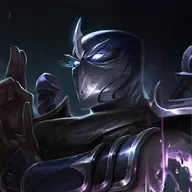
The correct habit is to look at what comes next. If no major objective is available, pushing a side lane can be excellent. If a decisive drake spawns in less than a minute, being too far away can cost the game. If your team needs you to engage, you cannot play like a pure split pusher. If your team can stall, you can create side pressure.
Being in the right place does not mean following your team everywhere. It means being where your presence creates the most pressure.
- If no major objective is coming in the next minute, push a side lane to force an enemy response.
- If a decisive drake spawns in under a minute, be in position before the timer hits zero.
- If you are splitting and your team can stall, keep going; if they need you to engage, rotate in.
- Never full split if you cannot get back to Baron or Nashor in time in an emergency.
Real macro in solo queue: controlling what your team does not control
A common question is: what is the point of macro if my team does not follow? The answer is simple: macro does not give you full control, but it increases the number of games where your decisions create a winning path. In solo queue, you cannot force four players to think correctly. But you can prepare waves, ping earlier, reset at the right timing, avoid useless fights, cover your carry, punish enemy deaths and stop giving shutdowns for no reason.
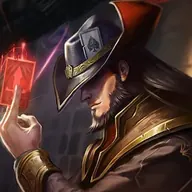
Twisted Fate shows this idea well. His strength does not come only from his ultimate, but from his ability to turn information into fast action. Seeing an overextended enemy, pushing mid, disappearing from vision, then creating a numbers advantage: that is applied macro. But if the player uses ultimate just because it is available, with no wave or objective behind it, the impact drops immediately.
In solo queue, macro must be simple, repeatable and readable. You do not need a complex professional plan. You need solid rules: do not die before objectives, push before moving, arrive early, convert kills, avoid coin flips, respect waves and play around available resources. These are basic decisions, but most players do not repeat them consistently enough.
Macro will not make your team perfect. It stops you from adding your own mistakes to the chaos.
- Push your wave before pinging an objective — your team follows more often when the map is clean.
- Identify what the enemy will take after every death; defend it or trade it for something else.
- Avoid fights with no conversion within two minutes of an enemy respawning.
- If you cannot control the team, at least control what you give away on your side.
Concrete example: first drake and the mistake almost everyone repeats
Imagine a standard game. First drake is spawning soon. You are playing jungle, your bot lane is doing fine, your mid is even, and the enemy team has an engage support like Leona. At 45 seconds before spawn, you should already be thinking about the sequence. Can your bot lane push? Can your mid move? Did you reset to buy? Is river warded? If the answer is no, starting drake when it spawns is not initiative. It is a mistake.
The bad player arrives at drake, pings the team, starts the objective and panics when the enemy engages. They will say afterward: “nobody helped me”. But the problem happened earlier. They did not prepare bot wave, they did not control river entrance, they did not check the enemy mid position and they turned a neutral objective into a coin flip. In that situation, the correct decision could have been to push mid, take vision, force Jinx to stay under tower, and only then start drake. Or, if the position was already lost, give drake and take Herald or a tower elsewhere.

Good macro does not always mean contesting. It means choosing the best available conversion. If you cannot win the zone, win something else. That logic separates players who suffer the map from players who read it.

To improve your macro, stop looking for one magical rule. Look for a logic. Before every major decision, ask yourself five simple questions:
- What does this action give me afterward?
- Do my waves allow me to move?
- Does my team have tempo or are we late?
- Do we have enough information to play this zone?
- If this objective is impossible, what can I convert elsewhere?
Macro is not reserved for Challengers. It is a way to think about the game with more clarity. Less panic, fewer coin flips, fewer absurd fights. Most importantly, more decisions that actually win games. You don’t lose because of your team, you lose because of your decisions.
Frequently asked questions
What is macro in Wild Rift?
Macro in Wild Rift refers to global decision-making: wave control, rotations, objectives, vision, tempo and map positioning. It is not about champion combos, but about turning each action into a lasting advantage.
How do I improve my macro in Wild Rift?
To improve your macro, start tracking objectives before they spawn, push waves before moving, reset at the right timing and avoid fights with no conversion. Your goal is to understand what each decision unlocks next: tower, drake, vision, Baron or side lane pressure.
What is the difference between macro and micro in Wild Rift?
Micro is mechanical execution: combos, dodges, trades and spell accuracy. Macro is global decision-making: where to go, when to reset, which objective to play, which lane to push and how to use information. A player can have strong micro and still lose through poor macro.
Why do I lose games even when I win lane?
Winning lane is not enough if you do not convert your lead. After a kill or lane advantage, you need to take plates, help an objective, invade, place vision or create a rotation. Without macro conversion, your advantage stays local and can disappear after one bad fight.
Does macro matter in solo queue?
Yes, even in solo queue. You cannot always control your team, but you can control your resets, waves, vision, timings and unnecessary deaths. Good macro reduces losing decisions and increases the games where you can turn a small lead into a win.