
Ranked mistakes in Wild Rift: expert analysis of the decisions holding you back
You can lose one game because a teammate trolls, because someone gives up mentally, or because the draft is bad. But if you truly want to improve in Wild Rift ranked, that explanation is not enough. Across a long series, the same mistakes come back: a fight started with no information, a dragon contested with no tempo, a death given right before an objective, a bad reset, an ignored wave. Your real ranked level is not only shown by your kills; it is shown by the decisions you refuse to take. This article is not here to comfort you. It is here to audit what actually costs you games. If you want to climb, you must stop judging losses emotionally and start reading them as chains of consequences.
The problem with ranked mistakes is that they are rarely isolated. A bad decision does not only cost HP or a flash: it shifts map control. A death before dragon can give river control. Lost river control can give deep vision. Deep vision can force your jungler to play from behind. Two minutes later, the game feels “impossible”, even though it actually broke on a decision made long before the final fight.
Most players miss this chain because they analyze the game in the wrong place. They look at the score, damage numbers, the fed champion or the teammate who missed a spell. Those things are visible, so they are easy to blame. Expertise begins when you look at what was less visible: tempo, recalls, lane priority, jungle position, available ultimates and the real cost of a move. A ranked mistake is not dangerous just because it exists; it is dangerous when it happens at the exact moment the map can punish it.
1. The expertise mistake: analyzing the result instead of the decision
The first mistake stuck players make is judging an action only by its outcome. If the fight is won, they think the call was good. If the fight is lost, they think someone played badly. That reading is too weak to improve. A good decision can fail because a spell is missed or because the enemy plays perfectly. A bad decision can succeed because the opponent panics. What you need to evaluate is not only what happened, but what was likely before you clicked.
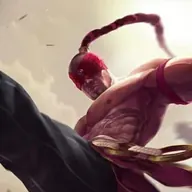
Imagine you are jungling with Lee Sin. You invade level 3, find the enemy jungler low HP, kill him and escape alive. Positive result. But if both nearby lanes were under tower, if your mid could not move and if the enemy support had disappeared, the move may still have been bad despite the kill. You were rewarded once by an enemy mistake, but across ten identical situations, you get collapsed on most of the time.
- Ask whether your team could actually follow.
- Ask whether the enemy had an obvious answer.
- Ask what you would lose if the move failed.
- Ask whether the reward justified the risk.
This method changes your progression. You stop looking only for “who fed”. You identify decisions with a bad risk-to-reward ratio. That is exactly what separates a player who spams games from a player who learns from them.
2. The tempo mistake: reaching the right place too late
Many players think they made the right choice because they moved toward the objective. But in ranked, being in the right place is not enough. You must be there at the right time, under the right conditions. Reaching dragon after the enemy has already placed vision, while your mid wave is under tower and your ADC has just left base, is not contesting. It is walking into a zone that has already been lost.
Tempo is one of the most misunderstood concepts in ranked. It does not simply mean “playing fast”. It means having an action window before the opponent: recalling before them, pushing before them, placing vision before them, moving before them. When you are late, you do not have the same rights on the map. You can still attempt a miracle, but it is no longer a stable decision.
This issue appears often with players who want to “help the team” at any cost. A Leona reaching river after her ADC recalled may still think she can engage. But if the enemy team already controls the brushes, her engage becomes predictable and suicidal. A Vi forcing her ultimate while her lanes cannot move does not create an opening: she isolates herself.


The correct call is not only “go objective”; it is preparing the objective before the enemy locks the zone. If you understand this, you will stop dying in fights that felt “mandatory” but were already lost thirty seconds earlier.
3. The vision mistake: thinking lack of information is neutral
One of the most expensive ranked mistakes is treating fog of war like a detail. You do not see the enemy jungler, but you still walk forward. You do not see the enemy support, but you keep hitting the tower. You do not see mid, but you contest a camp. This habit turns every move into a gamble. And the higher you climb, the less these gambles work.
Vision control is not a luxury reserved for support. It is a condition for decision-making. Without information, your brain fills the gaps with hope: “he is probably not there”, “they must have recalled”, “I can take the wave quickly”. In reality, competent enemies play around those gaps. They wait for you to step one screen too far, use your dash on the wave or ward too late.
A good player does not place wards only to see. He places wards to authorize a future action. If you want to play Baron in one minute, you do not discover river at 0:55. You take space earlier, force the enemy to enter your zone, then decide. That is the difference between suffering a dark map and building a playable one.
- If you do not have vision, reduce your ambition.
- If the enemy disappears, assume they can punish your next step.
- If an objective is spawning, prepare vision before it appears.
- If you are behind, prioritize defensive vision over facechecking.
Facechecking “just to check” is one of the invisible phrases that loses the most ranked games.
4. The conversion mistake: winning a fight and getting nothing
Another common mistake is confusing combat victory with game progress. You win a fight, take two kills, then your team recalls without pushing, without dragon, without deep vision, without tower pressure. On the scoreboard, the action looks positive. On the map, it is almost empty. An unconverted lead is a lead with an expiration timer.
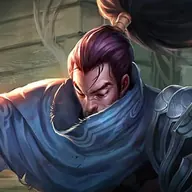
This mistake affects many mechanically solid players. They can win duels, outplay, chase and finish kills. But after the action, they do not know what to take. If you play Yasuo and kill your mid opponent, the next question is not “can I kill him again?”. The real question is: can you take a plate, move pressure bot, help your jungler invade, secure vision or force an enemy recall?
Ranked rewards conversion because the map is limited by time. Every enemy death opens a short window. If you use it poorly, the enemy returns, waves reset and your kill becomes only a line on the scoreboard. This is why some players end 12/4 and still lose: they created personal leads, not structural leads.
The method is simple: after every kill or won fight, immediately choose one priority conversion. Tower if the wave is ready. Objective if your jungler is alive and close. Deep vision if the enemy has to recall. Clean reset if you cannot take anything safely. The kill is the beginning of the decision, not its conclusion.
5. The mental mistake: trying to repair one mistake with a bigger one
Ranked mentality is not only about avoiding insults. Real mental strength is the ability to make a cold decision right after a hot mistake. You die badly, lose a duel, your team fails a fight, and immediately you want to compensate. You return to lane too fast. You force a trade without cooldowns. You contest an objective you cannot play. That is not motivation; it is tilt disguised as effort.
This mistake is dangerous because it accelerates losses. One bad death can remain limited. But if it creates a second death, then a lost objective, then a forced fight, it becomes a sequence. In ranked, many games are not lost because of missing talent, but because players cannot stop a negative sequence.
The correct reflex after a mistake is counterintuitive: slow down. Look at the wave. Look at timers. Look at ultimates. Ask what the enemy wants now that you have given them an opening. If you understand their next objective, you can defend logically instead of chasing revenge.
After a mistake, your goal is not to prove you are strong; your goal is to stop the mistake from becoming a chain. This is an invisible skill, but it separates players who climb from players who repeat the same loss streaks.
6. The E-E-A-T mistake: following advice without a verification method
There is a lot of Wild Rift advice online: play this champion, take this build, contest this objective, roam at this timing. The problem is not that these tips are always wrong. The problem is that advice without a verification method quickly becomes superstition. You copy a rule, apply it in the wrong context, then conclude that the game is unfair.
An expert approach requires checking every piece of advice through four questions: in which context is this advice true? What level of risk does it create? What kind of composition makes it better? What in-game signal tells me to apply it or not? For example, “contest dragon” is not a rule. It is an option if you have vision, tempo, smite, priority or a clear engage window. Without those conditions, the advice becomes dangerous.
This is where E-E-A-T becomes concrete for Nexus Core: an article should not only tell you what to do, it should show you how to think. Experience comes from repeated ranked situations. Expertise comes from isolating causes. Authority comes from a consistent method. Trust comes from the fact that you can verify the analysis in your own games.
- Never validate advice only because it sounds good.
- Test it across several games, not one isolated memory.
- Track the conditions where it works and where it fails.
- Keep the principle, adapt the execution.
Good ranked advice is not a magic sentence; it is a conditional decision.
Case study: the dragon contest that destroys a playable game
You are in ranked, minute 6:00. Your team is slightly behind, but the game is not lost. Your ADC Jinx has just recalled with enough gold to complete an important item. Your mid is late because his wave is under tower. Your jungler Lee Sin is at 60% HP, smite available, but has no river vision. On the enemy side, the support disappeared fifteen seconds ago and top lane Malphite has ultimate. Someone pings dragon. The whole team hesitates.

The average player sees an objective and thinks: “We have to contest, otherwise we give too much.” The expert player sees something else: no vision, late tempo, bad river entry, enemy ultimate threat, ADC not present yet. In this situation, contesting is not brave. It is mathematically poor. Even if you manage to steal the dragon, you risk losing three deaths, mid tower and your entire botside jungle.
The best decision is often to give up the dragon, catch waves, place defensive vision and prepare the next cycle. You accept a small controlled loss to avoid a massive one. That is ranked expertise: not playing the visible objective, but playing the likely consequence.

To fix your ranked mistakes, you need to stop looking only for a better champion, a better build or a better teammate. Start auditing your decisions with a simple method:
- After each loss, identify the first death that gave a real advantage.
- Find the first objective contested without vision or tempo.
- Note the first won fight that converted into nothing.
- Observe the moment where you played to repair your ego instead of stabilizing the map.
- Turn every mistake into a conditional rule for the next game.
You climb in ranked when your decisions become more reliable than your emotions. Mechanics win fights, but clarity wins streaks. You don’t lose because of your team, you lose because of your decisions.
Frequently asked questions
What are the most common ranked mistakes in Wild Rift?
The most common mistakes are fighting without vision, contesting objectives without tempo, dying for no value, failing to convert kills and making decisions while tilted. These mistakes are dangerous because they often create a chain: death, lost vision, lost objective, then enemy snowball.
How do I know if a ranked decision was good even if it failed?
A decision can be good if the conditions were favorable before the action: correct vision, lane priority, available cooldowns, clear objective and acceptable risk. The result alone is not enough. You need to judge the move by its probability when you started it.
Why do I win lane but still lose ranked games?
Because a lane lead must become a map lead. If your kills do not turn into a tower, deep vision, an objective or pressure on another lane, your lead stays personal. In ranked, unconverted advantages often disappear.
Should I always contest dragon in Wild Rift ranked?
No. Contesting dragon without vision, priority or position can cost more than the objective itself. Sometimes giving up dragon, catching waves and preparing the next objective is a more stable and profitable decision.
How can I improve faster in Wild Rift ranked?
The fastest improvement comes from auditing repeated mistakes. Review your deaths, poorly prepared objectives and useless fights. Fixing three recurring bad decisions can have more impact than changing champion or copying a meta build.