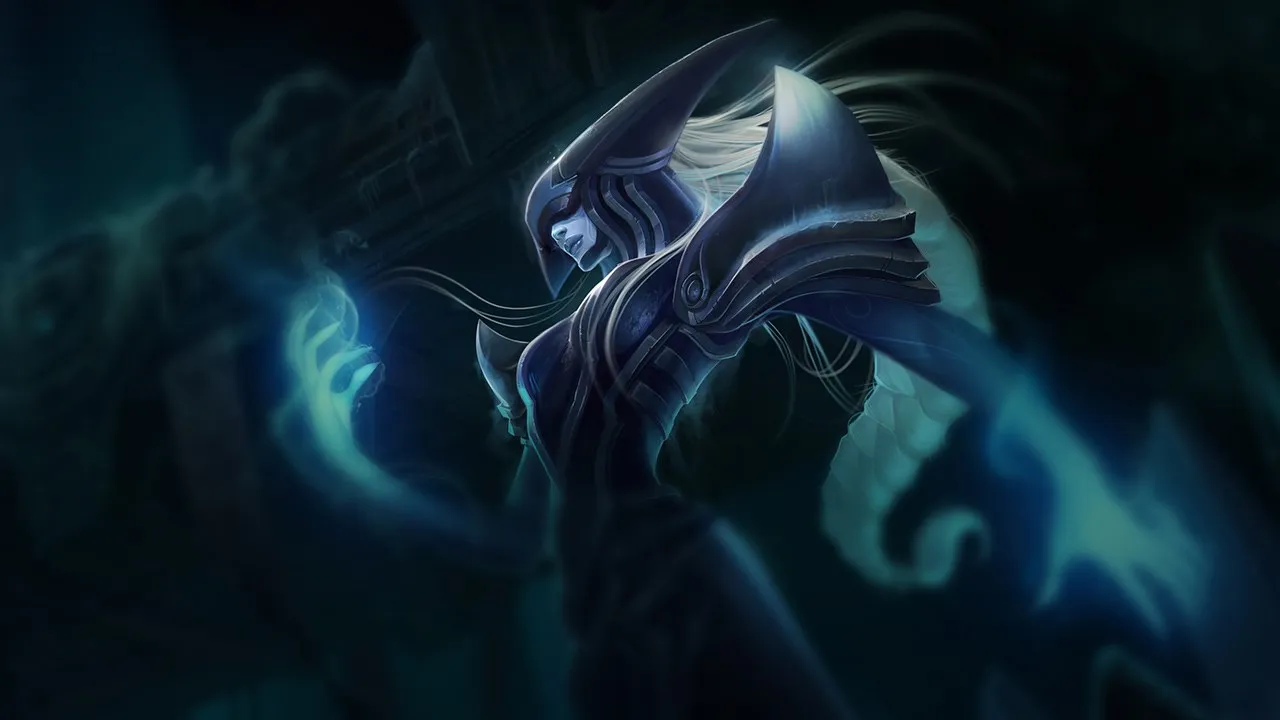







↑ Strengths
- Effectively shuts down assassins with her targeted ultimate.
- Very strong in objective fights and choke points.
- Can engage from fog with E, creating constant pressure.
- Instant punishment for positioning mistakes.

Lissandra is a Mid Lane control mage in Wild Rift, an ice witch specializing in freeze zones and mass control through glaciations.
Your next duel
The five most played Mid opponents — tap one to open the free duel sheet.


 Counters
Who beats Lissandra
Counters
Who beats Lissandra



Start here
The complete Lissandra breakdown, and the micro and macro skills that actually decide games on this champion.

Lissandra's win rate has climbed +1.82 pts over the last 30 days, now at 51.92%. See the full Wild Rift meta trends for more biggest movers. Measured effect of the adjustment in 7.3 (22/09): +1.51 pts of win rate over 10 days, and +2.12 pts of pick rate.
Meta Movers · video of the week
Week of October 19, 2026 · patch 7.3b
Lissandra is a Mid Lane control mage in Wild Rift, an ice witch specializing in freeze zones and mass control through glaciations. Her kit combines a cone projectile, a slowing freeze zone, a Glacial Path dash, and an ultimate temporarily encasing a target or herself in an ice crystal. She excels in engage or counter-engage compositions seeking to immobilize multiple targets simultaneously. In Wild Rift, her ability to self-cast her ultimate grants unique situational survival, turning assassination attempts into costly mistakes for opponents.
Lissandra fits in multi-CC engage compositions that benefit from her chained controls. She benefits from allies who can convert her freezes and stuns into quick kills. Dive or AoE compositions benefit from her ability to lock down multiple targets.
Lissandra is vulnerable against champions who can burst her before her CC lands or resist her controls through cleanse or high tenacity. Long-range poke profiles drain her resources before she engages. Her limited early game before items is a weakness window.
With Lissandra, use your E to initiate or escape depending on context — it's your most versatile ability. Your ultimate can be used offensively to CC a priority target or defensively to make yourself temporarily invulnerable. In teamfights, target dense groups with your AoE.






Ensure priority when it's safe, then shift. Play around with jungler timers and windows without Cleanse.
Control side vision, look for Flash-R on an isolated carry. Convert to objective.
Decide whether to engage (flank/Flash-R) or peel (Self-R) depending on the compo. Protect your win condition.
 Q
Q
 W
W
 R
Q
R
Q
Q for the slow and poke, W for the root, R for the stun or invulnerability, then recast Q.
 Flash
W
Q
R
Q
Flash
W
Q
R
Q
Flash into the group, AoE root with W, Q burst, prioritise R stun.
Flash
W
R
Q
Flash engage, root, cast R to put yourself in stasis, Q burst upon exiting.
Q
Q
Q
Poke from long range with Ice Shard; the projectile can pass through multiple targets.
What interrupts it Brand Q Sear stun · 1.75 s
 Yasuo R Last Breath knock-up · 1.3 s
Use it on yourself when you’re focused or diving deep without guaranteed survival. It lets you stall, absorb enemy cooldowns, and give your team time to follow up.
No. E is as much a pressure tool as it is an engage tool. Holding it can force mistakes without even using it.
Because they control space and deny your entry. Without flank angles, you’re forced to endure their poke.
Wait for the right moment. Lissandra isn’t brute initiation, but instant punishment of enemy mistakes.
| Lvl | HP | AD | Armor | MR | Mana | HP regen | Res. regen |
|---|---|---|---|---|---|---|---|
| 1 | 660 | 54 | 34 | 36 | 460 | 8 | 10 |
| 2 | 780 | 57 | 38.5 | 37.2 | 510 | 8.8 | 11 |
| 3 | 900 | 60 | 43 | 38.4 | 560 | 9.6 | 12 |
| 4 | 1,020 | 63 | 47.5 | 39.6 | 610 | 10.4 | 13 |
| 5 | 1,140 | 66 | 52 | 40.8 | 660 | 11.2 | 14 |
| 6 | 1,260 | 69 | 56.5 | 42 | 710 | 12 | 15 |
| 7 | 1,380 | 72 | 61 | 43.2 | 760 | 12.8 | 16 |
| 8 | 1,500 | 75 | 65.5 | 44.4 | 810 | 13.6 | 17 |
| 9 | 1,620 | 78 | 70 | 45.6 | 860 | 14.4 | 18 |
| 10 | 1,740 | 81 | 74.5 | 46.8 | 910 | 15.2 | 19 |
| 11 | 1,860 | 84 | 79 | 48 | 960 | 16 | 20 |
| 12 | 1,980 | 87 | 83.5 | 49.2 | 1,010 | 16.8 | 21 |
| 13 | 2,100 | 90 | 88 | 50.4 | 1,060 | 17.6 | 22 |
| 14 | 2,220 | 93 | 92.5 | 51.6 | 1,110 | 18.4 | 23 |
| 15 | 2,340 | 96 | 97 | 52.8 | 1,160 | 19.2 | 24 |
Base data : wiki.leagueoflegends.com (CC BY-SA 4.0) · 2026-07-09
Lissandra gains more Health per level: same durability at level 1, more in the late game.
Sources: our patch files, checked against Riot's official patch notes · measured effect: median win rate before and after the patch · All patch notes
Build your team around Lissandra, analyze enemy counters in real time and get pick recommendations aligned with the current patch meta.