Tank

Alistar

S SUPPORT
DMG
TANK
UTIL
DIFF
Win 58.0% #16
Pick 7.4% #7
Ban 0.6% #41
?Win Rate — % of games wonPick Rate — % of games where pickedBan Rate — % of games where banned#N — overall ranking among all champions
Wild Rift CN · Challenger ?Official Tencent data
Challenger CN server · Updated daily
Last update: 25 Apr 2026

Champion Guide

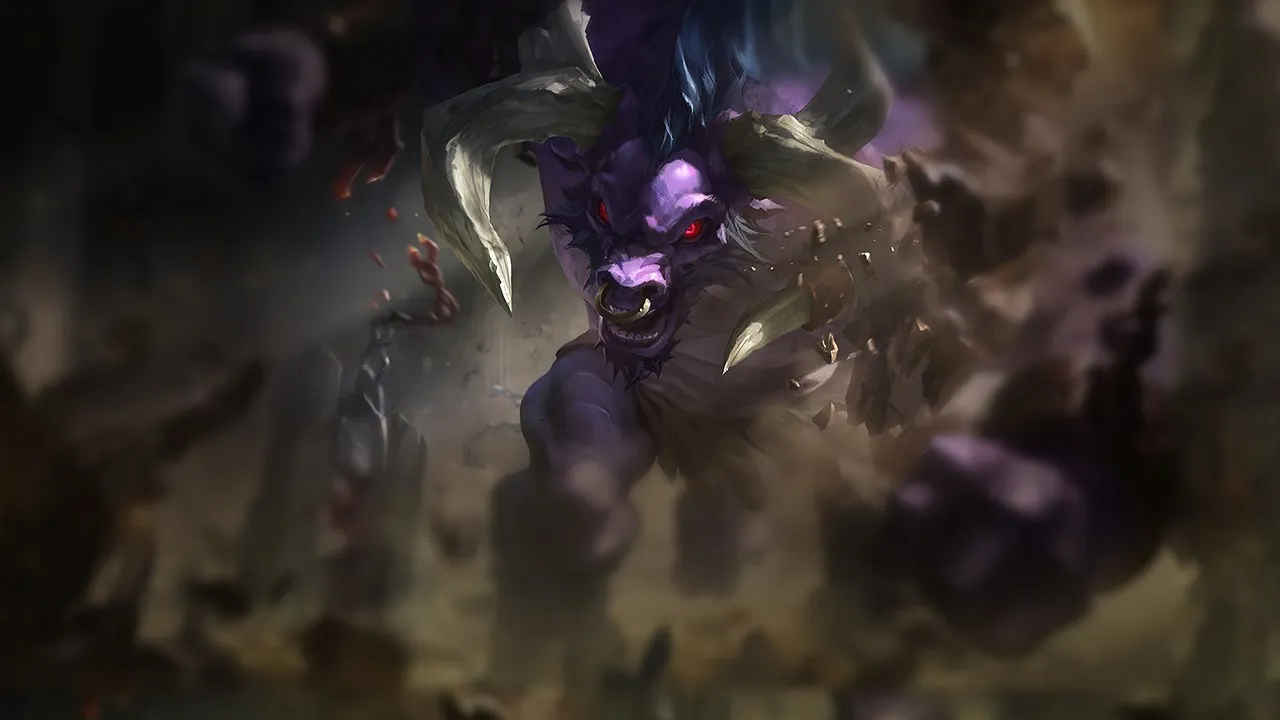
Alistar is a tank support in Wild Rift, recognized as one of the most powerful engage supports in the game through his Headbutt / Pulverize combo. His kit offers an AoE knock-up, a repositioning dash, passive heals, and massive damage resistance through his ultimate. He excels in all-in compositions seeking to lock down a target and eliminate it in under a second. In Wild Rift, his instant combo is harder to dodge than in other versions, reinforcing his status as one of the most formidable lane supports.

Counters

All counters →

Synergies

All synergies →
Glacial Augment
Bulwark of the Mountain
Zeke's Convergence
Radiant Virtue
+
Plated Steelcaps
Courage Of The Colossus
Bone Plating
Overgrowth

Alistar — patch analysis

Patch positioning

Alistar remains a very reliable engage support in the current patch, but his real value does not come from being a simple initiation button. He becomes especially valuable when games are decided by one clean first contact, a controlled dive, or a carry that needs long protection during extended fights. In a meta where many players misposition in lane, disrespect Flash timings, and rotate too late around objectives, Alistar turns small spacing errors into kills, bot-side tempo, or early zone control before dragon. He is not the most flexible ranged support, and he is less comfortable when lane becomes pure poke, but he is still one of the steadiest picks to force pace, stop enemy entry, and give his team a clear fight structure. When a team needs a true impact point, his value stays very high.

Meta reasoning

Alistar works because his kit keeps strong tactical clarity even when the game turns chaotic. His W→Q remains easy to execute yet game-changing, his Headbutt can both start and cancel sequences, and his ultimate gives him frontline tolerance that very few supports can match. He especially benefits in games where carries stand near walls, enemy supports must step up for vision, and fights are not fully controlled from range. He struggles more when opponents slow the lane down, cut his angle before contact, or bring very clear anti-engage tools. His success therefore depends less on raw damage patterns and more on the quality of the windows he reads and forces.

Real game insight

The trap with Alistar is that many players think landing a combo automatically makes them useful. In reality, his best games do not always come from his flashiest engages, but from his ability to choose between engaging, disengaging, or simply threatening entry. An average Alistar forces the moment he sees a target. A strong Alistar sometimes holds the combo to stop a dive, break a hook, or protect his ADC until the enemy has no clean exit left. He is also a champion that can feel invincible during ultimate, yet an engage started too early without follow-up often turns that durability into wasted time. In ranked, his real value comes from timing discipline, not just bravery.

Draft identity

Alistar is a direct-impact support built to give fights a clear structure. He does not only bring engage: he brings a point of entry, a brutally effective peel tool, and credible dive presence. You pick him when you want to punish immobile carries, give your team a real opening button, or secure an ADC who needs space to keep hitting while Alistar absorbs the first wave.

Pick conditions

Why play this patch

  • His W→Q remains one of the easiest engage buttons to convert into real value, especially when opponents misposition around objectives.
  • His ultimate lets him tank for a very long time in dives or front-to-back fights, which stabilizes the messy skirmishes common in solo queue.
  • He can protect a threatened carry almost as well as he can engage, which keeps him useful even when the game is not about nonstop hard engage.
  • He punishes supports and ADCs that need to step forward to ward, poke, or hold lane priority.

When to avoid

  • Avoid him if your team has almost no follow-up and your engage is likely to start fights nobody can actually finish.
  • Avoid him when the enemy lane can chip you down from range all game without giving you a real entry window.
  • Avoid him if the enemy draft has multiple clear tools to deny engage or break your first timing.
  • Avoid him when your ADC mainly needs sustained lane control or healing rather than a contact-based support.

Ideal draft context

  • Compositions that want a real opening button to start the first focus on a mispositioned target.
  • Drafts with an immobile or space-hungry carry that benefits heavily from Alistar's peel after the first engage.
  • Teams that want to dive under turret with a frontline able to soak enemy response for a long time.
  • Compositions that play dragons and river entries through tight angles, where one Headbutt or knock-up changes everything.

Bad draft context

  • Allied comps that are too slow to follow, where Alistar engages alone and ends up tanking without real conversion.
  • Drafts that completely lack early damage pressure in the first seconds of a fight.
  • Games where the enemy controls distance nonstop and forces you to walk too long before any useful contact.
  • Compositions where nobody truly benefits from the space created by his engage or the protection gained through his ultimate.

Hidden weakness

Hidden weakness

His real weakness is not just poke or kiting: it is the moment he goes in without redefining the fight. Many Alistars create contact, but not structure. They bump a target without isolating the right threat, activate ultimate too late, or move too far from their carry when the real danger is the counter-engage. When he does not clearly choose between engaging and protecting, he creates the illusion of action without actually improving his team’s position.

Low elo

In low elo, Alistar gains a lot of value because spacing mistakes are common, vision is less disciplined, and carries often disrespect all-ins. That lets him convert simple openings into kills very often. The downside is that many low-elo Alistars overforce, mistime Headbutt, or forget that protecting their ADC can matter more than a flashy combo.

High elo

In high elo, his kit remains strong but demands much sharper reading. Opponents cut angles better, hold anti-engage tools more carefully, and punish unsupported entries faster. At that level, Alistar becomes less of an automatic combo champion and more of a threat-presence pick built on patience, fight reset, and immediate punishment the moment a support or carry steps too far.

Expert take

Expert take

Alistar is not just an old engage support that is still decent. He remains a pick with genuine competitive value whenever a team needs a simple, reliable, readable impact point. But to play him well, you must move past the idea that “combo equals usefulness.” His real ceiling comes from timing management: when to threaten without committing, when to absorb enemy entry before re-engaging, when to protect your ADC instead of crossing the whole fight. He gives a lot to players who understand fight structure and much less to those who only want to force. If you like deciding when the game actually turns, Alistar remains an excellent choice. If you only want to charge forward, you will often create presence without advantage.

Coach notes

  • Think of your combo as a strategic resource, not a reflex. The more the enemy fears it, the more you can gain without even using it right away.
  • Your ultimate is not just for surviving: it is for deciding which area becomes unplayable for the enemy for a few seconds.

FAQ

Is Alistar a good blind pick support?

Yes, but not blindly into everything. He remains a fairly reliable blind pick when your team needs clear engage, true contact-based peel, and a support that can absorb a long sequence under ultimate. He becomes less comfortable when the enemy lane can completely slow the pace, wear you down from range, and cut your angles before every objective. The right question is not just “is he tanky?” but “can my team convert the space he creates?” If the answer is yes, Alistar stays a strong blind.

Should Alistar always engage or sometimes hold his combo?

You often need to hold the combo more than players think. On Alistar, the threat of W→Q can sometimes be worth more than instantly using it. If the enemy team has a more dangerous entry than your own engage, saving Headbutt to break that sequence can win more than an average all-in. This is especially true when your ADC is the real win condition or when the enemy is waiting for you to go too early. A good Alistar does not always choose first contact—he chooses useful contact.

When does Alistar truly become strong in a game?

He becomes threatening very early once his full combo must be respected in lane, but his real power rise mainly comes with ultimate and the first objective fights. From that point on, he no longer only punishes isolated mistakes: he can absorb an entire response, force a dive, or protect a carry through prolonged chaos. His spike is therefore not just a damage number. It is the moment when he can impose fight structure without instantly dying for it.

Why do some Alistar games look strong even without many kills?

Because his value is not only visible on the scoreboard. A useful Alistar changes enemy pathing, forces carries to step back half a screen, secures river entry, denies hooks, and buys firing time for his ADC. All of that may lead to few direct kills while still drastically changing fight quality. He is a structure champion, not only a finisher. If his presence creates better positioning, better timings, and less enemy freedom, he is already doing his job.