
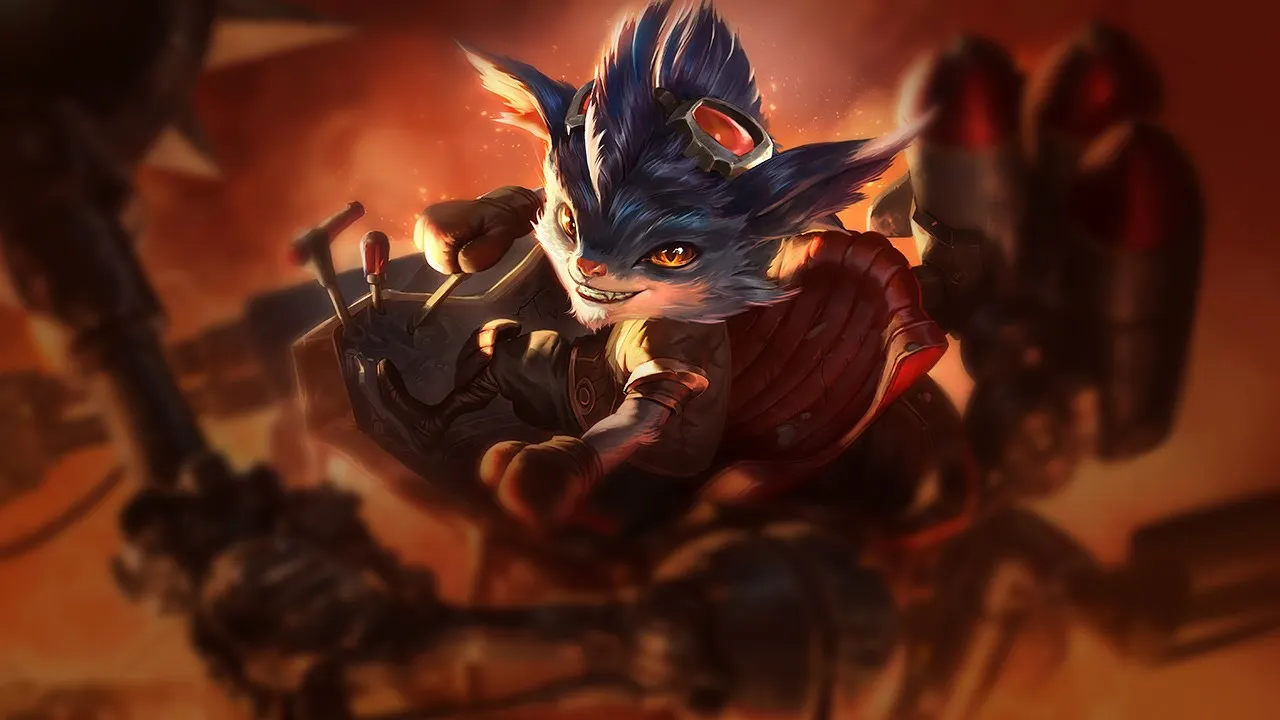
Core identity
Rumble is mainly played as Top. The page focuses on how to convert its strongest windows consistently.
With Rumble, manage your heat permanently to stay in danger zone without overheating. Place your ultimate in anticipation of enemy movement — not on current enemy positions. In teamfights, cut off enemy access routes with fire zones to force repositioning.
Rumble is mainly played as Top. The page focuses on how to convert its strongest windows consistently.
The early plan is to stabilize lane, protect tempo and reach the first clean spike.
Rumble can be punished when its cooldowns or spacing tools are forced too early.
The Equalizer gives Rumble his first real global conversion threat. Before this level, he can win lane pressure; after it, he can turn a pushed wave, a gank, or a Herald contest into a forced fight.
Once Rumble gets enough damage to make Flamespitter truly costly, the opponent can no longer last-hit for free. This window is about winning the wave, not necessarily forcing an immediate all-in.
Rumble gains a lot of value when Dragon or Herald forces teams into corridors. A good ultimate can deny entry, cut the exit, or separate the frontline from the carries.
When teams start playing around mid lane and vision, Rumble can decide the rhythm. He must stand close enough to threaten Flamespitter, but far enough not to be engaged before placing The Equalizer.
Rumble is generally played as Top. The early goal is to protect lane tempo and reach the first strong setup.
This page highlights the moments where Rumble can force clean trades, rotations, or objective setups. In practice, the champion is strongest when its cooldown cycle is respected and the fight starts on its own terms.
Rumble is usually punished by forcing its first defensive or spacing tool too early.