July 2026 · Patch 7.2a
Mage · Baron Lane

Rumble Wild Rift Guide

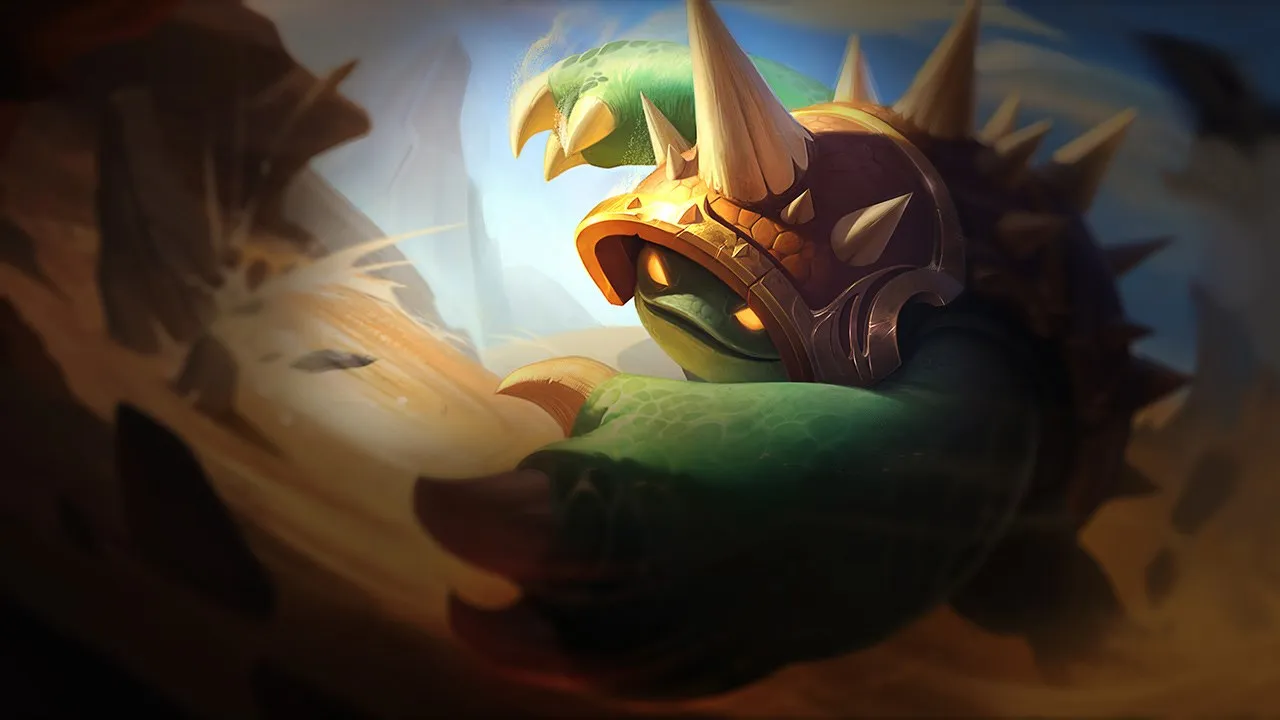
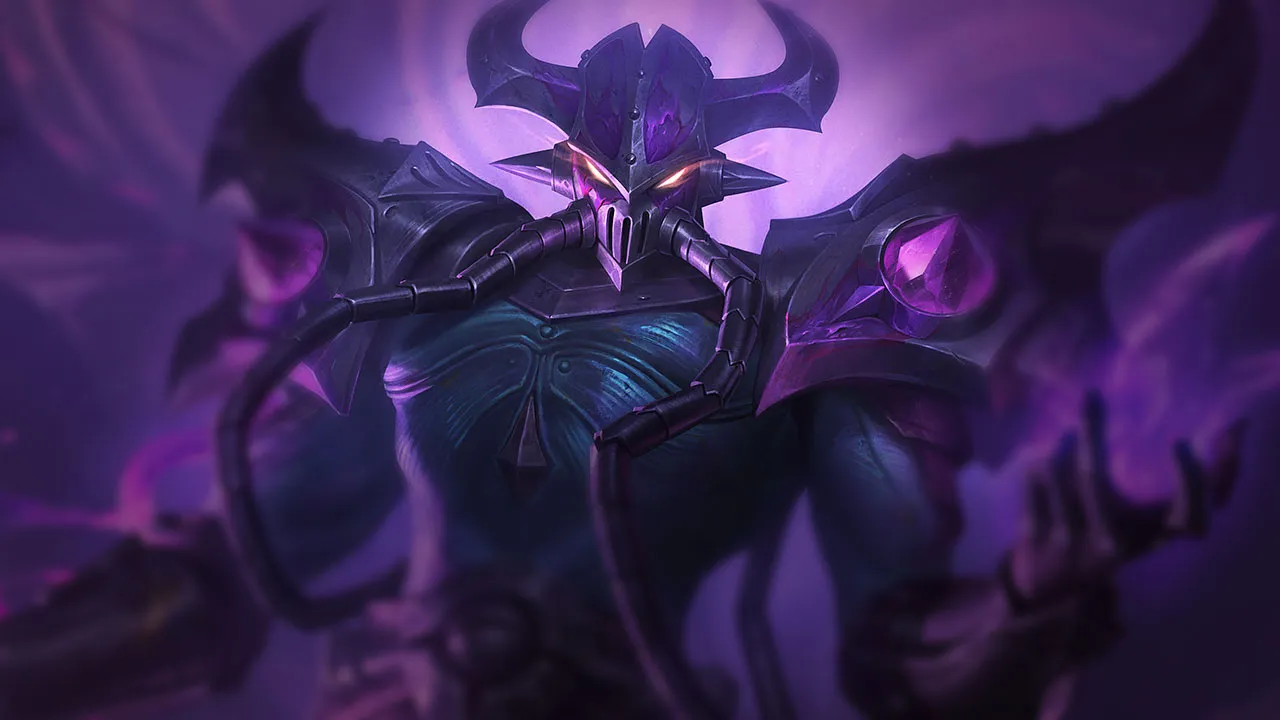
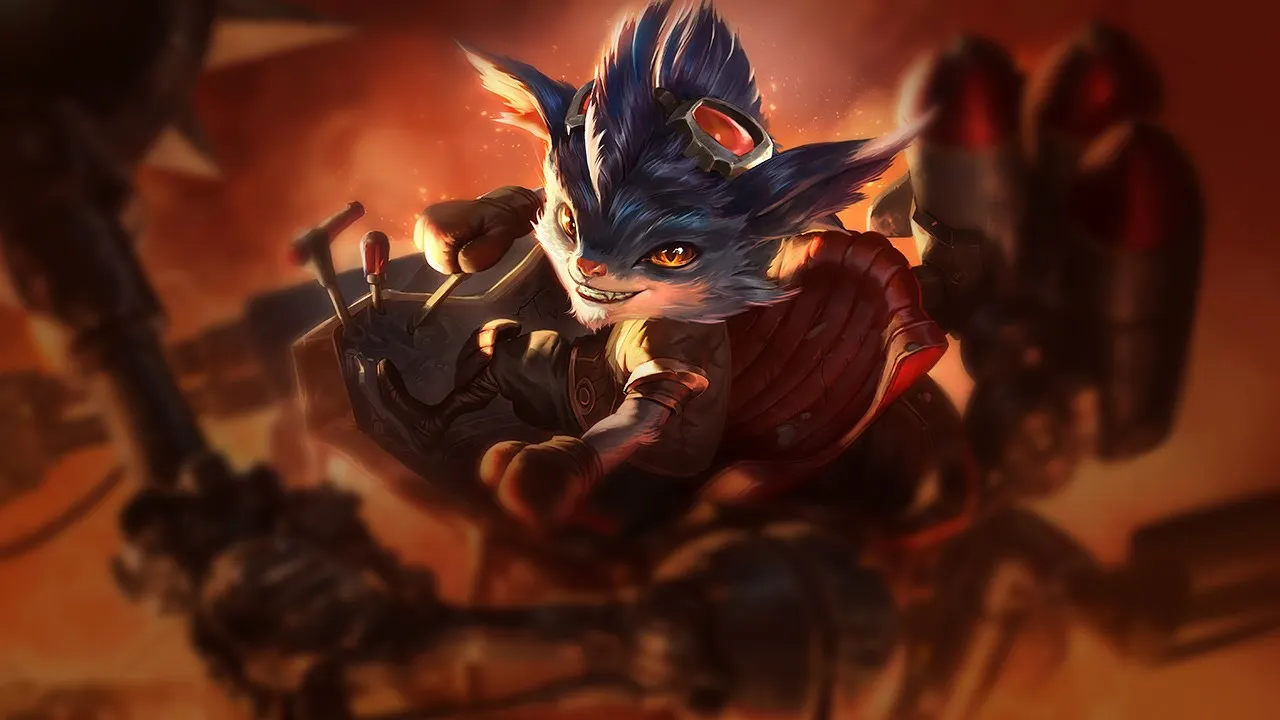
Rumble is a Baron Lane mage-fighter who pilots a flaming mechanical suit, dealing sustained magic AoE damage while managing his Overheat mechanic.

★ Baron Lane Tier S July 2026 · Patch 7.2a magefighterbaron lane
DMG
UTIL
TANK
DIFF
Win 49.2% #51 · ↑1pt
Pick 2.7% #27
Ban 0.1% #81
§ 01 — Editorial brief

Rumble TOP is a pressure and space-control pick: he does not only try to win lane, he tries to make certain areas unplayable.

By WRC Studio ~ 2 min read Patch 7.2a

Rumble is a Baron Lane mage-fighter who pilots a flaming mechanical suit, dealing sustained magic AoE damage while managing his Overheat mechanic. His ultimate deploys a field of rockets that slows and burns enemies, reshaping teamfight positioning. He counters melee bruisers with persistent zone damage and a slowing passive. In Wild Rift, he thrives in poke-and-control compositions where his rockets lock down chokepoints and force costly positional trade-offs.

Rumble excels in compositions seeking to control combat zones and force enemies through his damage. He benefits from allies who can cluster enemies inside his ultimate. Mass engage compositions get the maximum from his zone control.

Rumble is countered by compositions that can engage him before he enters danger zone and resist his damage through magic resistance. High-mobility champions dodge his flames and ultimate. His overheat can temporarily make him vulnerable if poorly managed.

With Rumble, manage your heat permanently to stay in danger zone without overheating. Place your ultimate in anticipation of enemy movement — not on current enemy positions. In teamfights, cut off enemy access routes with fire zones to force repositioning.

Expert note

Expert take

Rumble is an excellent pick for players who like deciding where the fight happens rather than only chasing mechanical duels. He requires fewer flashy dashes than a pure duelist, but far more precision in preparation: Heat, wave, vision, ultimate timing, and reading enemy paths. Played well, he turns an objective contest into an impossible decision for the enemy. Played poorly, he becomes an immobile AP top laner who pushes too much, wastes his ultimate, and gets caught before placing his zone. His real value is not burning as much HP as possible in lane; it is making the enemy team understand that certain spaces no longer belong to them.

Weak point

Hidden weakness

Rumble’s hidden weakness is not only his lack of dash. It is his dependence on correct Heat timing and the right terrain. A Rumble who enters a fight with poorly prepared Heat, or places The Equalizer after the enemy has already crossed the zone, loses a huge part of his value. He may have the right damage on paper, but if the fight happens in open ground, without a choke point or allied control, his spells become much easier to bypass.

§ 02 — Strengths & weaknesses Rumble Wild Rift strengths and weaknesses

↑ Strengths
  • He gives a solid AP source from TOP lane, helping drafts that are too AD-heavy avoid being neutralized by easy armor stacking.
  • He is very strong around objectives: The Equalizer can cut off a Dragon entrance, lock a corridor, or punish a team arriving too grouped.
  • He punishes champions who must walk toward him to trade, because Flamespitter and Electro Harpoon make every approach costly.
  • He can win without extreme snowballing: even from a merely stable lane, his ultimate keeps huge value in mid-game fights.
↓ Weaknesses
  • Avoid Rumble if your team has no way to force enemies to stay inside The Equalizer: without engage, his ultimate becomes easier to dodge.
  • Avoid him against a draft that can dive him very quickly before he places his zone, especially if multiple champions can cross his slow.
  • Avoid him if your team already lacks frontline and expects you to absorb the entire first contact. Rumble wants to control space, not tank five champions.
  • Avoid him if the game is likely to be decided only through extended side-lane duels against a mobile duelist, because his highest value comes more from objective zones than pure split pushing.
Win Rate (30d) 49.22%-0.27 pts
Pick Rate 2.74%
Ban Rate 0.14%

Rumble's win rate has dropped -0.27 pts over the last 30 days, now at 49.22%. See the full Wild Rift meta trends for more biggest movers.

02

§ 03 — Game planRumble Wild Rift game plan: early, mid and late game

II Mid

Look for priority without overheating for no…

Niv. 7 → 11

Look for priority without overheating for no reason: use Flamespitter to hit both minions and the enemy mid, then keep enough heat for Scrap Shield if the jungler appears. Electro-Harpoon should mainly deny last-hits or secure a short trade when the wave is moving toward river. From level 5 onward, play around dragon and herald entrances. Push mid before moving, place The Equalizer diagonally behind the target or across the river exit, then walk forward with Scrap Shield to keep Flamespitter ticking without giving a free crowd-control angle. Do not start every fight frontally. Mid Rumble often needs to wait until the enemy commits or an ally lands crowd control, then place The Equalizer on the carries' escape path. If the ultimate is down, protect the zone entrance with Electro-Harpoon instead of forcing a melee walk-up.

Data — Stats per levelRumble Wild Rift base stats per level (1-15)

Movement speed 355Attack range 175Bonus attack speed / lvl +2.2%
Show stats per level
LvlHPADArmorMRHP regen
16906246438
281065.550.5458.8
39306955479.6
41,05072.559.54910.4
51,17076645111.2
61,29079.568.55312
71,41083735512.8
81,53086.577.55713.6
91,65090825914.4
101,77093.586.56115.2
111,89097916316
122,010100.595.56516.8
132,1301041006717.6
142,250107.5104.56918.4
152,3701111097119.2

Base data : wiki.leagueoflegends.com (CC BY-SA 4.0) · 2026-07-09

§ 05 — Recommended buildBest Rumble Wild Rift build for the current patch

Rumble builds around AP power and magic penetration to maximize continuous zone damage. He prioritizes items with good AP ratios on his zone abilities. Complementary survival allows him to stay in combat during his flame channels.

Core
1 Riftmaker
Riftmaker
2 Liandry's Torment
Liandry's Torment
3 Rabadon's Deathcap
Rabadon's Deathcap
Boots
Sorcerer's Shoes Sorcerer's Shoes
/
Plated Steelcaps Plated Steelcaps
See the full build

§ 06 — The matchup wallRumble Wild Rift counters and synergies

Hard Unfav. Skill Fav. Synergy

§ 07b — Advanced MechanicsRumble: combos & tips Wild Rift

Standard trade combo
1 W W
2 Q Q
3 E E

Slow the target to keep the Flamespitter active, deal fire damage whilst the slow is active, and use a shield to absorb the counterattack

Overheat all-in combo
1 R R
2 Q Q
3 W W
4 E E

Use the ultimate for area-of-effect damage and damage-over-time on the enemy team; chain all skills quickly to reach Overheat (100 heat) — auto-attacks whilst in Overheat deal bonus magic damage and have bonus attack speed

Teamfight combo
1 R R
2 E E
3 Q Q
4 W W
5 W W

Use the ultimate to force the enemy’s positions, dive in using the speed from ability 3, and chain together damage

Mechanical Tips

  • Heat bar management: staying between 50–99 Heat is the ideal range — at 50 Heat, auto-attacks deal bonus magic damage (Danger Zone); at 100 Heat = Overheat (silence but even stronger auto-attacks)
  • Don’t waste Overheat: Overheat temporarily silences Rumble — only trigger it when skills are already on cooldown or during a phase of the fight where auto-attacks are sufficient
  • Electro Harpoon (2) double cast: the second cast can be used twice — space out the two casts to maximise the slow and damage on a fleeing target
  • The Equaliser placement: use the ultimate across a long area (chokepoint) rather than in a short straight line — this maximises the number of seconds enemies spend in the fire

Common Mistakes

  • Unintentional overheating: Wasting silence during an active teamfight is disastrous — keep a constant eye on the heat bar
  • Defensive ultimate: The Equaliser has an area-of-effect range — use it offensively to zone and corner enemies rather than for protection
  • Poor positioning: Rumble has no dash or escape mechanism — stay behind the front line at all times; use Scrap Shield (3) for speed if you need to retreat

Notable Interactions

  • The Equalizer deals damage over several seconds — enemies forced to remain in the area (by allied CC) take the maximum damage
  • Rumble synergises well with engage champions who group enemies together (Orianna, Malphite, Jarvan) — the combo: ally engages → The Equaliser on the group = massive AoE
  • With Liandry’s Torment, the burn from Flamespitter + the ultimate + the item stack up to devastating damage-over-time

§ 08 — DialoguesRumble Wild Rift FAQ

Q.01 Is Rumble TOP a good solo queue pick? +

Yes, but mainly if you understand that his strength is not only lane. Rumble can gain priority against many melee champions and bring a real AP source, which is very useful in solo queue. His limit comes from his lack of dash and his dependence on The Equalizer: if you use your ultimate without a clear purpose, you lose your best conversion tool. He is therefore good for players who can anticipate fights rather than only react.

Q.02 When is Rumble strongest in a game? +

Rumble is often strongest in the mid game, when teams start grouping for Herald, Dragon, or the first towers. At that point, his ultimate has enough damage to punish a bad path, and enemies do not always have enough resistance or mobility to ignore it. He remains useful later, but he must choose his angles more carefully, because opponents have more tools to leave his zone or engage him quickly.

Q.03 Should Rumble always push his lane? +

No. Rumble can push very easily with Flamespitter, but pushing without vision gives the enemy a gank window. The right decision depends on jungle position, your Heat, and the next objective. If you can push then disappear toward Herald or mid, that is excellent. If you push while Scrap Shield is on cooldown and the enemy can force you far from tower, you turn your pressure into a weakness.

Q.04 What is the most common mistake with The Equalizer? +

The most common mistake is aiming only at visible champions instead of aiming at their path. The Equalizer is stronger when it cuts off a retreat, forces a team to split, or denies an objective entrance. If you place it after the enemy has already engaged or already crossed the corridor, it becomes only a late damage zone. A good ultimate must change the enemy decision before the fight is already decided.

§ 09 — EchoesRumble Wild Rift related guides

01
Role guide

Split Push and Side Lane Pressure in Wild Rift: How to Create Real Map Threat

Learn how to split push in Wild Rift without throwing: timing, side lane pressure, vision, objectives and macro decisions.

Read
02
Key mechanic

Wave Management in Wild Rift: the expert skill that wins objectives

Master Wild Rift wave management to create tempo, secure objectives, and win more games without forcing bad fights.

Read
03
Role guide

Solo Lane Guide Wild Rift: how to understand Baron Lane and win more games

Learn Solo Lane in Wild Rift: Baron Lane role, laning phase, split push, teamfights and common mistakes to avoid.

Read
04
Key mechanic

Understanding Tempo in Wild Rift: Why You Are Always Late

Learn how tempo works in Wild Rift: recalls, rotations, objectives, and the mistakes that make you arrive too late.

Read
Interactive tool

Try Rumble in the Draft Simulator

Build your team around Rumble, analyze enemy counters in real time and get pick recommendations aligned with the current patch meta.

Launch the Draft Simulator →

Patch 7.2 build — computed

RiftmakerRabadon's DeathcapLiandry's TormentVoid StaffMorellonomicon Full variants, runes & power spikes →