
Understanding Tempo in Wild Rift: Why You Are Always Late
You can have a strong champion, a solid build, and even win your lane, but still lose because you are always late. Tempo is the real rhythm of the game. Not the score. Not how the game feels. It is the moment when you can move, recall, set vision, help your jungler, or prepare the next objective. If you understand tempo, you stop reacting to the game and start shaping it. If you ignore it, you spend the whole match chasing plays that were already decided by the enemy team.
Most players think they lose because their team does not follow. In reality, they often give their team terrible windows to play from. They stay in lane with low HP, recall too late, push a wave for no reason, or arrive at the drake after the enemy has already taken vision control. The issue is not only mechanical. It is a rhythm problem. Wild Rift has a smaller map, faster movement, and quick objective timers. A decision made ten seconds late can cost a turret, an objective, or a full teamfight. The worst part is that this mistake does not always appear in your stats. You can finish with a decent KDA and still destroy your team’s tempo by being absent at the key moment. Understanding tempo means learning to play before the action starts.
Tempo means knowing the current priority
Tempo does not mean playing fast all the time. That is one of the most common misunderstandings. Playing with tempo means knowing which action matters most at a specific moment. Sometimes the right choice is to fight. Sometimes it is to recall. Sometimes it is simply to push a wave so the enemy cannot move first.
Imagine your team wants to contest Baron Nashor. If you are still clearing a side wave while your team is setting vision, you are not just absent. You are breaking the team’s rhythm. On the other hand, if you push your lane thirty seconds before the objective, you force your opponent to answer, then you move before them. That is how you create tempo.
- A pushed wave gives you time to move.
- A clean recall gives you time to return with items.
- Early vision gives you time to choose the fight.
- An objective prepared too late often becomes a trap.
Tempo is the ability to be ready before the important decision happens.
Why your recall often decides the game
Recall timing is one of the clearest examples of misunderstood tempo. Many players recall when they no longer want to stay, not when the map actually allows them to leave. As a result, they return too late, lose a wave, arrive after the objective, or give the enemy the first move.
A good recall is prepared. Ideally, you push the wave before going back, or recall when the enemy cannot punish your absence. If you recall while your wave is about to crash into your turret, you lose gold and experience. If you recall fifteen seconds before drake and cannot buy fast enough, your team starts the objective window outnumbered.
With a champion like Jinx, this mistake becomes obvious. If she recalls too late before an objective, she arrives without position, without stable DPS, and her team has to play without consistent damage. With a champion like Malphite, a bad recall can remove the team’s main engage exactly when it needs to control the river.


A late recall often gives tempo away for free.

Rotations are not about running everywhere
A rotation is not a random move toward action. It is a movement with a purpose: helping an objective, protecting an ally, taking a turret, invading jungle, or punishing an enemy out of position. Many players confuse rotation with panic. They see a fight, so they run. But by the time they arrive, the fight is already lost.
The right question is not “can I move?”. The real question is: “does my move arrive before or after the decision?”. If you leave after your support is already dead, you did not create tempo. You only followed a mistake. If you move before the enemy sees your path, you change the situation.
A jungler like Lee Sin benefits heavily from tempo because he can turn a small movement advantage into a gank, invade, or objective. In contrast, a champion like Master Yi often needs his team to respect farm and objective tempo, otherwise he arrives in poorly prepared fights where he cannot reset.

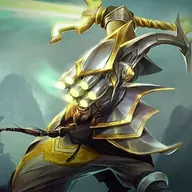
A good rotation starts before the ping, not after the fight.
How to read tempo before an objective
Before an objective, tempo can be read through three simple questions: who can arrive first, who must answer a wave, and who has already used their recall or key spell? These answers can matter more than a kill. The team that arrives first can set vision, occupy the river, and force the enemy to walk into a dangerous zone.
If your team reaches drake with no vision, no pushed lanes, and one player still in base, the objective is not contestable. It is an invitation to lose a fight. But if your mid wave is pushed, your duo lane can move, and your jungler is already in river, you can start controlling the area.
You also need to understand that tempo is not always aggressive. Sometimes the correct tempo is to give up an impossible objective and take a turret, steal camps, or prepare the next side of the map. Forcing a doomed fight “because it is drake” is a common mistake. An important objective does not automatically make a fight playable.
Concrete example: the drake was lost before it spawned
Imagine a game where the first drake spawns in thirty seconds. Your duo lane has just killed an enemy, but instead of pushing the wave and recalling quickly, they stay to collect a few extra minions. Meanwhile, the enemy jungler returns from base, places river vision, and their mid laner arrives first. When your team finally moves, the bot wave is bad, your support has no wards, and your jungler has to enter with no information.
In this situation, the drake is not lost on the smite. It was lost thirty seconds earlier. Your team had a window to create tempo: push, recall, buy, return, place vision. Instead, it stayed too long for a small immediate reward. The result is simple: the enemy controls the zone before you do.
Malphite can have his ultimate, Jinx can have her items, but none of that matters if the team walks through a dark corridor with no position. Good tempo turns an objective into a controlled choice; bad tempo turns it into a trap.
To improve your tempo, remember three simple rules. First, prepare objectives before they spawn, not when they are already active. Second, recall when the map allows it, not only when your HP is low. Third, never confuse a useful rotation with a panic move toward a lost fight. If you want to improve quickly, watch your movement delays more than your KDA. Tempo is often the difference between reacting to the game and controlling it. “If you understand this, your level will already improve.”
Frequently asked questions
What does tempo mean in Wild Rift?
Tempo is the real rhythm of the game: who can move, recall, set vision, or prepare an objective before the other team. Having tempo means being ready before the key action happens.
How do I know if I have tempo?
You have tempo if your wave is pushed, your recall is done, your position is better, and your team can arrive first to the next play. If you are always chasing fights, you probably do not have it.
Why is tempo important before drake?
Because drake is often won before the fight. The team that arrives first can set vision, control entrances, and force the enemy to walk into a bad area.
Is tempo useful for beginners?
Yes. Even without advanced mechanics, understanding when to recall, push a wave, or move toward an objective can quickly improve your impact. It is one of the most valuable fundamentals to learn.