
The Fog of War: The Secret Weapon of Assassins and Junglers
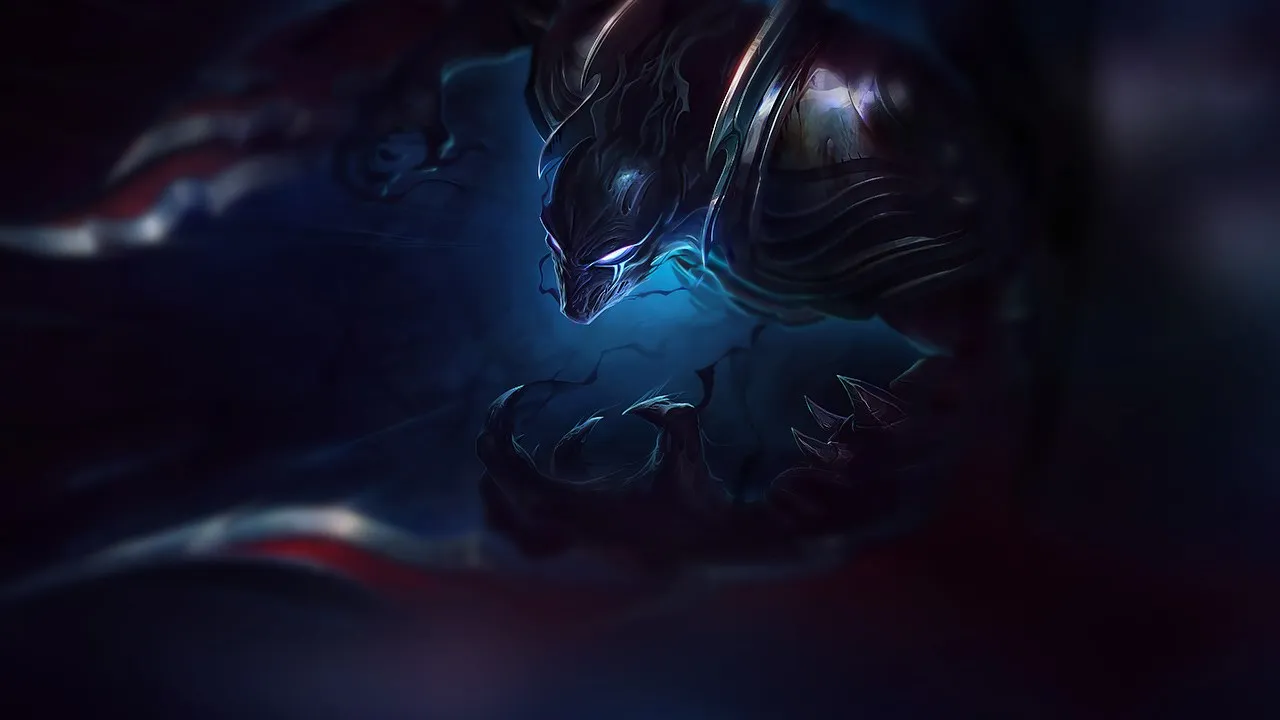
The fog of war, often perceived as a mere absence of vision, is in reality a formidable tactical weapon for Wild Rift assassins and junglers. Rather than avoiding it, champions like Evelynn and Kha'Zix exploit it to conceal their movements and optimize their attacks. Approximately 50.95% of Nocturne players in Master+ turn it into an advantage, according to Nexus Core data from patch 20260808.

The systematic avoidance of the fog of war, driven by understandable caution, deprives players of a crucial tactical dimension and makes their actions predictable. This defensive approach limits the reach of ganks and engagements, turning zones of opportunity into mere obstacles. A jungler who hugs visible walls loses the advantage of surprise.
Many players, even at high tiers, adopt a maximum safety mindset, forgetting that the invisible threat is often more potent than the visible one. By hugging jungle walls or avoiding unlit areas, they unconsciously signal their presence and intentions. This allows opponents to reposition or anticipate attacks, drastically reducing the effectiveness of champions like Zed or Akali. The concrete cost of this mistake is measured in missed ganks, lost objectives, and non-existent map pressure. A Talon who fails to surprise from an unexpected angle loses a large part of his assassination potential. This excessive caution transforms a potential advantage into a handicap, reducing overall game impact and long-term winrate.


Defining the Archetype: What Fog Allows and Forbids
The archetype of champions exploiting the fog of war is defined by their ability to initiate fights or reposition unseen, using the absence of enemy information as an asset. These champions, primarily assassins and junglers, excel in the art of surprise and isolation, but are vulnerable in prolonged frontal combat.
These champions are typically high-burst, often melee assassins, who rely on the element of surprise to neutralize priority targets. They can initiate fights from unwardable angles, like Nocturne with his ultimate, or sneak behind enemy lines like Evelynn with her camouflage. Their strength lies in the ability to transform a zone of uncertainty into an immediate danger zone for the opponent. However, their reliance on surprise engagement means they cannot afford to be spotted before acting. They are not designed for prolonged duels without the initial advantage of an ambush, nor for attrition fights. Their role is to enter, eliminate, and exit, using the fog to mask these three phases.
The fog of war is not passive cover, but an active medium that amplifies an assassin's threats, transforming every unlit area into a constant point of psychological pressure for the enemy team.
- Identify shaded areas as potential attack corridors.
- Use fog to flank isolated targets, never to engage head-on.
- Avoid prolonged fights without the initial advantage of surprise.
- Constantly reposition yourself in unseen areas after an engagement.
The Core Decision: When to Consciously Expose Yourself to Fog
The central decision for these archetypes is to arbitrate between the safety of allied vision and the offensive opportunity offered by the fog of war. It's about choosing the precise moment when temporary exposure to the unknown transforms into a decisive advantage, rather than an unnecessary risk.
Every game presents moments when a player must consciously immerse themselves in the fog, not out of recklessness, but out of strategic calculation. For a Zed, this might mean traversing an unwarded mid-lane area for a gank on the enemy ADC, knowing that the risk of being intercepted is offset by the probability of an easy kill. For an Evelynn, it's the art of patrolling deep into the enemy jungle, invisible, to punish an overly aggressive enemy jungler or steal an objective. Nocturne, with his ultimate, embodies this decision: he plunges into darkness to nullify vision and pounce on his target. The player must evaluate enemy positioning, spell cooldowns, and allied presence to determine if the moment is right for this calculated exposure.
True mastery of the fog of war lies in the ability to anticipate not only where the enemy is, but also where they *believe* you are not, turning that false sense of security into an opportunity.
- Evaluate the risk and reward before each incursion into an unwarded area.
- Use camp respawn timings to surprise the enemy in the jungle.
- Coordinate your movement in the fog with visible pressure from your allies.
- Prioritize unexpected gank angles to maximize the element of surprise.
The Systemic Error: The Reflex to Avoid Fog
The most widespread error is the unconditional reflex to avoid any unlit area, even when it compromises the archetype's effectiveness. This excessive caution, though instinctive, nullifies the intrinsic advantage of champions like Rengar or Kha'Zix, who depend on fog for their initiation and survival.
Approximately 80% of players, even at respectable skill levels, tend to prioritize the safety of allied vision, even if it means predictable gank paths or inefficient rotations. This approach is reflected in the data: champions like Akali show a global winrate of 44.62% and 43.44% in Master+ (patch 20260808, Nexus Core data), a negative difference of -1.18 points which suggests difficulty in fully exploiting her potential for camouflage and aggressive repositioning. Similarly, Talon sees his winrate drop from 52.11% globally to 50.1% in Master+, a decrease of -2.01 points, indicating that players struggle to adapt his surprise-based playstyle against more vigilant opponents. The error does not lie in caution itself, but in its blind application, which transforms a potential weapon into a mere obstacle. Players fail to integrate fog as an offensive tool, considering it only as a threat. This leads to forced engagements, compromised positions, and ultimately, chronic underperformance of these champions. They are played like classic fighters, ignoring their fundamental mechanics of concealment and surprise.
The paradox of fog is that its non-offensive use cripples champions who depend on it, transforming their main asset into a mere vision constraint, which is directly visible in winrate discrepancies at higher tiers.
- Question your usual paths and explore new gank angles.
- Use unlit areas to break enemy line of sight and reposition.
- Avoid showing your presence before engaging to preserve the element of surprise.
- Learn to 'play with' the opponent's vision, not just your own.
Optimizing Play: Phases, Positioning, and Attack Angles
Optimizing play with these archetypes involves aggressive but calculated positioning within the fog, adapted to each phase of the game, to maximize attack angles and minimize risks. It's about thinking in terms of invisible trajectories and unpredictable points of impact.
In the early game, junglers like Kha'Zix or Rengar should prioritize ganks from angles that wards cannot cover, often by crossing the river through the middle or using deep bushes. The key positioning is one that places you behind the opponent or on their flank, never directly in front. In the mid-game, the focus shifts to controlling neutral objectives and hunting isolated targets. A Nocturne or a Zed must use the fog to hide near Dragon or Herald, waiting for the opportune moment to pounce on an enemy carry who ventures too far. In the late game, positioning becomes even more critical: you must seek to flank enemy teams during team fights, using unlit areas to bypass the front line and target priority threats. The goal is always to create an invisible threat that forces the opponent to react defensively, opening opportunities for your team.
Optimal positioning in the fog is not static; it is a constant dance between concealment and aggression, aiming to maximize the attack angle while minimizing the opponent's reaction window.
- Adapt your gank paths based on known enemy ward positions.
- Use walls and natural obstacles to break vision and surprise.
- Position yourself in ambush near major objectives before they are contested.
- Seek to flank team fights, remaining invisible until impact.
Tactical Scenario: The Perfect Gank from the Fog
Imagine a game at the 7-minute mark. Your team is slightly struggling in the mid-lane, your Zed is level 7, and the enemy, a mage, is level 6, aggressively pushing the minion wave under your tower. The enemy jungler was spotted in the Baron lane 30 seconds ago. This is the perfect opportunity. Rather than showing yourself directly from your tower, you decide to use the fog.
You exit your base, hug the blue-side jungle wall, then cross the small unwarded area between the two mid-lane bushes. The enemy, focused on minions, sees nothing. You position yourself in the bush closest to them, waiting for the moment they step forward to last hit a cannon minion. As soon as they are in range, you engage with your shadow and shurikens, completely surprising them. The mage has no time to react, their flash is useless, and the kill is secured, relieving pressure on your mid-laner and opening up the map for an objective.
This isn't a direct gank; it's a calculated execution where the fog of war was the silent accomplice to your victory. Precise timing, knowledge of enemy positioning, and exploitation of invisibility transformed a disadvantageous situation into a decisive advantage.
The fog of war is not an obstacle, but a canvas upon which you paint your boldest strategies. As Oracle, I urge you to rethink your interaction with the unknown, to transform the fear of the invisible into an opportunity for domination.
Adopt these principles to transform your game:
- Adopt an offensive mindset towards unseen areas, considering them as tools.
- Learn unpredictable gank paths for each champion in your pool.
- Anticipate enemy movements based on their lack of vision.
- Practice visual disinformation by quickly entering and exiting the fog.
- Prioritize the element of surprise over absolute safety during your engagements.
Oracle reminds you: The true master of the battlefield does not merely see; they use the absence of vision to forge their victory.
Frequently asked questions
How do assassins like Zed use the fog of war to gank effectively?
Zed exploits the fog of war by taking unexpected paths to bypass enemy vision. He positions himself in unlit areas to cast his shadows and shurikens from unpredictable angles, thereby maximizing the element of surprise and the likelihood of eliminating his target before they can react. This allows him to dictate the pace of the mid-lane.
Which jungler champions are most effective at exploiting the fog of war?
Junglers like Evelynn, Kha'Zix, and Rengar are exceptional at exploiting the fog of war. Evelynn uses her camouflage to patrol invisibly, while Kha'Zix and Rengar excel at pouncing on isolated targets from bushes or unseen areas, transforming the absence of vision into an opportunity for instant burst and snowballing.
Can the fog of war be used defensively by these archetypes?
Absolutely. The fog of war is also a crucial defensive tool. An assassin like Akali can use it to break line of sight after an engagement, reposition, or escape a pursuit. She can hide in unwarded bushes to wait for her cooldowns or surprise an overzealous pursuer, transforming a retreat into a counter-attack.
How do winrate data reflect the importance of exploiting the fog of war?
Data shows that champions who rely on fog, like Akali with a 43.44% Master+ winrate (patch 20260808, Nexus Core data), often have a lower winrate if players do not fully exploit this mechanic. A negative discrepancy between global and Master+ winrate (e.g., Talon at -2.01 points) can indicate difficulty in mastering the art of surprise against more experienced opponents.
What is the difference between avoiding fog and using it tactically?
Avoiding fog is a passive reaction that minimizes risk but sacrifices opportunity. Using it tactically is a proactive action where one deliberately enters the fog to gain an advantage, such as an unexpected gank angle or discreet repositioning. It's about transforming the unknown into a weapon, rather than a threat to flee from.