
Mastering the Mental Cooldown Counter: The Invisible Edge of Engage Supports
The mental cooldown counter is the fundamental skill that distinguishes a passive support from a dominant one, a true invisible weapon on the Rift. It's not about guessing the right moment to act, but precisely calculating when the enemy can no longer retaliate effectively. This strategic anticipation radically transforms a defensive situation into a clear aggressive opportunity, allowing you to dictate the pace of the laning phase and exert constant pressure. Nexus Core data shows that players who integrate this practice have a significant impact on game outcomes, particularly with high-engage potential champions, by capitalizing on enemy positioning errors.
Players often fail to capitalize on windows of opportunity because they don't perceive the direct cost of an enemy's abilities being on cooldown. They passively wait for the opponent to initiate, or engage randomly without guaranteed success, turning favorable trades into risky situations.
The inability to track enemy cooldowns leads to a reactive rather than proactive laning phase. A Blitzcrank who misses his Hook leaves his team in a window of vulnerability for over 15 seconds, during which the enemy team can advance without fear of being caught. Similarly, a Leona who unsuccessfully uses her Zenith Blade grants her opponents a period of respite. This ignorance results in missed opportunities to secure objectives, punish poor positioning, or simply generate a gold advantage. The concrete cost is a loss of lane control, resources, and ultimately, a disadvantage that accumulates and can decide the outcome of the game.

Engage Supports: Strengths and Limitations
The engage support archetype excels at initiating fights and locking down key targets, creating an immediate numerical advantage or prioritized focus. Champions like Leona or Alistar are designed to force action and control the game's tempo through their ability to lock down targets with powerful crowd control.
However, their strength is also their greatest vulnerability: once their engage spells are used, they become relatively easy targets. A Nautilus, for example, after casting his Dredge Line, loses much of his threat and ability to protect his carry, making him vulnerable during his spell's cooldown. They cannot constantly poke from a distance like other supports, as their range is often limited to that of their initiation ability. Their role is to identify and exploit windows of opportunity, not to maintain constant pressure.
Understanding the cyclical nature of their threat, which directly depends on the availability of their engage abilities, is essential to maximize their impact and minimize their vulnerability.
- Identify enemy champions whose engage abilities are on cooldown before initiating.
- Actively disengage when your own engage abilities are on cooldown.
- Observe your carry's position before engaging, to ensure follow-up damage.
- Use brush to conceal your engage attempts and surprise the opponent.
The Constant Trade-off: When to Engage, When to Be Patient
The central decision for an engage support is the constant trade-off between aggression and patience, dictated by the availability of key spells, both allied and enemy. It's not about engaging at the first opportunity, but at the best one, the one that guarantees a clear advantage.
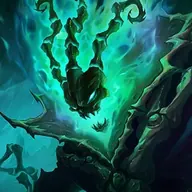
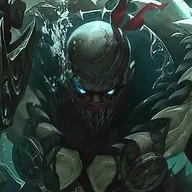
This dilemma is particularly acute for champions like Thresh or Pyke. A Thresh who unsuccessfully casts his Death Sentence deprives himself of a vital engage and disengage tool, leaving his ADC exposed. Pyke, with his Bone Skewer, must judge whether the impact of his hook justifies the risk of finding himself in the thick of the fight without immediate escape ability. Nexus Core data analysis reveals that Pyke players with a Master+ winrate of 50.46% (patch 20260808) are those who choose their engagements with the greatest precision, avoiding low-probability attempts.
The success of an engagement is not measured solely by its execution, but by the certainty of its favorable outcome, which requires a precise reading of both teams' momentary strengths and weaknesses.
- Calculate the cooldown of enemy engage spells before initiating a trade.
- Clearly communicate your intention to engage or disengage with your carry.
- Assess whether your team can follow up on your engage and deal enough damage.
- Identify priority enemy targets that are isolated or poorly positioned.
The Systemic Error: Premature Over-engagement
The most common mistake among engage supports is premature over-engagement, often driven by impatience or poor risk assessment. This manifests as engage attempts without vision, without allied support, or on non-priority targets.
Nexus Core data confirms this trend: Blitzcrank has a global winrate of 50.81% but drops to 49.27% in Master+ (patch 20260808). This -1.54 point discrepancy suggests that high-level players mercilessly punish Blitzcrank's engage errors, which are less forgiving than at lower tiers. A missed Hook or an isolated engagement quickly turns a potential advantage into a numerical disadvantage, offering opponents a window of opportunity to counter-attack or secure objectives. This error is all the more costly as engage supports are often fragile once their abilities are used.
Patience is a strategic virtue for engage supports, because every failed attempt not only wastes a spell, it creates an exploitable vulnerability for the opponent.
- Avoid engaging if your carry is not in a position to follow up or is farming.
- Do not use your primary engage spells for poke if it leaves you vulnerable.
- Wait for enemy disengage spells to be used before initiating a fight.
- Do not engage in unwarded areas where you could be flanked.
Optimizing Impact: Timing, Positioning, and Priorities
Optimizing an engage support's impact relies on precise timing, strategic positioning that maximizes the element of surprise, and clear identification of target priorities. It's not enough to have an engage spell; you must know when and on whom to use it.
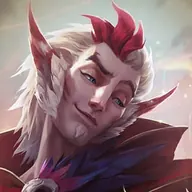
In the early game, a Rakan should look for short windows to harass with his Grand Entrance and Battle Dance, without overextending unnecessarily. In the mid-game, his role evolves towards more decisive engagements around major objectives. Positioning is crucial: hiding in brush, as a Thresh would, reduces enemy reaction time and increases the probability of a successful engage. Prioritizing fragile targets or those who have already spent their defensive spells is key. An Alistar, for example, can aggressively position to force an enemy carry's Flash, even without securing a kill, thereby creating an advantage for subsequent engagements. Engage supports who master these aspects have a disproportionate impact on victories.
Success does not lie in merely activating an ability, but in creating a situation where that activation guarantees an irreversible advantage for your team.
- Adapt your playstyle and targets based on the game phase (early, mid, late).
- Use terrain and map elements to conceal your approach and surprise.
- Focus on targets that pose the greatest threat or are the most fragile.
- Initiate engagements when your allies are ready to follow and enemies are scattered.
Scenario: Punishing a Blitzcrank's Positioning Error
Imagine a laning phase situation, around 3:30 minutes in, with your champions at level 5. The enemy team, consisting of a Blitzcrank and an ADC, attempts to push the minion wave under your turret. The overzealous enemy Blitzcrank uses his Hook to try and catch your ADC, but misses his target and becomes exposed.
At this precise moment, his Hook goes on cooldown for approximately 15 seconds. This is your window of opportunity. As Leona, you can immediately advance with your Zenith Blade, immobilizing the Blitzcrank. Your ADC can then deal damage without fear of being caught in return. Blitzcrank no longer has his primary threat, and you have a temporary numerical advantage for the trade. Punishing this cooldown error transforms a potentially dangerous situation into a gain of gold and pressure, or even a kill.
Mastering the mental cooldown counter is a skill acquired through observation and deliberate practice. It transforms the perception of the game, shifting from a series of events to a sequence of calculated opportunities. Applying these principles will give you a constant strategic advantage.
- Observe: Mentally note or time the cooldowns of key enemy spells.
- Anticipate: Prepare your engage or disengage based on the availability of enemy spells.
- Communicate: Inform your team about windows of opportunity or moments of vulnerability.
- Capitalize: Exploit every enemy cooldown error to gain an advantage.
"The silence of enemy spells is the music of the perfect engagement."
Frequently asked questions
How can I effectively track enemy cooldowns without external tools?
The most effective method is visual observation. After an enemy champion uses a key ability like Blitzcrank's Hook or Leona's Zenith Blade, mentally note the time. Estimate its cooldown duration based on the game phase and the absence of cooldown reduction items. Regular practice will refine this estimation skill.
What is the impact of poor cooldown tracking on winrate?
Poor cooldown tracking leads to risky engagements or missed opportunities. For example, a Blitzcrank who misses his Hook sees his winrate drop from 50.81% globally to 49.27% in Master+ (patch 20260808), because high-level players punish these errors, turning his recovery time into a window of aggression for them.
Are engage supports still effective in the late game?
Yes, but their role evolves. In the late game, engagement is often more decisive around major objectives like Baron or Dragon. An Alistar or a Nautilus can still initiate crucial fights, but must be more patient and wait for the perfect target, as errors are even more costly.
How can an engage support adapt if their ADC doesn't follow up on engagements?
If your ADC doesn't follow up, adapt your style. Focus on protection and peeling, or look for engage opportunities with other members of your team, such as your jungler or midlaner. A Rakan can pivot to engage with his jungler, thus minimizing the risk of dying alone in lane.
What is the difference between a good and an excellent engage support?
A good engage support knows when to initiate. An excellent engage support knows not only when to initiate, but also when not to, when to disengage, and when the enemy cannot retaliate. They master the art of patience and exploiting windows of opportunity, transforming every enemy cooldown into an advantage.