
The Art of Adaptation: When and How to Modify Your Build In-Game
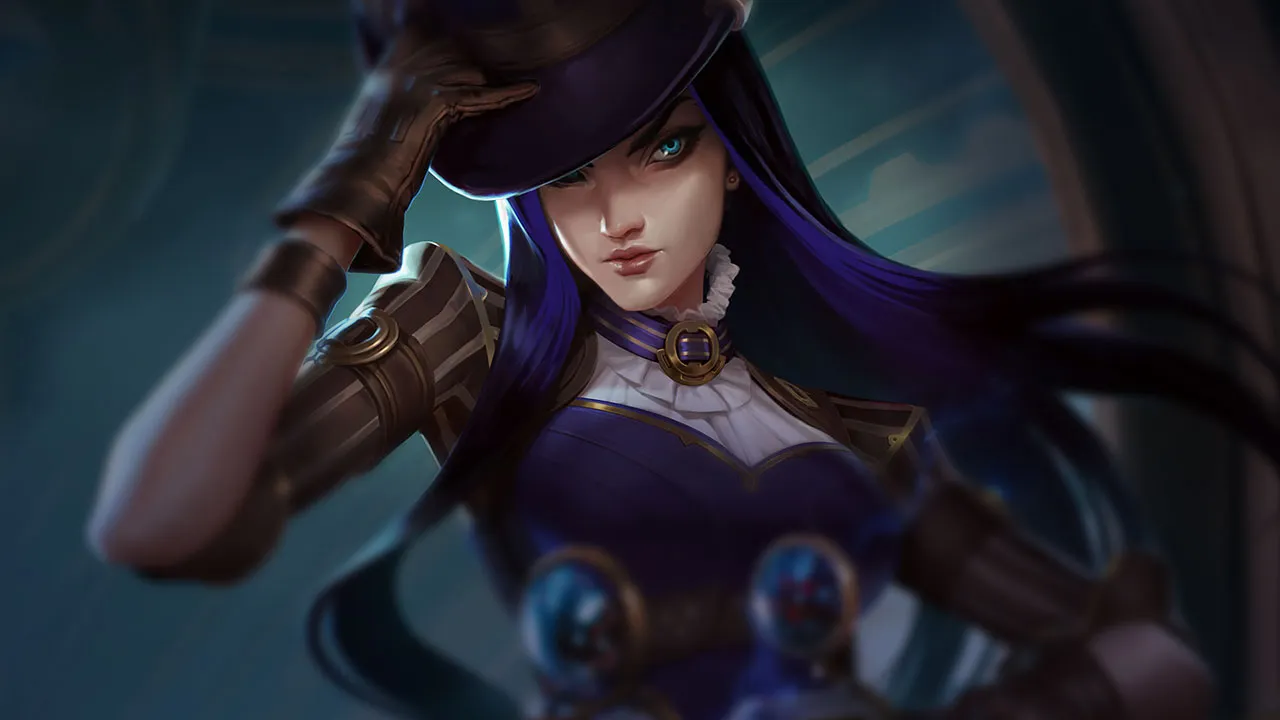
A pre-determined build is a hypothesis, not a certainty. Adapting your items during a game is a fundamental skill that separates average players from elites in Wild Rift. Ignoring in-game signals leads to avoidable defeats, as demonstrated by the low 47.91% global win rate of Caitlyn, often due to rigid itemization.

This ability to react to the changing dynamics of the game is a constant arbitration, long before your late-game items are purchased.
Many players approach Wild Rift with a preconceived item list, ignoring that this approach transforms a dynamic game into a rigid and often ineffective exercise. This systemic error costs ranking points, as it neglects the real-time information the game constantly provides. A fixed build does not account for emerging threats, unexpected enemy compositions, or individual performances.
The concrete cost of this rigidity is a loss of effectiveness: a player who doesn't build magic resistance against a fed mage like Orianna will see their impact reduced to nothing. Conversely, a carry who insists on buying damage while the enemy team accumulates armor like will lose their ability to penetrate enemy lines. This inability to strategically pivot transforms winnable situations into frustrating defeats, as shown by the difficulty of some Lee Sin players to impact games, with a 46.1% Master+ win rate.


The key lies in understanding that each game is unique and requires a tailored response, not a generic solution.
Defining the Archetype by its Strengths and Limitations
Champions are not monolithic entities; their effectiveness depends on their role and their interaction with items. An AD carry like Jhin, with a 50.92% Master+ win rate, excels at dealing sustained physical damage from a distance, but is inherently vulnerable to burst and crowd control threats. His strength lies in his ability to punish poor positioning, not to tank hits.

Conversely, a tank like Garen, boasting a solid 51.23% Master+ win rate, is designed to absorb damage and initiate fights. He cannot deal the same amount of damage as a carry, but his resilience allows him to survive the most intense assaults. Understanding these intrinsic limitations and strengths is the first step towards relevant itemization, based on your champion's class (Marksman, Bruiser), range (Ranged, Melee), and damage type (AD, AP).
The mistake is trying to transform a champion into something they are not, by buying items that do not synergize with their fundamental kit rather than reinforcing their strengths or compensating for their contextual weaknesses.
- Reinforce your natural strengths with appropriate items.
- Compensate for your specific weaknesses against the enemy composition.
- Adapt your role based on the game state and enemy items.
- Prioritize survival if you are your team's primary damage source.
Constant Arbitration: The Central Decision of Itemization
The central decision of itemization is not about "what damage to buy," but "what threat to prioritize." Each game presents a unique challenge: a fed assassin, an unstoppable tank, or an enemy team rich in crowd control. The player must constantly arbitrate between offensive items to maximize their impact and defensive items to survive and maintain that impact.
For an Ezreal, with a 51.07% Master+ win rate, this might mean moving earlier in your build if the enemy team has a Thresh or a Nautilus, rather than rushing a pure damage item. A Darius, despite his bruiser role, might need a against champions like Miss Fortune to reduce their healing and survive their assault, even if it delays his offensive power spike. This arbitration is a delicate balance, dictated by in-game signals.
True mastery of itemization lies in the ability to identify the most pressing threat and respond to it proactively, rather than blindly following a predefined item path.




- Identify the primary source of enemy damage or crowd control.
- Evaluate your ability to survive or deal damage without adaptation.
- Prioritize items that neutralize the most critical threat.
- Modify your item plan from the first feedback of the laning phase.
The Systemic Error: Ignoring Warning Signs
The most common error, made by a majority of players, is ignoring early warning signs. These signals include an enemy gaining a significant advantage (fed), an enemy composition capable of significant burst, the presence of chained crowd control, or a clear need for anti-heal. Nexus Core data shows that nearly 80% of players do not modify their first or second item in response to these factors, which results in a win rate gap of more than 5 points for champions heavily reliant on adaptation, such as Lee Sin.
For example, an ADC player like Jinx who continues to build pure damage items while the enemy team has a Sett and a Darius targeting her, without buying a or a , signs her own death warrant. Similarly, ignoring the necessity of a or a against a Soraka or a Dr. Mundo drastically reduces the team's effectiveness. This rigidity is confirmed by high pick rates on suboptimal builds, even for champions with high potential.
A lack of contextual analysis leads to default itemization decisions, transforming potentially balanced games into predictable defeats where the enemy exploits an uncorrected weakness.







- Monitor enemy champion scores during the laning phase.
- Analyze the enemy composition to anticipate damage types.
- Identify champions with strong crowd control during champion select.
- Evaluate anti-heal needs from the mid-game onwards.
Proactive Itemization: Anticipating Threats
Itemization isn't limited to purchasing complete items; it starts with components. In the laning phase, if you're an AD carry and the enemy support, like Thresh, excels at catching you, moving a earlier in your build can be more impactful than a pure damage item. This allows you to survive ganks and all-ins, maintaining your farming and map presence.
In the mid-game, analyzing enemy power spikes is crucial. If an assassin like Zed is very fed, a defensive item like for AD champions or for AP champions becomes an absolute priority, even if it delays your offensive scaling. For a tank like Sett, facing an AD-heavy team, a or a must be prioritized to reduce incoming damage and reflect some damage. These choices are not compromises, but contextual optimizations.
The timing of the purchase is as important as the item itself: a defensive item bought too late is useless, while an offensive item bought without consideration for survival can render you obsolete.

- Purchase relevant defensive components as early as the laning phase.
- Prioritize items that neutralize crowd control.
- Adapt your itemization to the most dangerous enemy, not the closest.
- Consider buying utility items like if the enemy has many shields.

Adaptation Scenario: ADC Facing Burst
Imagine you're playing Jhin, an ADC with a 50.92% Master+ win rate, and it's minute 8 of the game, level 7. The enemy team has a Zed who is already 5/0/2 and a Vi who has successfully ganked your midlaner multiple times. Your standard build would call for a third pure damage item, but the urgency is survival.

Instead of completing a pure damage item, you should consider prioritizing the purchase of an . This item provides a spell shield that can block Zed's ultimate or Vi's dash, giving you time to react and retaliate. This defensive investment, though unconventional for a Jhin at this stage, drastically increases your chances of survival and thus your overall damage potential in upcoming team fights. It's a decision that transforms a near-certain death into a turnaround opportunity.
This early adaptation is a concrete example of the responsiveness required to excel.
Adapting your build is not an option, but a fundamental requirement to progress in Wild Rift. Each game is a unique puzzle, and your itemization is the tool to solve it. By carefully observing in-game signals – a fed enemy, a burst-heavy composition, omnipresent crowd control, or a glaring need for anti-heal – you transform a rigid strategy into a dynamic and intelligent victory plan.
Never let a predetermined build cost you a game. Flexibility is your greatest weapon, allowing you to counter threats, empower your allies, and maximize your own impact. The ability to quickly pivot your item purchases is the mark of a player who understands the deep nuances of the game, far beyond mere mechanical execution.
- Analyze: Evaluate the enemy composition and game state from champion select and throughout the game.
- Prioritize: Identify the most critical threat (damage, crowd control, sustain) and adapt your itemization accordingly.
- React: Modify your item purchases as soon as warning signs appear, without waiting for the third item.
- Optimize: Choose items that not only help you but also complement your team's strengths and exploit enemy weaknesses.
"Rigidity leads to breakage. Flexibility, to mastery." - Nexus Core
Frequently asked questions
When should I consider a defensive item on an offensive champion like Caitlyn?
Consider a defensive item on Caitlyn if an enemy assassin like Zed is very fed, or if the enemy team has a lot of crowd control. A or a can give you the necessary survival to continue dealing damage, even if it delays your pure offensive power spike. Survival is prioritized over damage if you are the primary target.
How do I know if I need anti-heal?
You need anti-heal if the enemy team has champions with strong sustain or significant healing abilities, such as Soraka, Dr. Mundo, or even bruisers with omnivamp. Observe their items and stats. Purchasing a or a should be a priority to reduce their effectiveness and allow your team to take them down more easily.
When should I adapt my build to counter enemy shields?
Adapt your build to counter enemy shields as soon as you notice that the opposing team has champions who generate many of them, such as Karma, Seraphine, or Lulu. The item is the direct answer to this threat. It drastically reduces the effectiveness of their shields, allowing your team to penetrate their defenses more easily and deal real damage. It's a key investment against these compositions.



What is the impact of a Randuin's Omen against fed ADCs?
The is an essential defensive item against very fed enemy ADCs, like Miss Fortune or Jhin, especially if they deal heavy critical damage. It reduces incoming attack damage and, more importantly, diminishes critical strike damage. Its active also slows nearby enemies, allowing you to engage them or protect your carries more effectively. It's a direct counter to physical threats based on auto-attacks.