
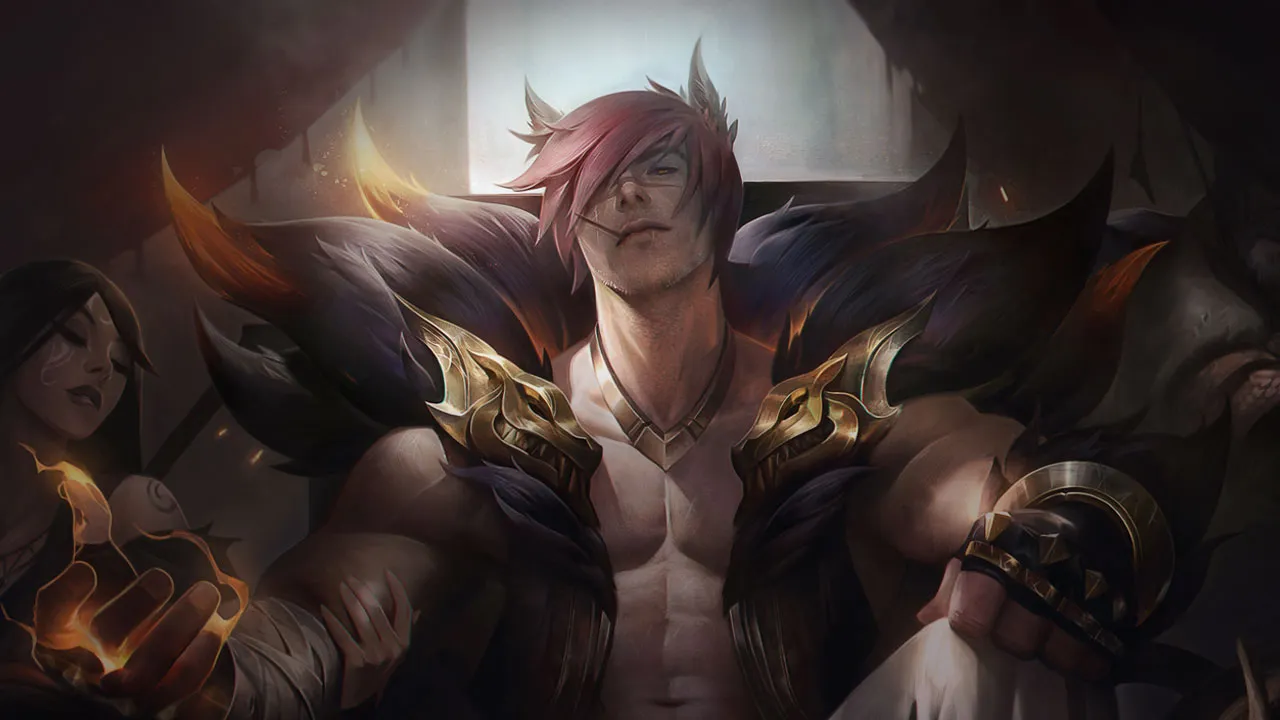
Prioritizing Resistance: Who Kills You in 3 Seconds?
Purchasing resistance is a complex decision that goes beyond simply balancing between physical and magic damage. It's about identifying the source of damage that will eliminate you the fastest, not necessarily the most prevalent one. Ignoring this nuance reduces your effectiveness and team survival, a factor that explains why champions like Sett show a winrate of 50% in Master+, patch 20260808 (Nexus Core data), despite a strong presence.

Many players make the mistake of building their resistance reactively, based on the overall damage type of the opposing team. This approach is fundamentally flawed because it doesn't account for the real impact of individual threats. For instance, a player might buy against a magic-heavy team, while an enemy Volibear is fed and kills them in two hits.


The concrete cost of this error is a significant loss of survivability and influence in combat. You become an easy target for the primary threat, unable to fulfill your role as a tank or bruiser. This leads to teamfight losses, lost objectives, and an inability to protect your carries. The difference between a Dr. Mundo with a 50.01% global winrate and 51.61% in Master+, patch 20260808 (Nexus Core data) often lies in this ability to adapt to the real threat.

A tank who cannot absorb damage from the enemy carry is dead weight. This poor prioritization transforms a potential engager into a mere health bag, offering free resources to the enemy and unnecessarily prolonging the game.
The "Adaptive Wall" Archetype: Capabilities and Limitations
The "adaptive wall" archetype is defined by its ability to pivot its resistance build based on the most pressing threat, rather than a fixed stat. These champions can absorb massive damage, but their effectiveness depends on their ability to target the appropriate resistance. They cannot be invulnerable to everything simultaneously.
Champions like Malphite or Rammus perfectly illustrate this archetype. Malphite, with a winrate of 52.2% in Master+, patch 20260808 (Nexus Core data), can become an unbreachable fortress against physical damage with and , but will be vulnerable to an uncontrolled magic threat. Rammus, despite his anti-AD kit, sometimes needs to invest in a if an enemy Galio is the primary source of lethal damage.





The true power of this archetype lies in anticipating the lethal damage source, allowing you to focus resistance investment where it will directly impact your survival and your ability to control the fight.
- Identify: The damage source that kills you the fastest, not the one that pokes the most.
- Adapt: Your resistance itemization based on this immediate threat.
- Protect: Your carries by absorbing critical damage from the primary enemy.
- Influence: The course of the fight by rendering the enemy threat ineffective against you.
The Survival Trade-off: Choosing Your Defensive Target
The central decision for a tank is to choose which damage source they will actively counter to maximize their impact. It's not about being resistant to everything, but about being invulnerable to what matters. This trade-off is constant and dynamic throughout the game.
Take the example of Garen or Sion. If the enemy team has a very fed Sett, with a winrate of 50% in Master+, patch 20260808 (Nexus Core data), and a less threatening AP mage, Garen must prioritize items like and . Conversely, if an enemy Galio is the primary source of burst damage, an Alistar will need to opt for a or an , even if the rest of the team is AD. The lethal threat dictates itemization.




Your ability to identify and counter the most immediate lethal threat is the determining factor of your effectiveness as a tank, transforming a passive gold expenditure into an active strategic investment.
- Evaluate: The relative power of each enemy threat in real time.
- Prioritize: The purchase of defensive items against the most dangerous enemy champion.
- Ignore: Non-lethal damage to focus on surviving burst.
- Anticipate: Power spikes of enemy champions to adapt your build.
The Systemic Error: The "Default Build"
The most widespread error, affecting over 80% of players according to Nexus Core data, is adherence to a "default build" or rigid itemization. Players tend to follow a pre-established guide or react only to the majority damage type early in the game, without re-evaluating the situation. This rigidity is confirmed by the small winrate difference for champions like Galio (+0.41 pts in Master+) who, despite his obvious role against AP, is often poorly optimized against an unexpected AD threat.
This approach leads to situations where a Warwick, with a winrate of 54.06% in Master+, patch 20260808 (Nexus Core data), could be a monstrous AD carry. However, if opposing tanks don't correctly prioritize their armor against him, they become useless. The "default build" prevents adaptation, transforming a defensive investment into an inefficient expenditure. Data shows that players who deviate from this pattern to adapt to the specific threat achieve better results.

Persistence in a pre-established itemization scheme, without considering the dynamic evolution of enemy threats, is the primary cause of underperformance for defensive archetypes.
- Question: Your defensive build every time you return to base.
- Analyze: The scoreboard to identify the most fed enemy carry.
- Avoid: "Generic" items if a specific threat dominates the game.
- Prioritize: Itemization flexibility over completing a fixed build.
Itemization and Positioning: Countering the Specific Threat
Itemization and positioning must be direct responses to the most lethal threat. In the early game, a can be a good start for champions like Dr. Mundo or Sion for waveclear and area damage. But as soon as the main threat emerges, itemization must pivot. If an enemy AD carry like Sett starts to dominate, a becomes a priority, reducing his burst and critical strikes.

In the mid-game, an Alistar facing a fed Galio will need to consider a to increase his regeneration and magic resistance, while against an overpowered Warwick, a will be more effective at reflecting damage and reducing his lifesteal. Positioning is also key: a tank must place themselves between the lethal threat and their own carries, absorbing critical damage. For example, a Garen with 51.23% Master+ winrate, patch 20260808 (Nexus Core data), must position himself to intercept the enemy AD carry's damage, even if it means ignoring a less dangerous mage.
Each game phase demands a constant re-evaluation of threats and a proactive adaptation of your itemization and positioning to maximize your ability to counter the most dangerous damage source.
- Adapt: Your first defensive item to the most probable lane threat.
- Prioritize: Specific defensive items as soon as an enemy carry gains an advantage.
- Intercept: The enemy carry's lines of fire with your positioning.
- Utilize: Item actives like to reduce targeted burst.
Practical Scenario: The Duel Against the Fed Carry
Imagine a game at the 15-minute mark. You are playing Sion, level 11, and the enemy team has a level 12 Sett, already with two kills and a . Your team has an AP mage who is being poked by an enemy Galio, but the Sett is the real threat, capable of one-shotting your AD carry. You've just backed with 3000 gold.
The correct decision here is not to buy a to help your mage against the Galio, but to complete a and perhaps a . Your priority is to absorb Sett's damage to protect your team and allow them to retaliate. By positioning yourself between Sett and your carry, you force Sett to attack you, reducing his effectiveness with Randuin's critical damage reduction. This transforms a potentially lost fight into an opportunity to turn the situation around.
This scenario illustrates that even if the enemy team has varied damage sources, the most pressing threat demands an immediate and targeted response to ensure your team's survival and secure objectives.
Mastering resistance purchases is an art that transforms a simple tank into a strategic pivot. Your ability to analyze the most lethal threat and react to it intelligently is what distinguishes an average player from an elite player.
Adopt a proactive, not reactive, mindset towards defensive itemization. Every gold piece spent must have a clear objective: to neutralize the damage source that most directly threatens your survival and that of your team.
- Identify: The most lethal and immediate enemy damage source.
- Adapt: Your defensive itemization specifically to this threat.
- Protect: Your team by absorbing critical damage from this threat.
- Win: Teamfights by rendering the enemy carry ineffective.
"In the chaos of battle, the clarity of your defense is your greatest weapon. Don't just endure damage, master it."
Frequently asked questions
How do I know which enemy threat is the most lethal?
Analyze the scoreboard: identify the enemy champion with the most kills, most gold, and most completed offensive items. Also look at damage dealt at the end of the game. A Sett with a and a winrate of 50% in Master+, patch 20260808 (Nexus Core data), is often a priority threat.
Should I always ignore poke damage to focus on burst?
Yes, generally. Poke reduces your HP but doesn't kill you instantly. Burst, on the other hand, can eliminate a key member of your team before they can act. Always prioritize resistance that will prevent you from being one-shot or burst-down in a teamfight.
When is it relevant to buy hybrid resistances?
Hybrid resistances, like for a tank, are useful when physical and magic threats are balanced and you cannot afford to prioritize one over the other. However, if a Dr. Mundo is fed, a remains more effective than hybrid resistance for countering his sustain and magic damage.

Does defensive itemization change based on my role?
Absolutely. An Alistar support will prioritize items to protect his carries, such as a , while adapting his resistance to the main threat. A top lane Garen, on the other hand, will focus on his own survival to stay on the front line and control the fight.

What are the signs of poor defensive itemization?
If you are constantly dying to the same enemy champion, or if you feel like you can't absorb damage in teamfights, that's a sign. A Rammus with a winrate of 54.11% in Master+, patch 20260808 (Nexus Core data), if properly built, should not be an easy target for an AD carry.