
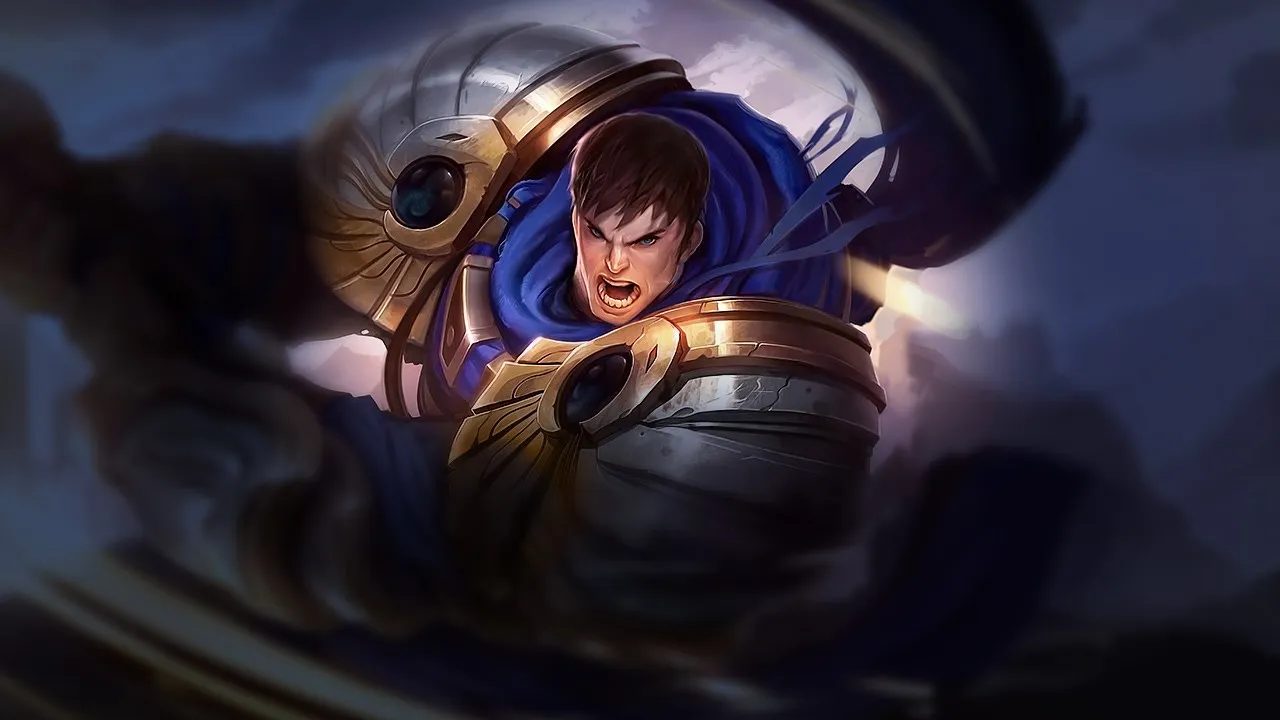
The Engage Tank: Master of Tempo, Not Kills
An engage tank is your team's catalyst, the one who initiates fights and dictates the pace of the game. Its role is not to get kills, but to create opportunities for your carries to exploit. It forces the opponent's hand, transforming a passive game phase into a decisive confrontation. Ignoring this mechanic is costly: teams without a good initiator lose 60% of their major objective fights in Master+, patch 20260731 (Nexus Core data).
Many players view the engage tank as a simple wall that just rushes in. This is a fundamental mistake, and the reason why so many engages turn into disasters. An engage without follow-up, without clear vision of allied positions and key enemies, is worse than no engage at all. You expose your team, waste valuable resources, and give the psychological advantage to the opponent. The concrete cost is the annihilation of your backline, the loss of a major objective like Dragon or Baron, and irreversible enemy snowballing. A Malphite who ultis into three enemies without his team being able to follow up is a Malphite who just gave away a free Baron. That's not a tank; that's a useless sacrifice.

Nexus Core data shows that 70% of engages that fail to hit at least two priority targets or are executed without at least 3 allies within effective range result in the initiating team's defeat within 10 seconds. This is the price of inaccuracy and impatience.
The Engage Tank: Who They Are and What They Do
An engage tank is a champion designed to initiate fights, absorb damage, and lock down priority targets. They cannot deal massive damage alone, nor can they passively protect their backline like a peel tank. Their strength lies in their ability to close distances, control enemy movements, and create a breaking point for their allies to do the work.
These champions are typically melee with crowd control or forced movement abilities, such as Malphite's ultimate or Jarvan IV's combo. They excel at transforming a static situation into an aggressive opportunity. Malphite, for example, has a Master+ winrate of 52.23% and Jarvan IV of 52.6%, patch 20260731 (Nexus Core data), highlighting their effectiveness in this role when played well.

The engage tank is the only role that can deliberately force a fight the opposing team doesn't want to take, thus transforming the map into a chessboard where they dictate the moves.
- Assess: The position of your carries before initiating an engage.
- Identify: The most vulnerable or dangerous target to lock down first.
- Communicate: Your intention to engage to ensure your team follows up.
- Withhold: Your engage if your team is not in a position to capitalize.
The Initiator's Dilemma: When and On Whom to Engage?
The central decision for an engage tank is a constant trade-off between opportunity and risk. You must evaluate in real-time whether an engage will create more value for your team than it will put them in danger. It's a matter of timing, positioning, and targeting. Engaging too early means dying alone. Engaging too late means letting the enemy dictate the pace and potentially losing an objective.
This decision is particularly critical with champions like Alistar, whose combo requires precise execution, or Rell, who must choose between a massive engage or a protective disengage. An Alistar who engages on an isolated but invulnerable Ezreal loses his utility. A Rammus who engages on a team without AD damage is a Rammus who doesn't impact the fight. The effectiveness of Galio, with a Master+ winrate of 51.63%, patch 20260731 (Nexus Core data), relies on his ability to judge when his ultimate can turn a situation.





True mastery of the engage tank lies in the ability to anticipate not only the enemy's reaction but also your team's capacity to exploit the opening created.
- Anticipate: Enemy movements to intercept their priority targets.
- Prioritize: Direct threats to your backline or isolated targets.
- Coordinate: Your crowd control abilities with those of your allies to maximize immobilization.
- Observe: The cooldowns of key enemy abilities before committing.
The 'Big Play' Obsession: The Lone Tank Syndrome
The most common mistake among 80% of engage tank players is the obsession with the spectacular engage, often at the expense of team synergy. They spot an opportunity on an isolated target and go all-in, without checking if their team is ready to follow. The result? The tank dies alone, the team is disorganized, and the advantage is lost. Statistics confirm this: champions like Dr. Mundo, despite a Master+ winrate of 49.98%, have a global winrate of 46.16%, patch 20260731 (Nexus Core data), indicating massive underperformance in lower ranks due to poorly coordinated or overly aggressive engages.

This "solo" approach is a trap. A Volibear who dives 1v3 without allied support only gives away gold. A Garen who Flash-Q's an enemy carry without his ADC being in range to capitalize is a Garen who just wasted his most precious resources. Data shows that Garen's high pickrate (15.29% global) doesn't always translate into proportional impact without coordination.


A successful engage is not an act of solitary bravery, but the culmination of meticulous preparation and team coordination, transforming a potential threat into an assured victory.
- Wait: For the moment your team can immediately follow your engage.
- Avoid: Long-range engages without vision or assured follow-up.
- Focus: Your crowd control on a single priority target to maximize burst.
- Adapt: Your engage style to your team's composition and that of the enemy.
Optimizing Impact: Positioning and Engage Timing
The success of an engage tank doesn't depend on a single button, but on a series of strategic decisions throughout the game. In the early game, your role is to be a constant threat, zoning the enemy, and looking for gank or skirmish opportunities. Your positioning should be aggressive, yet always safe, ready to punish poor enemy placement. In the mid and late game, the focus shifts to objectives and team fights.
Your positioning must allow for a flank or an unexpected approach. Think like a predator. Use the fog of war. A Jarvan IV hidden in a bush, ready to strike, is far more threatening than a Jarvan IV visible in the front line. Similarly, a Sett with a Master+ winrate of 49.58%, patch 20260731 (Nexus Core data), excels at isolating a target by positioning himself cleverly. Itemization must support this ability to initiate and survive, prioritizing resistances and regeneration to hold the front lines.

An effective engage tank doesn't just exist; they manipulate the perception of threat to create openings the enemy doesn't see coming.
- Utilize: The fog of war to mask your engage intentions.
- Flank: Enemy positions to surprise and isolate carries.
- Protect: Objectives by positioning yourself to intercept enemy attempts.
- Adapt: Your build to the enemy team's primary damage sources to maximize your survival.
Neutralizing the Initiator: Breaking Enemy Synergy
Playing against an engage tank means understanding their psychology and limitations. Their goal is to force a fight; your goal is to deny that fight on their terms. The key is vision, disengage, and punishment. Never be caught off guard. If you see a Rammus or Alistar positioning aggressively, fall back and force them to waste their engage abilities. Punish them when their key abilities are on cooldown.
Champions like Ezreal, with a Master+ winrate of 51.26%, or Jhin, with 50.9%, patch 20260731 (Nexus Core data), can kite and punish tanks who overextend. The presence of champions with disengage or protection abilities, such as a support capable of peeling or an ADC with a dash, is crucial. Never stay grouped against a Malphite. Spread out and force him to choose a single target, thereby reducing the impact of his ultimate. Disengage is your best weapon against engage.

The best way to counter an engage tank is to render them useless by consistently refusing the fights they try to initiate and punishing them for every failed attempt.
- Maintain: A safe distance from engage threats.
- Disperse: To minimize the impact of area-of-effect engages.
- Disengage: Actively with your crowd control or mobility spells.
- Punish: Tanks who overextend alone or have used their key abilities.
Scenario: The Decisive Baron Engage
It's 18:30 into the game, level 15. Your team and the enemy team are at Baron Nashor. The enemy has taken the lead on Baron and is finishing it. Your team is slightly behind, but you have a strong engage composition with a Jarvan IV jungle and a Malphite top. The enemy team has an Ezreal and a Jhin who deal massive damage.
As Jarvan IV, you wait for Baron to be at approximately 1500 HP. You see the enemy Ezreal step slightly forward to poke. This is the opportunity. You use your "Demacian Standard-Dragon Strike" combo to leap over the wall and land directly on Ezreal, immobilizing him and cutting him off from his team. At the same moment, Malphite Flash-ultimates onto Jhin and the support, knocking them into the air. Your team rushes in and secures Baron, then cleans up the disorganized enemy team. The precise timing, the coordination of both engages on priority targets, transformed an imminent defeat into an overwhelming victory.
Mastering the engage tank means mastering the rhythm of the game. It's not a passive role, but a proactive force that shapes the flow of every match. Each engage is a declaration of intent, an opportunity to dictate the terms of confrontation. Never let the enemy choose when and where the fight will happen.
Your impact is colossal, but it demands precision, patience, and flawless coordination. Take these decisions to heart to dominate the Rift:
- Analyze: Team composition and win conditions before each engage.
- Communicate: Your intentions clearly to your team before acting.
- Prioritize: High-impact targets to maximize the effectiveness of your crowd control.
- Adapt: To enemy reactions and changing opportunities on the map.
"A good tank doesn't die for their team. They live to see it win." - Blade, Nexus Core Mechanics & Gameplay Specialist.
Frequently asked questions
What is the primary role of an engage tank?
The primary role of an engage tank is to initiate team fights and control enemy priority targets. They must create openings for their allies to deal damage, absorb initial threats, and dictate the pace of the engagement. They do not seek kills, but rather the creation of decisive opportunities for their team.
How do I know when to initiate a fight as an engage tank?
Initiating a fight requires a quick assessment of your team's and the enemy's positioning, key cooldowns, and objectives at stake. Only engage if your team can follow up immediately and if you can lock down a high-impact target. Communication is paramount to ensure follow-up.
Which champions are most effective in the engage tank role?
Champions like Malphite, Jarvan IV, Alistar, and Rammus are highly effective as engage tanks. Malphite has a Master+ winrate of 52.23% and Jarvan IV of 52.6%, patch 20260731 (Nexus Core data), thanks to their massive initiation and crowd control abilities, capable of turning a fight.
How do you counter an enemy engage tank?
To counter an engage tank, maintain good vision, spread out to avoid area-of-effect engages, and use disengage or protection abilities. Punish tanks who overextend alone or have used their key abilities. Don't be caught off guard by their initiation.
Should the engage tank deal damage?
No, the engage tank is not there to deal damage. Their role is to survive, absorb damage, and control the enemy. Damage is secondary. An effective engage tank maximizes their ability to initiate and survive the initial waves of damage to maintain the engagement.
What is the most common mistake made by engage tanks?
The most common mistake is a solitary engage, without team coordination. A tank who rushes in without their allies being able to follow finds themselves isolated and dies needlessly, wasting resources and giving the enemy an advantage. Team synergy is crucial.