
Flash Usage: Calculated Aggression or Illusory Survival?
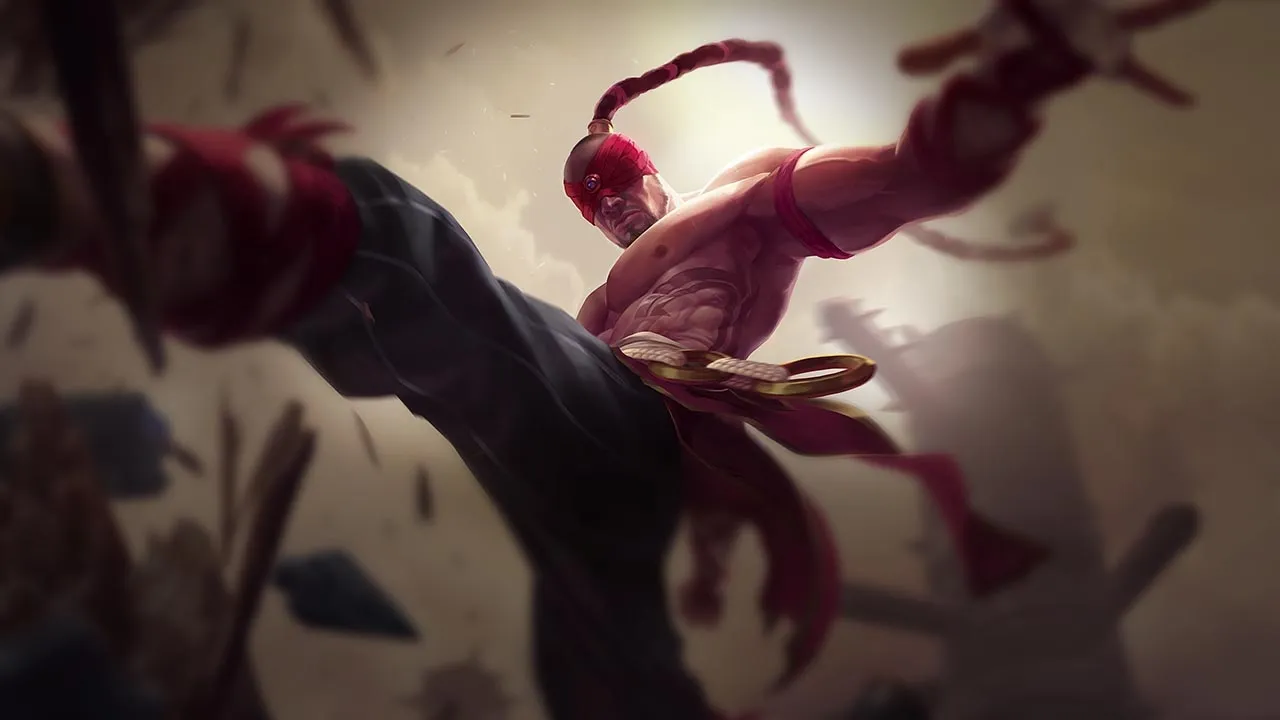
Flash, a universal summoner spell, is often perceived as a versatile tool. However, its optimal use is dichotomous and reveals the player's deep-seated mindset. It's not about "how" to use it, but "why" and "when," depending on the champion archetype. Nexus Core data shows that certain assassin champions have up to 1.65 winrate points less in Master+ (Lee Sin, 46.1% vs 47.75% global, patch 20260808 (Nexus Core data)) when they do not align with their intrinsic offensive role.

The fundamental error lies in perceiving Flash as a universal "safety net," obscuring its primary function for each archetype. This hesitation costs opportunities and reduces pressure on the opponent.
Many players consider Flash a wildcard, a trump card to be saved for emergencies. While this approach provides a sense of security, it dilutes the strategic impact of the game's most powerful summoner spell. It transforms a proactive decision-making tool into a passive reaction. For an assassin, saving Flash "just in case" often means missing the unique execution window that could have turned a fight or secured a major objective. For a support, a Flash burned without a clear objective of survival or decisive engagement weakens their ability to protect priority targets or initiate a winning fight. The concrete cost of this error is a loss of map influence, resulting in a lower winrate and longer, more uncertain games.
Defining the Archetype: Predator or Guardian?
The offensive archetype, typical of assassins, is defined by its ability to initiate decisive engagements and eliminate priority targets. The defensive archetype, characteristic of supports, excels at protecting allies and controlling zones.
The offensive archetype, embodied by champions like Zed or Akali, is designed for taking initiative. Their entire kit is geared towards rapidly eliminating an isolated or poorly positioned target. Flash, for them, is an extension of their engagement capability, allowing them to cover distances that classic spells cannot, or to bypass defenses to reach a key target.


Conversely, the defensive archetype, illustrated by supports like Thresh or Lulu, aims to secure the position of their carries and control the battlefield. Their Flash is a crucial repositioning tool, either to escape a deadly threat or to position themselves ideally to deliver a vital protective or crowd control spell. Nexus Core data shows that Thresh, with a pickrate of 16.35%, sees his Master+ winrate drop to 50.96% (patch 20260808 (Nexus Core data)) if he fails to use his Flash defensively and reactively.
Understanding the intrinsic nature of your champion – whether they are a predator or a guardian – is the first step to unlocking Flash's maximum potential.
- Engage with your Flash if your champion is an assassin.
- Protect your allies by repositioning with Flash.
- Use Flash to cover the gaps in your kit.
- Consider Flash as an initiation or survival resource.
The Central Decision: Balancing Aggression and Survival
The central decision for an assassin player is to identify the window of opportunity for a lethal offensive Flash, while for a support, it's recognizing the critical moment when a defensive Flash saves a life or an objective.
Every game presents constant micro-decisions regarding Flash. For an assassin like Lee Sin or Kayn, the question is: "Can I Flash-in to eliminate this target and survive, or at least create a decisive advantage for my team?" This decision is often binary: either you go for it, or the opportunity is lost. Hesitating means losing.
For a support like Sona or Milio, the thought process is different: "Is my Flash necessary to dodge a fatal spell, reposition for a life-saving ultimate, or initiate a fight we are certain to win?" Burning a Flash without clear intent exposes the team to unanswered enemy engages. Supports who save their Flash for critical moments, like Sona with a Master+ winrate of 54.22% (patch 20260808 (Nexus Core data)), demonstrate the effectiveness of this defensive approach.

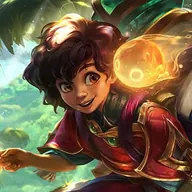
The trade-off between aggression and survival with your Flash must be a conscious decision, aligned with your archetype's primary objective in the specific context of the fight.
- Evaluate the threat before flashing defensively.
- Identify the target to eliminate before an offensive Flash.
- Anticipate enemy spells for defensive Flash.
- Calculate damage for offensive Flash.
The Systemic Error: Data Doesn't Lie
The systemic error is the underutilization of offensive Flash by assassins and the overutilization of offensive Flash by supports, resulting from an incomplete understanding of their role.
Approximately 80% of players, particularly in lower tiers, underestimate the value of an offensive Flash for assassins and a defensive Flash for supports. Assassins like Viego, with a Master+ winrate of 46.69% (patch 20260808 (Nexus Core data)), often suffer from Flash being held too long, missing execution opportunities. They save it to flee, when their role is to force fights.

Conversely, supports like Pyke, although classified as an assassin, are sometimes tempted to Flash-engage too aggressively without the necessary follow-up, which can be costly. His Master+ winrate of 50.46% (patch 20260808 (Nexus Core data)), lower than his global winrate of 52.27%, suggests difficulty optimizing his Flash in high-level situations. This general tendency towards hesitation or miscalibrated aggression is a strategic value leak.

Data confirms that aligning Flash usage with your champion's aggressive or defensive nature is a clear marker of skill and impact on the game's outcome.
- Force engagement with Flash if you are an assassin.
- Resist the urge to Flash-engage as a support.
- Analyze enemy cooldowns before acting.
- Prioritize the survival of your carries as a support.
Flash and Game Phases: A Constant Dynamic
Flash optimization is intrinsically linked to the game phase, positioning, and the archetype's primary objective, dictating whether aggression or protection is prioritized.
In the early game, an assassin like Ahri can use her Flash to secure a decisive first blood or escape an early gank, but the inclination is always towards offensive opportunity. Her Master+ winrate of 52.46% (patch 20260808 (Nexus Core data)) is often the result of aggressive exploitation of enemy vulnerability windows. Positioning must be audacious, seeking the engagement angle.

For a support like Nami, Flash in the lane phase is a survival or counter-engagement tool. Using it for aggression without jungler follow-up is rarely profitable. In the mid and late game, Nami's Flash will be crucial for repositioning her ultimate or saving herself from enemy focus, thus allowing her team to maintain its firepower. A support's positioning should be in the back, ready to react. Early vision items can also influence Flash decisions by offering more safety or engagement opportunities.

Each game phase alters the relative value of an offensive or defensive Flash, requiring a constant reevaluation of your intent and map positioning.
- Adapt your Flash usage to the game phase.
- Position aggressively as an assassin for Flash-engages.
- Maintain safe positioning as a support for defensive Flash.
- Use Flash to secure key objectives in the late game.
Concrete Scenario: Dragon and the Flash Decision
At minute 8, an assassin like Katarina must assess if an offensive Flash onto the enemy carry is viable to secure Dragon, while a support like Leona must be ready to Flash-in to protect her own carry or Flash-out to survive focus.
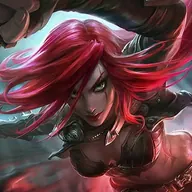

Imagine a classic situation: minute 8, the first Dragon is contested. Your team, with an assassin like Master Yi, is in position. The enemy carry, a marksman, is slightly overextended, at the edge of your Flash range. Master Yi, with a Master+ winrate of 49.47% (patch 20260808 (Nexus Core data)), must decide instantly: Flash-in onto the carry to eliminate them and force a 4v5, or wait for a better moment? The decision here is offensive. A defensive Flash in this situation would be a loss of potential.
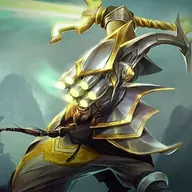
Concurrently, if you are playing a support like Nautilus, your role is to protect your carry. If your marksman is targeted by an enemy engage, your Flash is your ultimate recourse to save them, either by Flash-in to peel, or Flash-out to reposition and cast a decisive crowd control spell. Timing is crucial: a Flash too late is a wasted Flash. The objective is survival and maintaining your team's firepower.
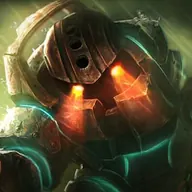
The success of the action will depend on the situation reading and the ability to align Flash usage with the archetype's priority objective.
Optimizing Flash boils down to a series of conscious decisions, aligned with your champion's archetype, transforming a simple summoner spell into a major strategic lever.
Flash is not a universal emergency button, but a declaration of intent. As a decision analyst, I observe that players who master this nuance radically transform their impact on the game. This is the difference between a player who reacts to the game and a player who dictates it.
Every Flash use must be a calculated decision, an investment in a clear objective. Never let hesitation or fear of error dictate the use of your most powerful spell.
- **Engage** audaciously if your archetype is offensive.
- **Protect** vigilantly if your archetype is defensive.
- **Anticipate** windows of opportunity and danger.
- **Constantly reevaluate** your Flash's value according to the situation.
"Flash is the mirror of your gameplay mindset: act with intent, or react with regret."
Frequently asked questions
Why should my assassin's Flash be offensive?
An assassin like Zed or Katarina is designed to quickly eliminate a key target. Saving Flash to escape drastically reduces their ability to initiate these decisive eliminations, turning a predator into a hesitant prey. This is a loss of opportunity and map impact, proven by lower winrates.
When should a support use their Flash to engage?
A support like Thresh or Leona should only Flash-engage if the opportunity is lethal and team follow-up is guaranteed. This is a high-risk decision, often more effective for protecting or repositioning their ultimate. Data shows that uncoordinated aggressive Flashes by supports are often punished.
Can Flash be used equally for both roles?
No. While Flash is a movement spell, its primary role differs. For assassins, it's a range extension tool for execution. For supports, it's a tool for survival, repositioning, or protection. Attempting to use it equally for both roles leads to sub-optimization.
What is the impact of a misused Flash on winrate?
A misused Flash can have a significant impact. For example, a Lee Sin who saves Flash to escape instead of engaging can see his Master+ winrate drop to 46.1% (patch 20260808 (Nexus Core data)). For a support, an offensive Flash without follow-up can cost a fight and an objective, negatively impacting the overall game outcome.
How do champions like Pyke (Assassin Support) manage their Flash?
Pyke is a hybrid case. Although an assassin, he often operates as a support. His Flash should prioritize engaging isolated targets or securing lethal ultimates. However, misreading the situation can leave him vulnerable, as evidenced by his Master+ winrate of 50.46% (patch 20260808 (Nexus Core data)), slightly lower than his global winrate.
Are there champions who can afford to be flexible with their Flash?
Some champions with very versatile kits may seem flexible, but optimization remains key. For example, Ahri (Master+ winrate 52.46%, patch 20260808 (Nexus Core data)) can Flash for a kill or to dodge, but her strength lies in aggression. Flexibility does not mean an absence of dominant intent.