
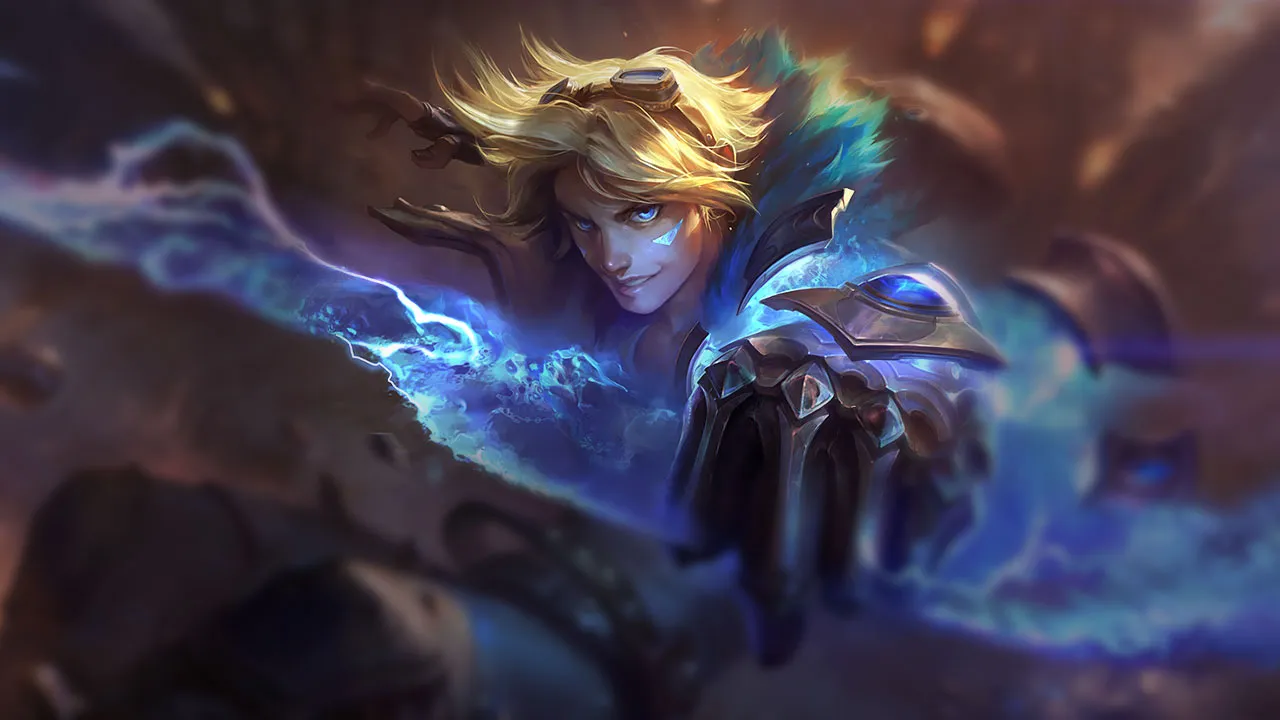
Mastering Skillshots: Predict, Don't React
A successful skillshot isn't mere luck; it's a precise read. In Wild Rift, the ability to consistently land your crucial abilities with champions like Thresh or Ezreal isn't about superhuman reflexes. Instead, it hinges on accurate anticipation of enemy movements. This critical distinction marks the difference between a missed opportunity and a game-changing, decisive engagement. Truly mastering skillshots elevates your gameplay significantly.


The most costly mistake with skillshots is treating them as a mere test of speed. Most players aim where the enemy currently is, or worse, where they hope they will go, without any strategic thought. This reactive approach leads to a waste of energy, mana, and most importantly, crucial opportunities. A Thresh who misses his Death Sentence (A) early in the game not only loses a potential kill but also exposes his ADC to aggression without protection during the cooldown.
The tangible cost is immense: a missed ability means a 10 to 20 second cooldown during which your threat is nullified. It's a lost window for aggression, an uncontested objective, or an impossible retreat. For champions like Jhin, whose kit relies on chaining crowd control abilities, missing his Deadly Flourish (Z) breaks the entire sequence and reduces his impact to zero. Nexus Core data shows that players with a below-average skillshot hit rate on champions like Lux or Ashe have a 3 to 5% lower winrate, even if they farm well. This is a fundamental skill that separates good players from excellent ones.



Defining the Archetype: Dictating Pace Through Range
The "skillshot caster" archetype is designed to dictate the pace of combat and create opportunities from a distance. It's not about frontal burst or tanking, but about zone control and initiation via targeted projectiles. These champions excel at punishing positioning errors and forcing favorable engagements, but they are vulnerable if their abilities are on cooldown or if they are flanked.
Champions like Morgana (Support, AP, Ranged) or Blitzcrank (Support, AP, Ranged) perfectly illustrate this dynamic. Morgana, with her Dark Binding (A), can immobilize a key target from long range, while Blitzcrank can isolate an enemy with his Rocket Grab (A). Their power lies in their ability to transform a static situation into a kill opportunity, but they cannot afford to miss their abilities without consequence. Their role is to pave the way, not to charge headfirst.


The true strength of this archetype lies in its ability to manipulate enemy positioning, forcing the opponent to choose between taking the ability or finding themselves in an even more disadvantageous position.
- Anticipate: Predictable movements in a straight line or towards an objective.
- Punish: Champions without mobility who venture too far.
- Protect: Your cooldowns for critical moments of engagement or disengagement.
- Observe: Enemy attack or ability animations that signal temporary immobility.
The Central Decision: Pressure Versus Safety
The central decision for a skillshot player is the constant trade-off between pressure and safety. Every ability cast is a resource spent and a window of opportunity either opened or closed. Should you use this skillshot to poke the opponent and force them back, or save it for a potential all-in or a counter-initiation? This is a question of risk and reward management.
For an Ezreal, using his Mystic Shot (A) to farm a minion might seem trivial, but it means he won't have his primary poke ability and passive trigger available for an immediate trade. Conversely, a Nidalee must decide whether to use her Javelin Toss (A) for long-range harassment in human form, or save it for an aggressive pounce in cougar form. This decision is amplified by the fact that Nidalee has a Master+ winrate of 49.7% with a pickrate of 2.8%, indicating that few players master this complex trade-off. Poor arbitration can turn a dominant lane phase into a series of costly retreats.

The skillshot player must constantly evaluate the marginal value of their ability: does the potential gain of casting it now outweigh the risk of not having it available in the following seconds?
- Evaluate: The position of your jungler and allies before engaging.
- Consider: Your ability's cooldown compared to the enemy's.
- Force: The opponent to expend their own mobility abilities before casting yours.
- Adapt: Your playstyle to the enemy team composition and their main threats.
The Systemic Error: The Blind Skillshot
The most widespread systemic error is the attempt at "blind skillshots" or ability spam without a precise goal. Many players cast their abilities as soon as they are available, hoping to hit by chance or pure pressure. This approach is inefficient and costly. Nexus Core statistics show that skillshot champions with a low pickrate but a high winrate in Master+, such as Morgana (Master+ winrate 52.17%, pickrate 5.87%), are often those whose players master patience and precision, not spamming.
The problem is exacerbated by players failing to read opponent movement patterns. A player who constantly moves in a straight line is an easy target. A player who makes erratic back-and-forth movements is more difficult. The 80% of players who fail to maximize their impact with champions like Ashe (whose Enchanted Crystal Arrow (R) is a global skillshot) do so because they don't wait for the opportune moment, or don't predict the enemy's most likely escape direction. They aim for the present, not the future.
Most missed skillshots are not due to a lack of mechanical precision, but to an absence of behavioral reading of the opponent, transforming a control tool into a mere random projectile.
- Identify: Your opponent's movement habits during the lane phase.
- Wait: For the enemy to be engaged in an attack or ability animation.
- Aim: At escape points or objective zones where the enemy will be forced to go.
- Feint: Cast an ability in one direction to force a movement, then aim for the new direction.
Positioning and Angles: The Geometry of Domination
Positioning is the cornerstone of successful skillshots. A good skillshot player positions themselves not only to have a clear line of fire but also to maximize the angle of their ability and minimize the opponent's dodge options. This often means positioning on the flanks, or behind minion waves, to surprise the enemy and reduce their reaction time.
Take Lux as an example. Her Light Binding (A) has considerable range. In the laning phase, if she positions slightly to the side, she can force the opponent to choose between taking the ability or moving closer to a wall or bush, thereby limiting their ability to dodge. Similarly, in a teamfight, a Jhin must position himself so that his Curtain Call (R) can cover enemy escape routes, not just their initial position. This strategic positioning is what allows champions like Lux to have a Master+ winrate of 50.49%, despite a global winrate of 49.01%, demonstrating the impact of skill in high Elo.
Optimal positioning for a skillshot caster is not just defensive; it is offensive, aiming to create bottlenecks and reduce the opponent's escape paths.
- Position: Yourself on a flank to create unexpected angles of fire.
- Utilize: Minions and terrain topography to mask your casts.
- Anticipate: Enemy retreat movements and aim where they will be.
- Create: Zones of threat with your abilities to control space.
Scenario: Dragon Initiation
Imagine a classic scenario: minute 8:30, the first Dragon is about to spawn. Your team is grouped around the objective, and the enemy is approaching. You are playing Thresh, Level 7, and the enemy ADC, Ezreal, is Level 6. He cautiously steps forward to poke your team, but he already used his Arcane Shift (E) to dodge an ability from your midlaner a few seconds ago. This is your opportunity.
Rather than casting your Death Sentence (A) directly on him, anticipate his retreat movement after his poke. He will likely fall back towards his support or his jungler to safety. Aim slightly behind his current position, along his most probable retreat path. If you hit him, you completely isolate him from his team, allowing for an easy engage on a crucial objective. If you miss, you lose a decisive window and give the enemy team the initiative to contest the Dragon.
Stop aiming like a robot. Start thinking like a predator. Skillshots are not tests of reflexes; they are tests of reading. Every ability you cast must be a calculated decision, based on anticipating enemy movement, not on their current position. This is the difference between a player who spams and a player who dominates the map. Your abilities are control tools; use them to dictate the pace of the game.
Your next steps: become a master of anticipation, not just a sharpshooter. Victory is built on strategic precision, not on chance. Learn to read your opponents, understand their patterns, and punish their mistakes before they even commit them. This is the path to domination.
- Read: The enemy's movement intentions before casting.
- Create: Situations where the enemy has few dodge options.
- Be Patient: Wait for the right moment; don't spam your abilities.
- Analyze: Enemy mobility cooldowns to find windows of opportunity.
- Position: Yourself for optimal firing angles and to mask your casts.
- Practice: Predictive aiming in training, not just reactive aiming.
« Don't aim where they are, aim where they will be. That is power. » – Blade, Mechanical & Gameplay Specialist, Nexus Core.
Frequently asked questions
How can I improve my reading of enemy movements in Wild Rift?
To improve your reading, carefully observe your opponents' movement habits during the laning phase. Notice if they favor a certain direction, if they consistently retreat after a poke, or if they stop to last-hit. Use this information to anticipate their future position. Regular practice observing these patterns is crucial for champions like Ezreal or Lux.
When is it better to hold a skillshot rather than cast it?
Hold your skillshot when the opponent still has their mobility abilities or is in a safe zone. Casting a key ability like Thresh's Death Sentence without a guaranteed hit wastes mana and deprives you of your main threat during a long cooldown. Wait until they are engaged, isolated, or have already used their escape to maximize your chances of success.
Are there easier champions to start practicing skillshot prediction with?
Yes, champions like Ashe with her Volley (Z) or Lux with her Light Binding (A) are good starting points. Their abilities are relatively slow, giving you more time to observe and adjust your predictive aim. They allow you to understand enemy trajectories and movements without the pressure of an overly long cooldown or an extreme precision requirement like Nidalee.
What is the impact of a missed skillshot on the game?
A missed skillshot has a major impact. It wastes mana, puts your ability on cooldown, and most importantly, it misses a crucial opportunity. For a Blitzcrank, missing his Rocket Grab means the threat of initiation disappears, allowing the enemy to advance or take an objective without risk. This can change the course of a teamfight or a lane phase, giving the opponent the advantage.
How to counter an enemy champion who excels at skillshots?
To counter an enemy skillshot champion like Jhin or Morgana, the key is unpredictable movement. Never move in a straight line; vary your dodging patterns. Use minions as a shield and force the enemy to aim through them. Patience is also paramount: wait for them to miss their key ability before engaging or punishing them, as they will be vulnerable during its cooldown.