Tank

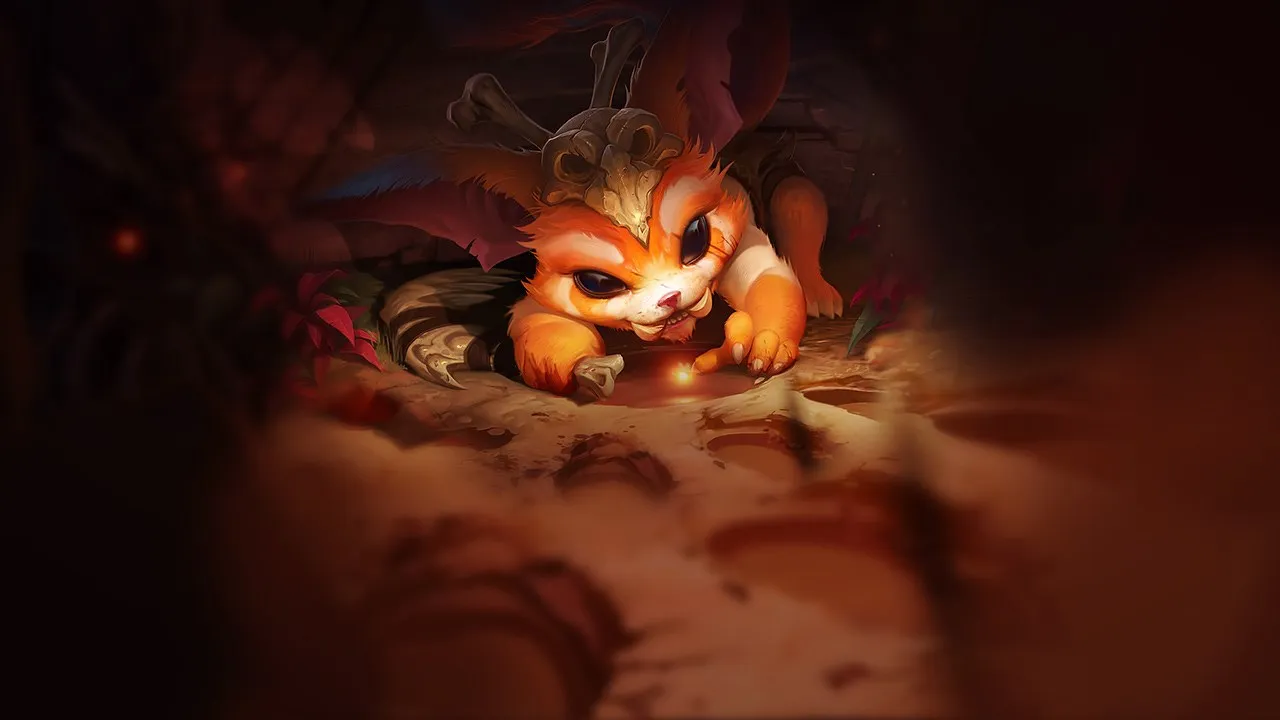
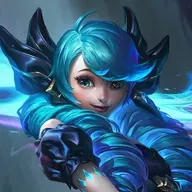
Gnar

S TOP
DMG
TANK
UTIL
DIFF
Win 63.0% #18
Pick 1.8% #30
Ban 0.1% #62
?Win Rate — % of games wonPick Rate — % of games where pickedBan Rate — % of games where banned#N — overall ranking among all champions
Wild Rift CN · Challenger ?Official Tencent data
Challenger CN server · Updated daily
Last update: 25 Apr 2026

Champion Guide

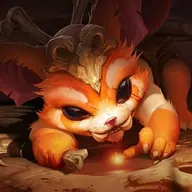
Gnar is a Baron Lane fighter in Wild Rift, a prehistoric yordle alternating between a fast mini form at range and a tank mega form in melee based on his rage meter. His kit provides slowing boomerangs, leaps, and in mega form, an AoE knock-up engage and an ally-throwing ultimate. He excels in compositions leveraging his dual nature to adapt to each tactical situation. In Wild Rift, managing MEGA GNAR transformation at the right moment is fundamental — transformation on the right enemy group can reverse an entire teamfight.

Game Plan

Early

Wave control + poke; prepares Mega for the first Herald.

Mid

Play corridors/wall angles; look for 5v5 Mega ready.

Late

Front-to-back: protect your Mega backline and look for the decisive wall.

Counters

All counters →

Synergies

All synergies →
Fleet Footwork
Trinity Force
Black Cleaver
Sterak's Gage
+
Plated Steelcaps
Nullifying Orb
Bone Plating
Overgrowth

Gnar — patch analysis

Patch positioning

Gnar remains a very stable solo queue pick this patch, but his true value depends less on stats and more on Rage management. Unlike many top laners, he doesn’t simply “win” through matchups—he dictates tempo through transformation cycles. In Mini form, he controls lane through poke and spacing but stays fragile. In Mega form, he can reshape entire fights with a well-angled wall ultimate. The current patch favors grouped objective fights and teamfight setups, which naturally increases his impact. However, this power is conditional: mistiming Rage leaves him almost useless for 15–20 seconds, which is massive in ranked.

Meta reasoning

Gnar thrives in the current meta because fights are predictable and centered around objectives. This gives him time to prepare Rage and choose engage angles. His build (Black Cleaver, Trinity Force) enhances his dual identity: mobile poke in Mini, explosive frontliner in Mega. Additionally, many current drafts rely on grouped engages or immobile carries, increasing the value of his wall-based ultimate. However, the rise of mobile bruisers and duelists puts pressure on him in lane.

Real game insight

In reality, most Gnar players lose games not because of matchups, but because of poor transformation timing. Many enter fights in Mini form with 20–30 Rage, thinking they can stack during the fight, only to get burst before transforming. Others force engages in Mega without follow-up, wasting their only real power window. The truth in ranked: Gnar wins when he synchronizes Rage with objectives, not when he tries to outplay individually.

Draft identity

Gnar is a hybrid pick between poke, zone control, and conditional engage. He’s neither a constant tank nor a pure carry—he shifts between lane pressure and teamfight impact. His identity revolves around transforming fights through strong wall angles. He fits best in drafts that can play around his timing rather than those requiring constant engage.

Pick conditions

Why play this patch

  • Grouped objective fights amplify the value of his wall-based ultimate.
  • His ranged laning phase remains strong against many bruisers.
  • His current build keeps him threatening in Mini and durable in Mega.
  • He brings real tempo control through Rage management.

When to avoid

  • If your team cannot follow up on a Mega engage quickly.
  • Against duelists who consistently punish your Mini form.
  • If the enemy composition plays at range and avoids wall fights.
  • When your team already lacks a stable frontline.

Ideal draft context

  • Compositions with coordinated engage to capitalize on Mega.
  • Teams able to delay and play around objectives.
  • Presence of zone control to force enemies into walls.
  • Drafts with immediate follow-up after his ultimate.

Bad draft context

  • Split compositions that never group.
  • Lack of damage to follow up a good engage.
  • Teams that rely on a constant frontline presence.
  • Drafts facing long-range poke that’s hard to reach.

Hidden weakness

Hidden weakness

Gnar’s real weakness isn’t his lack of tankiness or his kite—it’s his total dependence on a short transformation window. Once Mega is used or wasted, his impact drops instantly. This creates a structural issue: he cannot handle consecutive fights effectively. Teams that force repeated skirmishes exploit this weakness and drastically reduce his overall value.

Low elo

In low elo, Gnar often dominates because players poorly respect his Rage timing and position too close to walls. His Mega engages land easily and punish positioning mistakes. However, many Gnar players themselves mismanage transformations and lose key fights.

High elo

In high elo, Gnar becomes more mechanically and strategically demanding. Opponents play around his Rage and avoid his angles. His value depends heavily on wave control and objective preparation. Poor Mega timing is instantly punished.

Expert take

Expert take

Gnar isn’t difficult because of mechanics, but because timing defines everything. He rewards game understanding far more than raw execution. If you can manage Rage, play around objectives, and wait for the right wall angle, he can solo carry fights. But if you play reactively or without a plan, he becomes inconsistent. He’s not a universal blind pick—he’s a tempo control pick.

Coach notes

  • Always check your Rage before checking the map.
  • Your goal isn’t poke, but preparing Mega at the right moment.

FAQ

When should you engage with Gnar?

You should only engage when your Rage is near full and your team is ready to follow immediately. A common mistake is engaging in Mini hoping to transform mid-fight. Instead, you need to plan 10–15 seconds ahead, prepare Mega, and force a fight near a wall with a clear angle. Without that setup, your engage loses most of its value.

Why is Gnar inconsistent in ranked?

His inconsistency comes directly from his Rage mechanic. Unlike other champions, he cannot freely choose when to engage. If a fight starts before he’s ready to transform, he becomes weak. This makes his impact highly dependent on game tempo and his ability to anticipate fights.

Should you play Gnar for split push or teamfights?

Gnar can do both, but his real impact comes from Mega teamfights. Split pushing is mainly used to force reactions and prepare Rage before objectives. Staying in side lane too long reduces your main value. Split push should be seen as preparation, not the main strategy.

How do you avoid missing your ultimate?

The key isn’t mechanical, but positional. You must think about angles and walls before entering the fight. If you engage without a nearby wall or proper alignment, your ultimate loses most of its impact. Use Flash only when you’re certain you can hit multiple targets into a wall.