June 2026 · Patch 7.1f
Tank · TOP

K'Santé Wild Rift Synergies

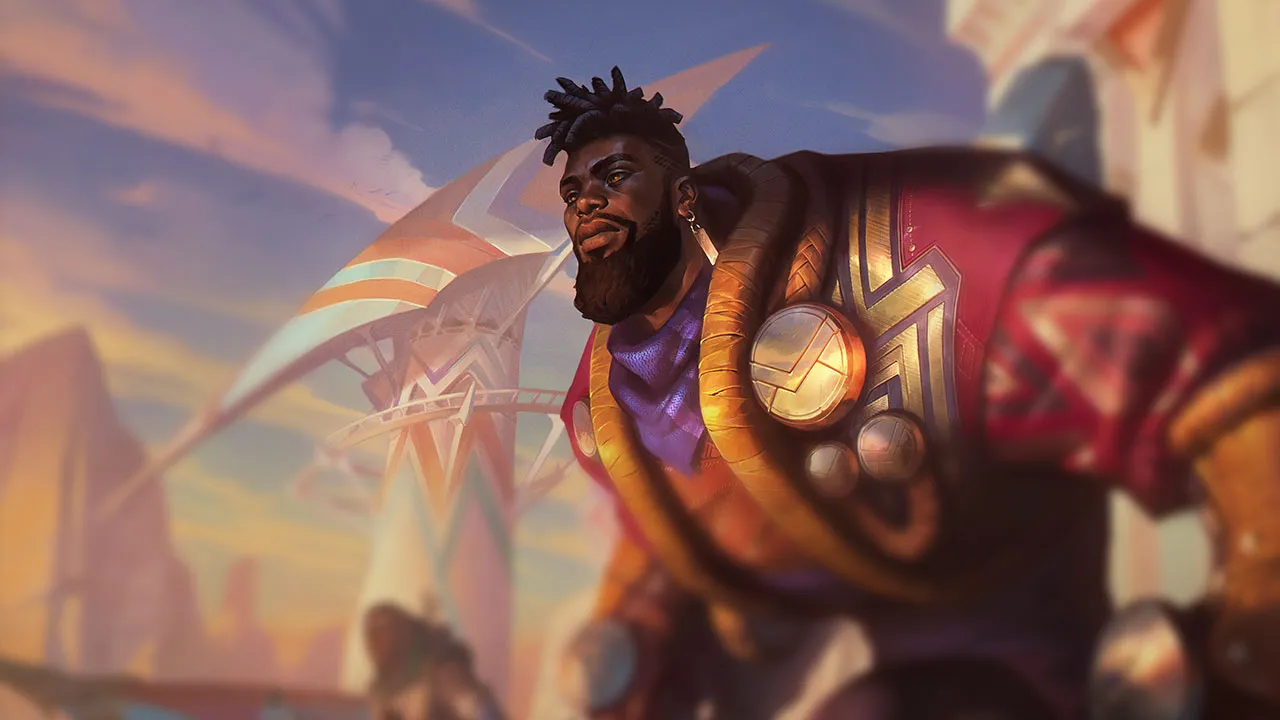
K'Santé excels in teamfight and zone control compositions. He benefits from allies who can follow up on his engage, bring burst or crowd control to capitalize on his isolations. Teams that can play around his picks maximize his potential.

K'Santé
★ TOP Tier A
DMG
UTIL
TANK
DIFF
Win 51.7% #33 · ↓2pt
Pick 8.2% #5
Ban 68.2% #4

K'Santé Wild Rift Synergies

Perfect Duos 2
Strong Synergies 3
Decent Synergies 2

How to draft around this champion

Synergy angle

K'Santé's synergies are not only about the fact that he “engages well.” What makes a duo or composition strong with him is the ability to exploit the exact sequence he opens. When he controls a target with Q3, isolates through a wall, or chooses to stay front instead of leaving for a duel, the allies who shine with him are the ones who convert that tempo without asking the impossible from him. Some extend his control, others secure the burst, and others benefit from the way he absorbs enemy attention to deploy their own zone. Real synergy with K'Santé is not purely mechanical. It is structural: it relies on teams that understand what his commit creates, but also what it removes. A strong composition with him does not just celebrate his R; it knows how to survive, punish, or accelerate depending on whether he engages, peels, or temporarily disappears from the frontline.

Patch context

In the current patch, K'Santé pairs especially well with champions that give clear continuation to his control without forcing him to overplay his all-in. His kit creates short but very strong windows: knock-up, trapping, displacement, and entry denial. The best allies are therefore those who read that window quickly and convert it immediately, whether through burst, additional lockdown, or zone pressure. On the other hand, compositions that are too slow or too dependent on a permanently present frontline may struggle to absorb his shift into All Out. His ideal synergy does not only ask teammates to follow his engage; it asks them to understand when his engage must become a kill and when his mere presence should already be enough.

Draft identity

With the right synergies, K'Santé becomes either the opener of a fast follow-up composition or the defensive pivot who prepares a larger entry without immediately leaving the line. His draft identity with allies is built on that duality: he can create the first point of impact, or hold structure long enough for a more explosive ally to take over. The best comps with him are therefore the ones that value timing, space, and conversion.

Quick read

  • K'Santé likes allies who can convert a short control window or an isolation quickly, not just “arrive once it starts.”
  • His best synergies often appear around objectives, where wall angles and allied follow-up naturally combine.
  • Compositions that are too passive behind him can struggle with his All Out because they lose their wall without gaining enough tempo in return.

Best composition types

Immediate follow-up on crowd control

This type of composition perfectly cashes in on what K'Santé opens because it does not wait for his crowd control to become “long” before acting. A well-placed Q3, a displaced target, or an R that cuts access is already enough to start the next layer. Yasuo directly benefits from the knock-up; Kai'Sa converts very well on a locked or isolated target. The strength of this structure comes from time gained: the faster allies convert, the less K'Santé's possible loss of frontline becomes a problem. He is not asked to be everywhere at once; his first impact is immediately transformed into a kill or numbers edge.

How to play it. Play these comps with a short-chain logic: first control, instant conversion, then positional reset. Do not drag the sequence out before securing the kill. If K'Santé goes too far without immediate payoff, the comp quickly loses coherence.

Wombo or zone play built on his impact point

K'Santé is excellent at defining where the fight must happen. He draws attention, closes an angle, pushes or isolates, which creates a very clear truth zone for area mages or carries. Orianna turns his entry point into a much wider collective threat, while Miss Fortune loves slowed enemies, grouped targets, or opponents forced into a corridor. This synergy works well because K'Santé does not only ask for single-target follow-up; he can also organize the battlefield. In the right spaces, his mere control of the area gives these allies a maximum-value window.

How to play it. Look to fix the zone first before forcing the full commit. If the enemy is already badly positioned or compressed, K'Santé does not need to ult immediately: his presence alone can sometimes give the best angle to area follow-up.

Double engage or structural trapping

This structure is strong because it reduces the uncertainty in K'Santé's play. When another ally can close the exit, create an arena, or add a cage, K'Santé's initial isolation or control instantly gains a different dimension. Jarvan IV adds a trapping layer that denies breathing room; Veigar makes movement even riskier and turns corridors into traps. The result is that K'Santé does not need to overload his combo to create value. The composition secures the continuation on its own, making his commit decisions much more comfortable.

How to play it. Do not stack every control tool too early. The idea is to chain the enemy's exit options, not spend everything on the first frame. K'Santé initiates, then the second layer locks down the escape or the counter-entry.

Composition traps

Slow backline that depends on a fixed frontline

This type of comp uses K'Santé poorly because it needs a stable wall almost at all times. If the carries have no mobility, no quick answer, and no real way to convert his engage, his All Out often becomes a net cost. Even when he finds a strong target, the team may lose its main front and get overrun before his duel pays off. The issue is not that he lacks engage, but that his best action removes the very thing this comp needs most.

Overly split composition with no clear conversion

When each ally plays their own window without real synchronization, K'Santé becomes an initiator opening into empty space. His kit creates short but powerful opportunities; if nobody reads them immediately, they close quickly and the lost tempo flips against him. These comps often create the feeling that he “engaged well” even though nobody can truly punish afterwards. The more split the composition is in rhythm, the more K'Santé must choose between overforcing his all-in or becoming a passive tank again, which sharply lowers his actual value.

Priority synergies

Yasuo

Yasuo is a very natural synergy with K'Santé, but the duo's real value goes beyond simply triggering off the knock-up. What makes them dangerous together is how quickly a control window becomes a lethal sequence. K'Santé prepares the space, locks the entry, or isolates; Yasuo immediately turns that short moment into maximum offensive pressure. That heavily reduces K'Santé's classic problem, which is leaving his frontline without enough payoff. When the duo works well, the enemy does not have time to punish the missing tank: the fight already flips first.

Orianna

Orianna gives K'Santé something extremely valuable: a way to widen the value of his impact point without forcing him to overcommit alone. When the ball is well positioned, his entry creates immediate collective threat rather than only a duel or isolated pick. That changes the way his fights are read, because he can stay in his pivot role longer before deciding whether All Out is even necessary. This synergy is especially strong around objectives, where his wall angles and Orianna's zone control compress enemy space together.

Common mistakes

Common mistakes

  • Thinking it is enough to “follow K'Santé” without planning who actually converts his first control window.
  • Stacking every follow-up ultimate too early instead of chaining the enemy's escape options.
  • Forcing All Out in a composition that mostly needed him to remain a living wall in front of its carries.
  • Playing far away from him around objectives when his best synergies come precisely from the narrow zones he controls.

Coach notes

  • Before the game, define mentally what K'Santé opens for your comp: an instant kill, a zone, or simply breathing room. Without that answer, synergies remain theoretical.
  • The best comps with him do not only chase a pretty wall combo; they also know how to keep playing if K'Santé must stay in front instead of going All Out.

Synergy reading

What these duos unlock

K'Santé performs best when allies extend the first window of control or damage. The strongest pairings on this page, such as Yasuo, Orianna, Kai'Sa, create cleaner fights and more reliable tempo swings.

Profile to look for

K'Santé has a tank profile, so allies with engage, peel, or layered control are usually the best fit.

When synergy matters most

These pairings matter most around first engage timing, objective setup, and follow-up on crowd control. The page is not just naming allies: it highlights combinations that reduce execution risk for K'Santé.

FAQ

What is the best type of ally for K'Santé?

The best ally for K'Santé is the one who converts quickly on what he opens. That can be direct follow-up on a knock-up, an area champion who profits from the space he closes, or additional crowd control that seals the exit. The common point is not the role, but conversion speed. K'Santé often creates a short and powerful window; the ideal ally is the one who turns that window into a kill, won space, or tempo advantage before his possible absence from the frontline becomes an issue.

Why do some K'Santé synergies look strong on paper but fail in real games?

Because theoretical synergy is not enough if the rhythm is wrong. Many duos look strong because they share crowd control or a big ultimate, but fail when their timings do not line up or when follow-up comes too late after K'Santé's entry. His kit does not offer an infinite window: it creates a decisive instant. If the ally cannot convert quickly or survive while he goes All Out, the synergy becomes aesthetic rather than effective.

Does K'Santé prefer wombo comps or front-to-back comps?

He can work in both, as long as the composition knows why it is picking him. In wombo, he excels at defining the zone and creating the first point of impact. In front-to-back, he can slow, protect, deny access, and only switch into All Out if a real opening appears. The real issue comes from comps that commit to neither: not explosive enough to convert his engage, not stable enough to absorb his absence. So K'Santé prefers coherent teams, not necessarily a single rigid style.

Should you build an entire comp around K'Santé's ultimate?

No, and that is often a mistake. His ultimate is a very powerful weapon, but it should not become the draft's only reason to exist. A good composition with K'Santé should already have a healthy logic without All Out: hold space, convert first control, protect carries, or play objectives properly. The ultimate should act as an accelerator or a structure breaker, not as the only plan. When everything depends on it, the enemy only has to neutralize that key moment to break the whole comp.