
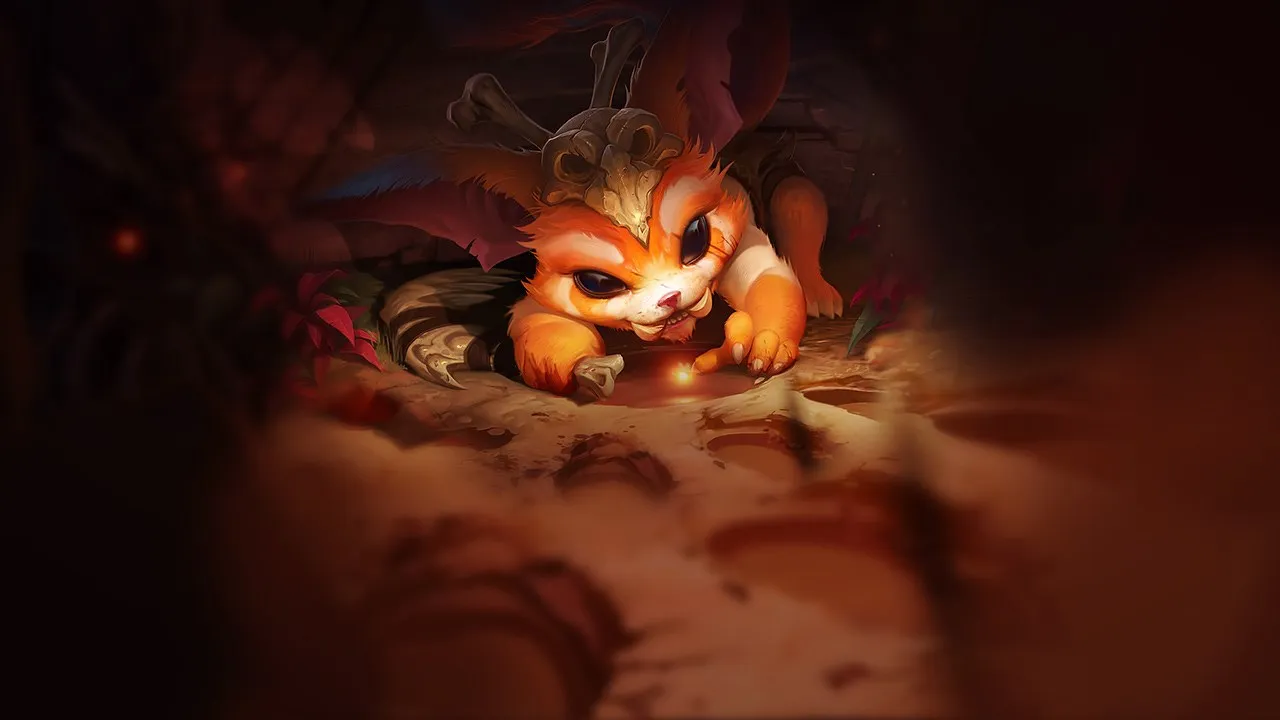
Gnar's Rage: Mastering Transformation to Dominate the Rift
The rage bar of Gnar is not a passive mechanic; it's a direct indicator of your aggression and your ability to anticipate key moments in the game. Precisely understanding how it fills and, more importantly, when to unleash it, is the absolute key to exploiting the unique and explosive potential of his transformation into Mega Gnar. Ignoring this fundamental dynamic means depriving yourself of a major tactical advantage, turning a high-impact champion into a predictable and suboptimal threat on the Rift. Gnar boasts a Master+ win rate of 51.92% (patch 20260808, Nexus Core data), a figure that, while solid, masks a vast performance gap between players who master his rage as a tool and those who suffer it as a constraint. This guide is here to correct that and give you the keys to this mastery.

Too many Gnar players believe rage is a resource to be consumed as soon as possible, leading to random and ineffective transformations. This passive approach, where the bar fills without clear intent, results in a Mega Gnar appearing at the wrong moment, often after the decisive engagement has already occurred. The cost of this error is brutal: a Mega Gnar who cannot initiate a fight or protect allies is a temporary dead weight. You lose a crucial window of opportunity for massive crowd control or explosive damage.
Imagine a Gnar who transforms into Mega just after the enemy team has engaged your carry. His control kit becomes useless, his damage is late, and he often finds himself chasing after an already lost fight. This results in lost team fights, conceded objectives, and constant pressure on your teammates. A Renekton or a Darius, for example, have more predictable power windows. Gnar, however, demands proactive management of his unique resource, or his potential will collapse and his impact on the game will become marginal.
Gnar: A Ranged Bruiser Who Dictates the Tempo
Gnar is a top lane bruiser who excels in ranged trades in Mini form, then becomes a formidable tank-initiator in Mega form. His strength lies in his ability to harass opponents with his range and mixed damage, while maintaining the threat of an explosive transformation. He can dominate his lane against champions like Darius or Renekton thanks to his poke, but he cannot sustain long trades as Mini-Gnar. His Mega transformation allows him to engage, control, and absorb damage, but it is temporary and its window of action is limited.
Unlike a Jax who seeks prolonged duels or a Nasus who scales by accumulating stacks, Gnar must alternate between poke and all-in. His kit allows him to control areas, punish positioning errors, and initiate team fights. He is less effective at split-pushing alone than Camille, but his ability to pivot and join fights with decisive impact is superior if his rage is well managed.

Gnar's true power lies not in his ability to transform, but in his ability to force the transformation at the precise moment the enemy team is vulnerable or about to engage.
- Harass: Use your ranged attacks and abilities to safely build your rage.
- Anticipate: Foresee enemy engagements so your Mega transformation coincides with the start of the fight.
- Provoke: Force enemies to engage on you when your rage is nearly full.
- Disengage: Avoid prolonged fights in Mini-Gnar if your rage is not ready for transformation.
Rage Arbitration: Calculated Aggression or Punitive Passivity
The central decision for any Gnar player is knowing when and how to manipulate his rage bar. Do you want a quick transformation for an aggressive engagement, or do you prefer to save it to react to a threat? This arbitration is constant. A Gnar who fills his rage too quickly without a clear objective often finds himself with a Mega transformation that expires before the important fight, leaving him vulnerable as Mini-Gnar.
Conversely, a Gnar who hesitates to build his rage can miss crucial engagement opportunities. Champions like Aatrox or Gwen have more linear power windows. Gnar, however, demands dynamic management. For example, against an aggressive Darius, you can build your rage by poking him, then transform into Mega Gnar to punish him if he attempts an all-in. It is this ability to dictate the pace of exchanges through the threat of transformation that makes him unique.

Gnar's rage management is a balancing act between offensive preparation and defensive reactivity, where every point of rage must be intentional.
- Control: Maintain your rage bar between 50% and 80% for maximum flexibility.
- Accelerate: Use your abilities on minions or jungle monsters for a quick rage boost.
- Monitor: Observe the enemy Gnar's rage to anticipate their power windows.
- Adapt: Change your playstyle based on the state of your rage and that of your opponent.
Passive Transformation: The 80% Mistake
The systemic error that 80% of Gnar players make is letting the rage bar fill passively, without tactical intent. They wait for the transformation to happen on its own, rather than actively forcing or delaying it. This passivity leads to a Master+ win rate of 51.92% (patch 20260808, Nexus Core data) which, while respectable, is below his true potential. Champions like Gwen, with a Master+ win rate of 52.34%, or Nasus (51.34%), show that more direct control of one's resources can pay off more.
The data confirms it: the Gnars who have a decisive impact are those who transform their rage into a tool for initiation or counter-engagement, not merely a cyclical phase. When a Gnar transforms into Mega in the middle of a team fight without being able to initiate, he loses the element of surprise and the ability to isolate priority targets. He then becomes a mere health bag, unable to dictate the pace of the fight.
Transforming into Mega Gnar must be an active and strategic decision, never an inevitability imposed by the rage cycle.
- Initiate: Use Mega transformation to engage team fights and surprise the opponent.
- Counter-engage: Save your rage to punish enemy engagement attempts.
- Avoid: Do not let your rage reach 100% without a clear plan of action.
- Disengage: If transformation is imminent and no advantageous fight is present, retreat to drain it.
Positioning and Timing: Maximizing Mega Gnar's Impact
During the laning phase, your positioning as Mini-Gnar must allow you to harass the opponent while building your rage. Aim for short trades and quick retreats. Once your rage is close to transformation, position yourself aggressively, ready to engage or counter. If you are against a champion like Jax or Fiora, keep your distance, build your rage, then use Mega form to punish them if they get too close.

In the mid and late game, Gnar's positioning is critical. You must be on the front line, but slightly set back, ready to pounce. The goal is to be able to initiate with your ultimate as Mega Gnar, or to save it to protect your carries. If your rage is full and an objective like Dragon or Baron is contested, your presence alone can deter the enemy from engaging, knowing the threat of crowd control you represent. Never underestimate the psychological effect of a Gnar about to transform.
Your positioning must always reflect the state of your rage bar, signaling to your opponents the imminent threat or the opportunity to engage you.
- Flank: Look for angles for a surprise Mega Gnar ultimate on priority targets.
- Protect: Stay near your carries as Mega Gnar to deter enemy assassins.
- Zone: Use your presence as Mega Gnar to control objectives and choke points.
- Adapt: Change your positioning depending on whether you are in Mini-Gnar (poke) or Mega Gnar (engage).
Scenario: Gnar's Decisive Counter-Engage
Imagine the situation: you are Gnar at level 9, 15 minutes into the game. The enemy team is attempting to take Dragon. Your rage bar is at 80%. Your team is slightly behind but positioned for a fight. The enemy team, with an Aatrox on the front line, decides to engage your jungler. Instead of passively transforming and arriving after the melee, you force the transformation into Mini-Gnar by throwing your boomerang at jungle minions and quickly attacking monsters in the adjacent camp.
The Mega Gnar transformation activates just as Aatrox uses his ultimate and leaps onto your jungler. You leap with your jump ability, land in the middle of the enemy team, and use your ultimate to throw Aatrox and two other champions into the Dragon wall. This is massive crowd control that turns the fight around. Your team follows up, secures the Dragon, and gains the advantage. This proactive transformation, forced at the right moment, turned a disadvantageous situation into a decisive advantage, demonstrating the power of a Gnar who dictates his rage.
Mastering Gnar is not just about his combos or his build. It's primarily about controlling his rage, a resource that, when well-managed, gives you an immense tactical advantage. Never let the transformation surprise you; make it work for you.
- Anticipate: Foresee engagements and objectives to plan your Mega Gnar transformation.
- Force: Use your attacks and abilities to actively manipulate your rage bar.
- Punish: Exploit Mega form to engage or counter-engage, never to react passively.
- Analyze: Adapt your gameplay based on the state of your rage and that of your opponent.
"Rage is a double-edged sword. Those who control it carve out victory. The others cut themselves."
Frequently asked questions
How can Gnar maximize his rage during the laning phase without taking too much damage?
Gnar should use his boomerang on both minions and the enemy simultaneously to maximize rage gain. Harass with basic attacks as soon as the enemy approaches for short trades. Retreat immediately afterward to avoid return damage, especially against champions like Darius who excel in prolonged fights.
Is it always better to transform into Mega Gnar before a team fight?
Yes, in most cases. Transforming before the fight allows you to use Mega Gnar's massive crowd control to initiate or counter-engage. A late transformation reduces impact and can leave your team vulnerable. It's a matter of anticipation to maximize the element of surprise.
What should I do if my rage is full but there's no objective or imminent fight?
If your rage is full without an engagement opportunity, try to drain it on jungle monsters or minions to return to Mini-Gnar. This allows you to restart the cycle and control your next transformation. Avoid staying in Mega Gnar without purpose, as you will lose the element of surprise.
How does Gnar's rage management compare to other top lane bruisers like Renekton or Jax?
Unlike Renekton who uses his rage to boost his abilities or Jax who has no secondary resource, Gnar completely transforms his kit. His rage management is more complex because it changes his role. He must anticipate fights to be in Mega Gnar, whereas Renekton and Jax have more consistent power windows.
Are there times when it's better not to transform into Mega Gnar?
Absolutely. If the transformation puts you in danger (for example, you are isolated and enemies are numerous), or if the fight is already lost, it is sometimes better not to force it. Let the rage dissipate to avoid giving away easy eliminations and losing valuable time.
How can I use Gnar's rage for objective control like Baron?
When approaching Baron, build your rage to about 80-90%. Your presence as Mini-Gnar allows for poking and scouting. Once the enemy team engages Baron, force the Mega Gnar transformation for a devastating initiation with your ultimate, throwing enemies into the Baron wall or towards your team.