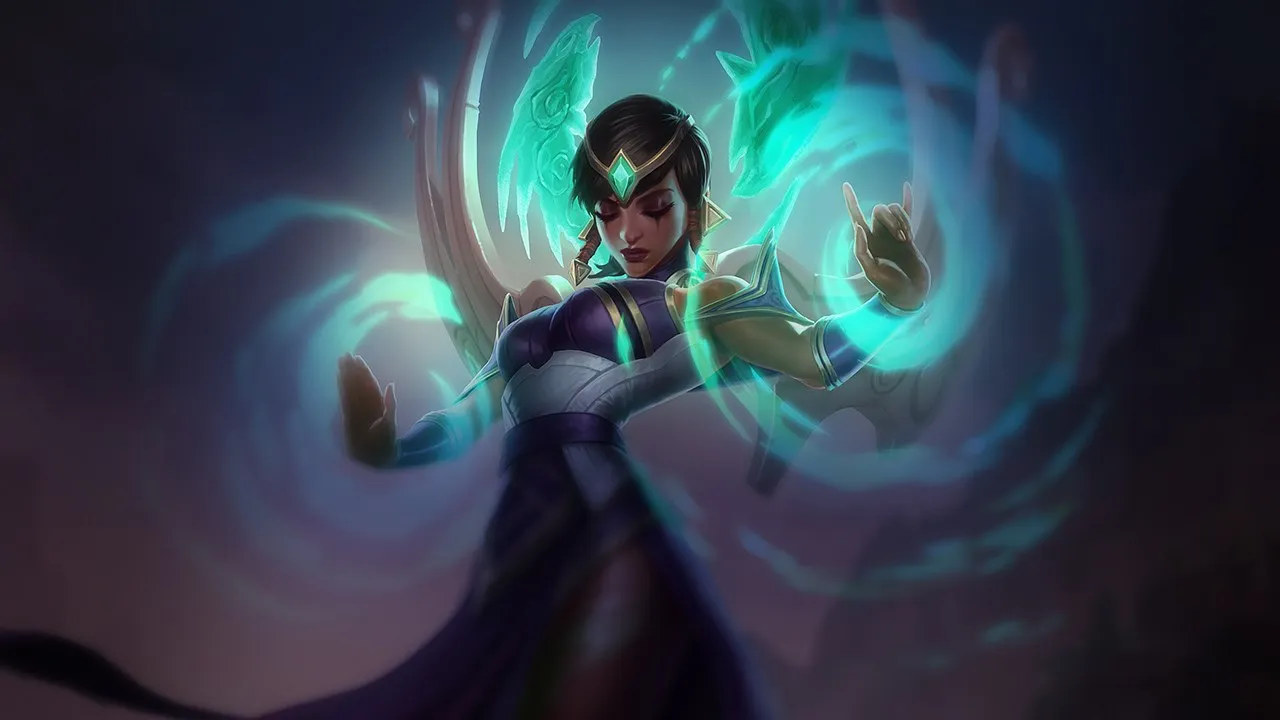
Core identity
Karma is mainly played as Support. Its clearest strength is flex sup/mid, enormous team utility..
Poke and deny hook angles; tempo jungler.
Karma becomes easier to punish when no reliable escape outside e movement speed.. From the opposite side, the page also highlights this answer: Force rapid engages before she places her Q zoning.
頻繁なマントラアクセスにより、即座のレーンテンポコントロールが可能。
バフはキャリーを大幅に強化し始める。
マントラEは、戦闘のエンゲージまたはディスエンゲージにおいて決定的になる。
Wave/vision priority and controlled poke.
Goal-based game: poke/acceleration for setup.
Protect your carries, tempo with E Mantra and look for the decisive root.
Poke and deny hook angles; tempo jungler.
Fast groups with E Mantra for first lens setup.
Priority Peel, Locket/Redemption at the right time.
Wave management + harassment, respect for junglers.
Poke before lenses, secures side vision.
Zoning Q/Mantra and peel on carries if opposing dive.
レーン最強のポーク。MantraはQを範囲攻撃+遅延ファイアゾーンに強化。長距離から巨大ダメージ。

通常Qでスロウをかけ、即座にR+Qで強化Qを速攻。
シールドと範囲速度ブーストを強化。チームの撤退や素早いエンゲージに使う。
Wテザーを付与し、敵がルートされた間にE Mantraでシールドと移動速度を得る。
Karma is generally played as Support. The first objective is to poke and deny hook angles; tempo jungler.. Its biggest edge comes from flex sup/mid, enormous team utility..
This page highlights the moments where Karma can force clean trades, rotations, or objective setups. In practice, the champion is strongest when its cooldown cycle is respected and the fight starts on its own terms.
Karma can be punished when no reliable escape outside e movement speed.. A practical answer listed here is: Force rapid engages before she places her Q zoning.