
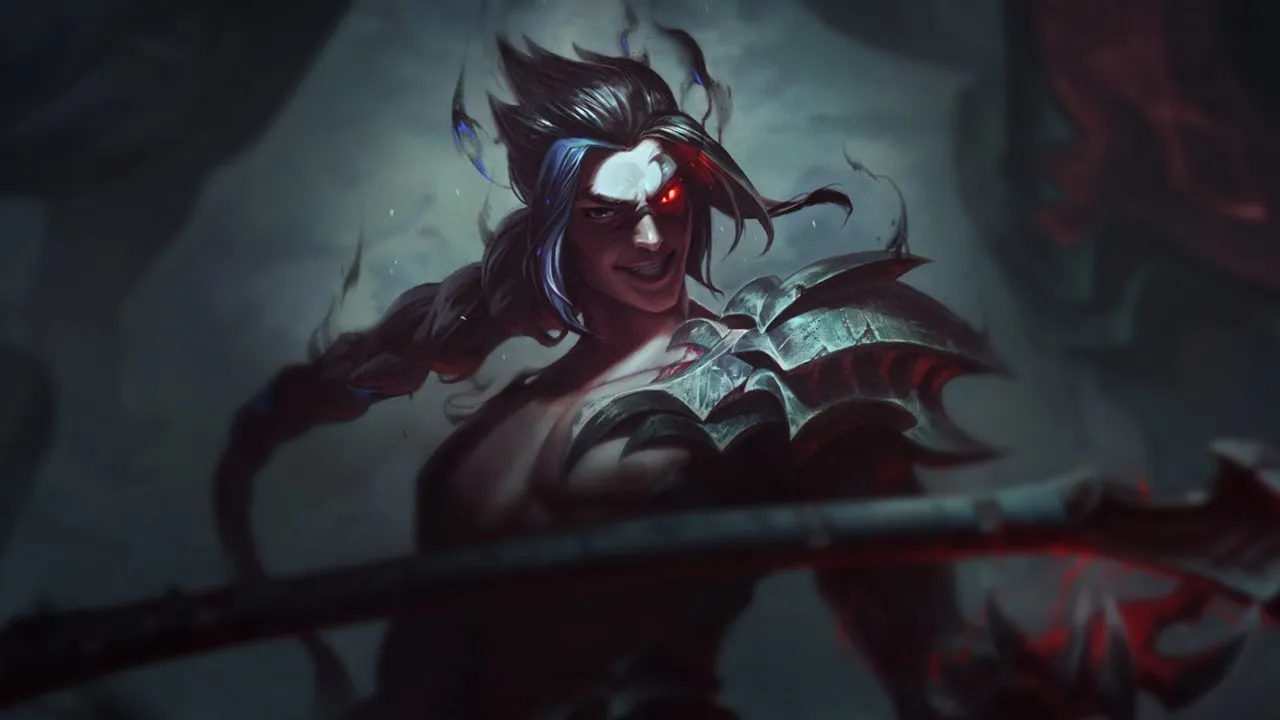
Kayn's Form Choice: Rhaast or Shadow Assassin?
Kayn, the Shadow Reaper, is a unique jungler in Wild Rift, whose power lies in his ability to evolve into one of two distinct forms: Rhaast, the Darkin, or the Shadow Assassin. This transformation is not a mere style adjustment but a fundamental strategic decision that directly influences the course of the game. Ignoring this nuance can be costly, as the chosen form must perfectly align with your team's needs against the enemy composition.

The most common mistake with Kayn is stubbornly sticking to a preferred form, regardless of the enemy composition. Players often get fixated on the idea that "Rhaast is always better" for his survivability or that "the Assassin is more fun" for his burst. This strategic rigidity transforms a champion with high adaptive potential into a predictable and suboptimal threat.
The cost of this error is tangible: a Rhaast facing five fragile targets will be unable to leverage his sustain or his max HP-based damage, becoming a tank with no real impact. Conversely, a Shadow Assassin attempting to eliminate champions like Garen or Volibear will encounter resistance he cannot pierce, wasting his rapid execution potential. Nexus Core data shows that Kayn players who do not adapt have a significantly reduced impact, resulting in a winrate below the average of 52.42% in Master+, patch 20260808 (Nexus Core data).


Defining the Archetype: What Kayn Can and Cannot Do
Kayn stands out with a unique hybrid archetype, capable of switching between a draining bruiser and an explosive assassin. Rhaast, the Darkin, is a melee fighter who excels in prolonged engagements. His damage is based on the targets' maximum health, and he boasts impressive sustain, allowing him to survive sustained damage and turn team fights. He can engage champions like Sett or Malphite and emerge victorious.


The Shadow Assassin, on the other hand, is a melee assassin focused on burst and mobility. He is designed to quickly eliminate fragile and isolated targets, such as Caitlyn or Jhin, thanks to his amplified damage and ability to traverse walls. He cannot sustain prolonged combat or absorb much damage, but his execution potential is unparalleled against low-health targets.


True mastery of Kayn lies in understanding that each form is a surgical solution to a specific team composition problem, not merely a playstyle preference.
- Analyze the enemy composition even before the draft phase to anticipate the most effective form.
- Identify the primary threats: are they resilient tanks or fragile carries?
- Prioritize collecting orbs from enemy champions that align with your desired form.
- Evaluate your team's win conditions: do you need a frontline or a backline assassin?
The Core Decision: The Trade-off in Every Game
The central decision for any Kayn player is to arbitrate between Rhaast's durability and area control, or the Shadow Assassin's rapid execution and mobility. This trade-off must be made in every game, based on the evolving enemy composition and your own team's needs.
If the opposing team consists of robust champions like Garen, Volibear, and Jarvan IV, Rhaast's ability to drain health and disrupt their frontline is invaluable. Conversely, if you face targets like Ezreal, Miss Fortune, and Samira, the Shadow Assassin can eliminate them before they have time to react, creating instant numerical advantages. Committing to a single form from the outset is a mistake that drastically limits your potential impact.




The timing of the transformation is not just a matter of when, but also the ability to anticipate future threats and engagement opportunities.
- Observe enemy first item purchases to confirm their build path (defensive or offensive).
- Adapt your jungle path to gank lanes where you can collect orbs for your desired form.
- Communicate with your team about the form you intend to take and why.
- Be prepared to adjust your plan if the enemy composition reveals unexpected surprises.
The Systemic Error: Why Data Doesn't Lie
The most prevalent systemic error is choosing Kayn's form based on personal comfort rather than an objective analysis of the game. Many players feel more comfortable with Rhaast for his resilience, or prefer the "one-shot" style of the Shadow Assassin, and stick to it regardless of the matchup. This approach leads to situations where Kayn becomes a liability rather than a strategic asset.
Nexus Core data confirms this trend: statistics show that Kayn has a global winrate of 51.16%, but this figure masks a significant disparity. Players who consistently choose the same form, even in unfavorable situations, see their winrate drop. For instance, a Shadow Assassin facing a team with three or more tanks (like Galio, Sett, Malphite) will have a much lower impact, as he won't be able to fulfill his role as a threat eliminator, leading to a reduced contribution to objectives and team fights.

Data reveals that flexibility is key to Kayn's performance: players who adapt their form achieve a Master+ winrate of 52.42%, higher than the global average.
- Reject the idea of a "default form" and evaluate each game as a unique case.
- Practice mastering both forms so you are not limited by personal comfort.
- Never underestimate the impact of a poor form decision on the game's dynamic.
- Analyze your own team's strengths and weaknesses to fill gaps through your transformation.
Game Phase, Itemization, and Positioning: An Essential Synergy
Kayn's game phase and positioning are intrinsically linked to the chosen form. A Rhaast will focus on prolonged team fights, seeking to be at the heart of the fray, disrupting enemy lines, and draining health. His itemization will lean towards fighter-tank items, increasing his survivability and sustained damage, allowing him to contend with champions like Volibear or Garen.
The Shadow Assassin, conversely, will favor flanking and isolating priority targets. His positioning will often be withdrawn, waiting for the right moment to engage a fragile target like Caitlyn or Ezreal, then quickly disengage. His itemization will emphasize burst damage and armor penetration to maximize his execution potential. The role difference is so pronounced that poor positioning for one form can negate all its advantages.
Understanding that each form demands a radically different tactical approach and positioning is fundamental to maximizing Kayn's impact.
- Adapt your initial jungle path to favor collecting orbs for the chosen form.
- Prioritize ganking targets that will grant you the necessary orbs most quickly.
- Change your playstyle and positioning as soon as the transformation is complete.
- Communicate to your team whether you are Rhaast (frontline) or Assassin (flank) to coordinate engagements.
Concrete Scenario: The Right Form at the Right Time
Imagine a game at the 12-minute mark; your team has just secured the Rift Herald. You are Kayn, level 8, and the enemy composition is predominantly made up of fragile champions like Jhin, Samira, and a mage midlaner. Your team already has a solid tank in Garen in the top lane. You have collected enough red and blue orbs, but the transformation has not yet occurred.
In this scenario, choosing the Shadow Assassin is the optimal decision. Your objective is to flank the enemy team while they defend their mid T1 tower and instantly eliminate their AD or AP carry. For example, by using your E (Shadow Step) to bypass enemy vision, then engaging Jhin with your W (Blade's Reach) and Q (Reaping Slash) followed by your ultimate (Darkin Descent / Umbral Trespass), you can take him out of the fight in under two seconds. A Rhaast in this situation would be less effective because he wouldn't have the necessary execution speed to eliminate a key target before they are protected or escape, allowing the fight to drag on.
Mastering Kayn relies on constant strategic adaptability. Never let personal preference dictate a decision that should be purely tactical. Every game is a new puzzle to solve, and Kayn offers you the tools to decipher it.
- Analyze: Evaluate the enemy composition from champion select to anticipate the need.
- Adapt: Choose Rhaast against resilient teams (Garen, Volibear) and the Assassin against fragile targets (Caitlyn, Ezreal).
- Prioritize: Target champions that will grant you orbs for the most relevant form for the game.
- Execute: Adapt your playstyle, positioning, and objectives according to the chosen form.
"In the shadows or at the heart of the fray, victory belongs to him who knows when to change masks."
Frequently asked questions
When should I choose Rhaast over Shadow Assassin?
Choose Rhaast when the enemy team has at least two or three resilient champions like Sett, Volibear, or Malphite. His ability to deal max HP-based damage and his sustain allow him to survive prolonged fights and effectively disrupt enemy lines.
In what situations is the Shadow Assassin more effective?
The Shadow Assassin is optimal against teams composed primarily of fragile and isolatable targets, such as Caitlyn, Jhin, or Ezreal. His high burst damage and great mobility allow him to quickly eliminate key threats and create numerical advantages.
Is it possible to change Kayn's form choice during the game?
No, once you have collected enough orbs and chosen a form (Rhaast or Shadow Assassin), this decision is permanent for the rest of the game. It is therefore crucial to thoroughly analyze the enemy composition before finalizing your transformation.
How does my own team's composition influence Kayn's form choice?
Your team's composition is essential. If your team lacks a frontline or sustain, Rhaast can fill that void. If you already have tanks but lack the damage to eliminate enemy carries, the Shadow Assassin will be more appropriate to provide the necessary burst.
What is the risk of choosing the wrong form for Kayn?
Choosing the wrong form can drastically reduce your impact. A Rhaast against fragile targets will lack the damage to eliminate them, while a Shadow Assassin facing tanks will be unable to pierce them, thus becoming an ineffective champion in combat. This can lead to a defeat.