
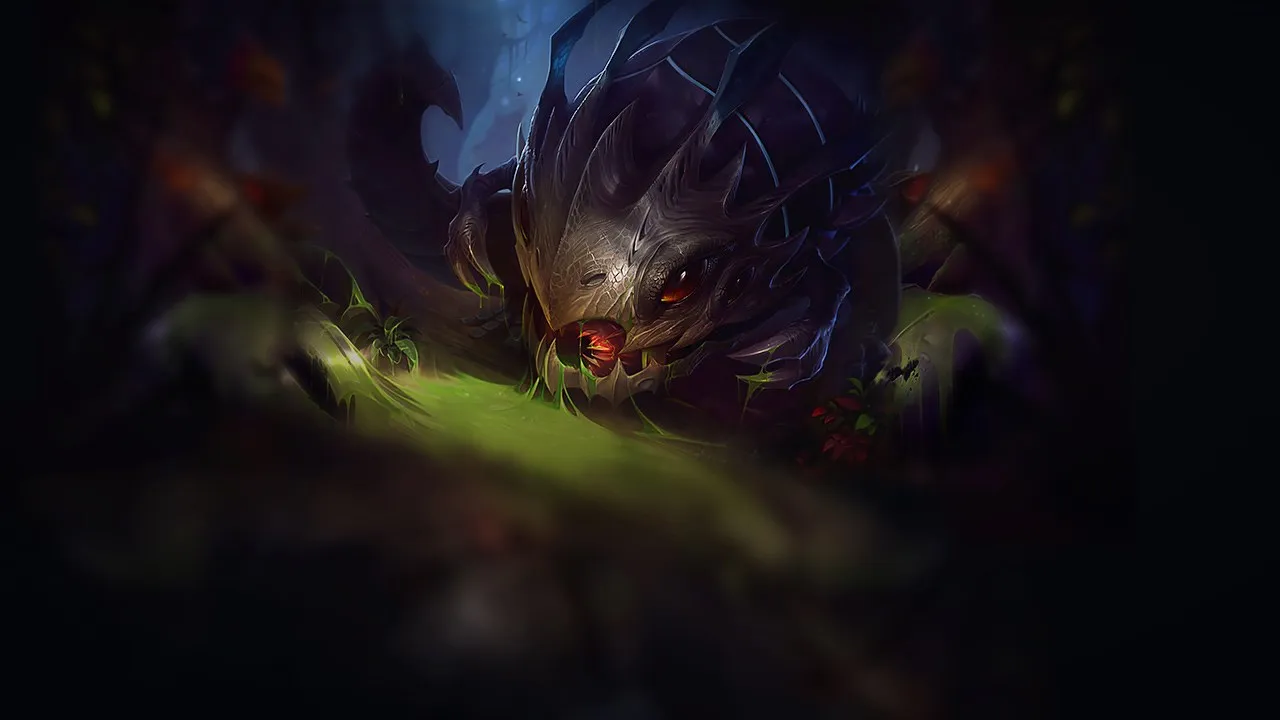

Kog'Maw Wild Rift Counters Guide
Hard Counters
4These champions have a build and playstyle that directly overpower yours, which can make controlling the lane and farming extremely difficult. Their kit can neutralize your core strengths or punish you the moment you try to play your usual game plan. In these matchups, the goal is often to minimize mistakes and look for ways to win outside of direct confrontation.

Lucian+2
Lucian completely dominates this matchup because his Relentless Pursuit allows him to instantly ignore the slow zone of your Void Ooze. By dashing directly over or through your bile, he closes the distance immediately. This allows him to trigger Lightslinger and chunk your health bar with Piercing Light before your Bio-Arcane Barrage can shred him back, making short trades absolutely lethal for you.
Lucian build →
See details
The interaction that decides it
Lucian can dash forward with Relentless Pursuit to bypass Kog'Maw's Void Ooze and burst him down before Kog'Maw's Bio-Arcane Barrage can ramp up.
Why
Lucian completely dominates this matchup because his Relentless Pursuit allows him to instantly ignore the slow zone of your Void Ooze. By dashing directly over or through your bile, he closes the distance immediately. This allows him to trigger Lightslinger and chunk your health bar with Piercing Light before your Bio-Arcane Barrage can shred him back, making short trades absolutely lethal for you.
Lane impact
You cannot contest Lucian for wave priority early on. If you step up to use Bio-Arcane Barrage on minions, he will punish you instantly. This constant threat forces you to concede the first few waves under your tower. Lucian will easily stack waves, chip away at your tower, and secure early recall advantages, while your health pool remains too low to safely rotate to early skirmishes.
How to play
Your priority is freezing the wave just outside your tower range. Never cast Void Ooze aggressively; hold it exclusively to disengage when Lucian uses Relentless Pursuit. If he dashes forward, immediately drop Void Ooze directly under yourself, activate Bio-Arcane Barrage to trade back safely as you retreat, and use Living Artillery to farm from extreme range if he freezes the wave.

Samira+2
Samira represents a nightmare matchup because her Blade Whirl acts as a complete barrier to your self-peel and defensive utility. When you attempt to slow her descent with Void Ooze or shred her resistances using Caustic Spittle, she can delete both projectiles mid-air. This leaves you completely exposed to her aggressive Wild Rush dash, allowing her to stack her Daredevil Impulse style rating without any fear of your retaliation.
Samira build →
See details
The interaction that decides it
Samira can completely nullify Kog'Maw's Caustic Spittle and Void Ooze with Blade Whirl before diving him with Wild Rush.
Why
Samira represents a nightmare matchup because her Blade Whirl acts as a complete barrier to your self-peel and defensive utility. When you attempt to slow her descent with Void Ooze or shred her resistances using Caustic Spittle, she can delete both projectiles mid-air. This leaves you completely exposed to her aggressive Wild Rush dash, allowing her to stack her Daredevil Impulse style rating without any fear of your retaliation.
Lane impact
You cannot contest the minion wave directly once Samira gets her abilities. If you step up to use Bio-Arcane Barrage for poke, she will bypass your minion wave with Wild Rush and burst you down. This forces you to concede wave priority constantly, trapping you under your own turret. You will lose significant gold to tower pressure while trying to safely farm with Living Artillery from maximum distance.
How to play
Never cast Caustic Spittle or Void Ooze proactively; instead, hoard these defensive tools until her Blade Whirl is officially on its long cooldown. Stand well behind your caster minions to maximize the distance she must travel with Wild Rush. If she initiates, immediately walk backward and use the bonus range of Bio-Arcane Barrage to farm safely. If she achieves her Inferno Trigger state, your only option is to run; do not try to fight her ultimate.
Other matchups


Unfavorable
11These champions have tools that generally give them the edge in a fight, without making the matchup unwinnable. They might have more range, a better ability to soak up your offense, or more ways to answer your engages. You'll need to adapt your approach and carefully pick your moments to accept a fight.

Yunara+1
This matchup is defined by how easily Yunara can neutralize your zoning tools. Whenever you try to disengage or slow her with Void Ooze, or pick her off with Living Artillery, she can trigger Kanmei's Steps / Untouchable Shadow to instantly reposition. Because she can dodge your setups while simultaneously firing back, you cannot easily lock her down or trade safely from a distance.
Yunara build →
See details
The interaction that decides it
Yunara's Kanmei's Steps / Untouchable Shadow allows her to reposition and dodge Kog'Maw's Void Ooze or Living Artillery while trading.
Why
This matchup is defined by how easily Yunara can neutralize your zoning tools. Whenever you try to disengage or slow her with Void Ooze, or pick her off with Living Artillery, she can trigger Kanmei's Steps / Untouchable Shadow to instantly reposition. Because she can dodge your setups while simultaneously firing back, you cannot easily lock her down or trade safely from a distance.
Lane impact
Because Yunara safely bypasses your slowing trail, she can force aggressive trades when your cooldowns are down. If you waste Void Ooze and she dodges it, she will immediately activate Cultivation of Spirit to shred your health pool. This constant threat forces you to concede early wave control, pinning you under your tower where you must focus on farming with Bio-Arcane Barrage.
How to play
Your primary survival rule is to hoard Void Ooze as an absolute self-peel tool rather than using it to poke. Never cast it unless Yunara has already committed her Kanmei's Steps / Untouchable Shadow. When she activates Transcend One's Self, retreat immediately and use the extra range from Bio-Arcane Barrage to farm from safety, only launching Living Artillery to check bushes or secure low-health minions.

Tristana+1
Tristana completely bypasses your zoning potential by using Rocket Jump to close the distance instantly. Once she is on top of you, she attaches Explosive Charge and activates Rapid Fire to stack it to maximum damage in a heartbeat. Because this burst is delivered at point-blank range, it entirely neutralizes the safety buffer normally provided by your Bio-Arcane Barrage.
Tristana build →
See details
The interaction that decides it
Tristana can jump directly onto Kog'Maw with Rocket Jump and quickly stack Explosive Charge, forcing Kog'Maw to fight at close range where his range advantage is negated.
Why
Tristana completely bypasses your zoning potential by using Rocket Jump to close the distance instantly. Once she is on top of you, she attaches Explosive Charge and activates Rapid Fire to stack it to maximum damage in a heartbeat. Because this burst is delivered at point-blank range, it entirely neutralizes the safety buffer normally provided by your Bio-Arcane Barrage.
Lane impact
This explosive threat forces you to play defensively under your own turret, as stepping past the river invites an immediate jump. You will constantly trail in minion pressure and struggle to secure active trades. Every time Tristana has her jump ready, you cannot contest the wave, allowing her to chip away at your tower plates with Draw a Bead.
How to play
You must respect the cooldown of Rocket Jump and only retaliate when she wastes it. If she jumps forward and misses her opportunity, immediately activate Bio-Arcane Barrage and spit Void Ooze to slow her retreat, punishing her heavily. If she manages to land on you, use Caustic Spittle to shred her resistances and immediately run back instead of trading while Explosive Charge ticks.

Varus+1
Varus dictates the pace of this lane because his Chain of Corruption acts as a death sentence for an immobile marksman like you. Without any dash, if you get snared by his ultimate, you become an easy target for his fully charged Piercing Arrow combined with Blighted Quiver stacks. This interaction turns what should be a pure poke duel into a highly volatile threat zone where any misstep means instant death.
Varus build →
See details
The interaction that decides it
Varus's Chain of Corruption easily catches the immobile Kog'Maw, setting up a lethal burst from Piercing Arrow.
Why
Varus dictates the pace of this lane because his Chain of Corruption acts as a death sentence for an immobile marksman like you. Without any dash, if you get snared by his ultimate, you become an easy target for his fully charged Piercing Arrow combined with Blighted Quiver stacks. This interaction turns what should be a pure poke duel into a highly volatile threat zone where any misstep means instant death.
Lane impact
You cannot safely contest the wave once Varus reaches level five. His Hail of Arrows constantly threatens to slow you, making it easier for him to align his skillshots. This forces you to farm under tower, giving Varus free priority to pressure your turret or secure dragons. Every trade you attempt with Bio-Arcane Barrage carries the risk of him retaliating with a devastating chunk of damage from his long-range arrows.
How to play
To survive, you must play behind your minion wave to block Chain of Corruption, but remain spread out enough that Hail of Arrows doesn't hit both you and the wave. Keep Void Ooze available to slow Varus down if he tries to walk up and trigger his Blighted Quiver stacks. Only activate your Bio-Arcane Barrage to farm safely from a distance or to poke him back when his Piercing Arrow is on cooldown.

Miss Fortune+1
Miss Fortune dominates this matchup by turning your lack of mobility against you. The crucial threat is her *Make It Rain*, which applies a heavy area-of-effect slow. Because you have no dashes, this slow guarantees you cannot escape the devastating cone of her *Bullet Time*. She will constantly fish for this setup, leaving you completely exposed to her channeled ultimate's massive physical damage.
Miss Fortune build →
See details
The interaction that decides it
Miss Fortune's Make It Rain slows Kog'Maw, making it incredibly easy for her to land a full-duration Bullet Time on him due to his lack of mobility.
Why
Miss Fortune dominates this matchup by turning your lack of mobility against you. The crucial threat is her *Make It Rain*, which applies a heavy area-of-effect slow. Because you have no dashes, this slow guarantees you cannot escape the devastating cone of her *Bullet Time*. She will constantly fish for this setup, leaving you completely exposed to her channeled ultimate's massive physical damage.
Lane impact
This interaction forces you into a highly defensive posture, conceding early lane priority. You cannot safely trade with *Bio-Arcane Barrage* if she has her cooldowns ready, as stepping up invites her slow. Consequently, she can easily push waves, bounce *Double Up* off your dying minions, and chip away at your tower while you are trapped farming under turret, constantly threatened by dive setups.
How to play
To survive, you must track the cooldown of *Make It Rain*. The moment she wastes it, you have an eight-second window to activate *Bio-Arcane Barrage* and punish her with long-range attacks. Always stand diagonally to your minion wave to prevent her from bouncing *Double Up* onto you. If she commits to *Bullet Time*, immediately retaliate with *Void Ooze* to slow her down, then use *Living Artillery* to chip her while she is standing still channeling.
Other matchups







Skill Matchups
5These matchups are above all duels of execution: both champions have credible ways to gain the upper hand. Dodging one key ability, anticipating an engage correctly, or a single positioning mistake can be enough to tip the duel one way or the other. Knowing the matchup and recognizing the right windows to act are especially important here.

Xayah±0
This matchup is defined by how you manage the distance between your attack range and Xayah's feathers. When you activate Bio-Arcane Barrage, your temporary range advantage allows you to melt her from a distance where she cannot easily strike back. However, if you stand directly behind your minions, her Clean Cuts pierce will line up feathers behind you, enabling a sudden Bladecaller pull that roots you.
Xayah build →
See details
The interaction that decides it
Kog'Maw can safely poke Xayah from outside her feather-recall range using Bio-Arcane Barrage, but must avoid standing in line with her Clean Cuts feathers.
Why
This matchup is defined by how you manage the distance between your attack range and Xayah's feathers. When you activate Bio-Arcane Barrage, your temporary range advantage allows you to melt her from a distance where she cannot easily strike back. However, if you stand directly behind your minions, her Clean Cuts pierce will line up feathers behind you, enabling a sudden Bladecaller pull that roots you.
Lane impact
Trades in this lane are highly explosive but short. If Xayah misses her Double Daggers or wastes her Deadly Plumage on minions, you gain a massive window to step up and harass her with Bio-Arcane Barrage. If you get rooted by Bladecaller, her burst will force you out of lane. Because of this, the wave constantly shifts back and forth as both of you try to manipulate feather positioning.
How to play
Always stand at a diagonal angle to the minion wave rather than directly behind it, nullifying Xayah's Clean Cuts trajectory. When she uses Double Daggers to set up feathers, immediately drop Void Ooze to slow her down, preventing her from repositioning to line up a Bladecaller root. Save your Living Artillery to finish her off when she tries to escape or safe-farm with her Featherstorm untargetability.
Other matchups




Favorable
4These champions generally struggle to answer your main strengths, which lets you approach the matchup with more freedom. You often have several ways to pressure them and force trades that go in your favor. Use this advantage to dictate the pace rather than giving them time to get back into a comfortable position.

Sivir−1
Sivir relies on Spell Shield to negate critical enemy threats, but this defense is highly ineffective against you. While she can absorb a single utility spell like your Void Ooze, she has no response to the massive, continuous magic damage delivered by your Bio-Arcane Barrage. Because your primary damage source comes from basic attacks enhanced by this ability rather than blockable spells, you naturally outscale her and win long trades easily.
Sivir build →
See details
The interaction that decides it
Sivir's Spell Shield can block a single spell like Void Ooze, but cannot stop the sustained magic damage from Kog'Maw's Bio-Arcane Barrage.
Why
Sivir relies on Spell Shield to negate critical enemy threats, but this defense is highly ineffective against you. While she can absorb a single utility spell like your Void Ooze, she has no response to the massive, continuous magic damage delivered by your Bio-Arcane Barrage. Because your primary damage source comes from basic attacks enhanced by this ability rather than blockable spells, you naturally outscale her and win long trades easily.
Lane impact
Sivir's Ricochet and Boomerang Blade allow her to push aggressively, but you can easily match her pressure by controlling the wave with your superior range. Since she cannot block your basic attacks, you can freeze the wave near your tower and force her into extended trades. This denies her the safety of her tower and prevents her from easily clearing waves to roam, neutralizing her early-game map pressure.
How to play
To execute this plan, always activate Bio-Arcane Barrage the moment Sivir steps up to hit a minion, using the extra range to punish her with basic attacks. Do not waste Void Ooze early in the trade; hold it until after she activates Spell Shield or use it to slow her down once her shield is down. If she tries to push you under tower, use your range advantage to thin the wave and keep her trapped in the long lane where she is vulnerable.

Twitch−1
Although Twitch attempts to dictate engagements by popping out of Ambush, your raw stat scaling quickly outpaces his burst potential. Once you survive his initial exit attack speed, hitting him with Caustic Spittle to melt his resistances allows your Bio-Arcane Barrage to shred his health bar. Twitch cannot match this sustained damage output in a direct, face-to-face duel once your abilities are active.
Twitch build →
See details
The interaction that decides it
Twitch's Ambush allows him to get the jump on Kog'Maw, but if Kog'Maw survives the initial burst, his Bio-Arcane Barrage and Caustic Spittle shred Twitch in a direct duel.
Why
Although Twitch attempts to dictate engagements by popping out of Ambush, your raw stat scaling quickly outpaces his burst potential. Once you survive his initial exit attack speed, hitting him with Caustic Spittle to melt his resistances allows your Bio-Arcane Barrage to shred his health bar. Twitch cannot match this sustained damage output in a direct, face-to-face duel once your abilities are active.
Lane impact
You hold the lane priority because Twitch's weak early stats force him to play defensively. You can easily zone him away from minions using the massive range from Bio-Arcane Barrage. However, if Twitch disappears from the map to setup an Ambush, you must immediately halt aggressive pushing to prevent him from getting behind you and activating Spray and Pray to pierce through your wave.
How to play
When Twitch goes invisible, do not panic-retreat blindly. Instead, hold your Caustic Spittle until the moment he uncloaks, landing it immediately to neutralize his defensive stats. Immediately follow up with Bio-Arcane Barrage to out-range and melt him. If he slows you with Venom Cask, drop Void Ooze directly on his path to disrupt his advance and ensure you can turn the trade in your favor before his Contaminate stacks get too high.

Vayne−1
This matchup is dictated by Vayne's lack of any long-range tools or waveclear, making her extremely vulnerable to your superior reach. Whenever you activate Bio-Arcane Barrage, you gain an overwhelming range advantage that allows you to safely shred her health bar. Since her only mobility is Tumble, she cannot easily close the massive gap to trade back without absorbing lethal poke before she can even land a single auto-attack.
Vayne build →
See details
The interaction that decides it
Kog'Maw can abuse his massive range advantage from Bio-Arcane Barrage to poke Vayne down whenever she steps up to last-hit, as she lacks waveclear or long-range tools.
Why
This matchup is dictated by Vayne's lack of any long-range tools or waveclear, making her extremely vulnerable to your superior reach. Whenever you activate Bio-Arcane Barrage, you gain an overwhelming range advantage that allows you to safely shred her health bar. Since her only mobility is Tumble, she cannot easily close the massive gap to trade back without absorbing lethal poke before she can even land a single auto-attack.
Lane impact
You command absolute control over the minion waves from the very first minute. By forcing Vayne to use her short-ranged basic attacks to last-hit, you can constantly crash waves and harass her under her own turret. This constant pressure chip-damages her health, forces her into terrible recall timings, and denies her the gold she desperately needs to scale, all while keeping her trapped in lane.
How to play
To execute this perfectly, position yourself strictly in the center of the lane, far from the side walls, to completely neutralize her Condemn stun. Only activate Bio-Arcane Barrage when you see her commit to a low-health minion. If she attempts an aggressive all-in with Final Hour, immediately drop Void Ooze along her path to slow her advance, then use Living Artillery to reveal her stealth while you safely kite backward.
Other matchups

| Matchup | Verdict | Edge | Win rate | Pick rate |
|---|---|---|---|---|
| Samira | Hard Counters | +2 | 51.2% | 11.9% |
| Lucian | Hard Counters | +2 | 47.0% | 3.1% |
| Draven | Hard Counters | +2 | 46.5% | 5.3% |
| Akshan | Hard Counters | +2 | — | — |
| Ashe | Unfavorable | +1 | 53.2% | 9.6% |
| Smolder | Unfavorable | +1 | 52.8% | 9.1% |
| Varus | Unfavorable | +1 | 51.0% | 6.2% |
| Kalista | Unfavorable | +1 | 50.4% | 7.1% |
| Kai'Sa | Unfavorable | +1 | 50.2% | 16.1% |
| Ezreal | Unfavorable | +1 | 49.6% | 7.8% |
| Yunara | Unfavorable | +1 | 49.1% | 6.3% |
| Tristana | Unfavorable | +1 | 49.0% | 11.6% |
| Miss Fortune | Unfavorable | +1 | 48.9% | 12.8% |
| Corki | Unfavorable | +1 | — | — |
| Nilah | Unfavorable | +1 | — | — |
| Xayah | Skill Matchups | ±0 | 50.9% | 5.2% |
| Jinx | Skill Matchups | ±0 | 50.5% | 13.5% |
| Caitlyn | Skill Matchups | ±0 | 50.0% | 16.1% |
| Zeri | Skill Matchups | ±0 | 49.5% | 1.1% |
| Senna | Skill Matchups | ±0 | — | — |
| Sivir | Favorable | −1 | 50.0% | 3.9% |
| Twitch | Favorable | −1 | 50.0% | 9.8% |
| Jhin | Favorable | −1 | 49.7% | 15.9% |
| Vayne | Favorable | −1 | 48.7% | 6.3% |
Edge: Wild Rift Core canonical verdict (−3 to +3), shown from the point of view of the champion named in the row. Win rate and pick rate: the opponent's own rate in this role — Wild Rift CN · Challenger, Patch 7.3c. Not a head-to-head win rate.