
The Truth About Anti-Heal: How Sustain Champions Must Adapt
Anti-heal is one of Wild Rift's most dreaded mechanics, often seen as the kryptonite for sustain-focused champions. However, it's not the item itself that dictates your fate, but rather your inability to change your approach. Champions like Vladimir, with a win rate of 46.11% in Master+ (patch 20260808, Nexus Core data), clearly demonstrate that persisting with an unadapted playstyle inevitably leads to defeat. This pervasive misconception that anti-heal is an insurmountable obstacle prevents players from evolving their strategies.

Sustain-focused champions often fall into the trap of overconfidence. Their kits are designed to absorb and dish out damage, transforming duels into marathons. However, when faced with anti-heal, this very strategy becomes a slow suicide. Players persist in seeking prolonged trades, mistakenly hoping that their innate sustain will compensate for the reduced healing, which is a fundamental and costly error in judgment.
The price of this mistake is brutal: every exchange is lost, every contested objective becomes a disproportionate risk, and the laning phase devolves into an agonizing struggle where the opponent effortlessly gains the upper hand. You not only forfeit gold and experience but also lose control of the map, as your champion, intended to be a pillar of durability, becomes a liability incapable of holding their position or protecting allies. This creates a downward spiral that impacts the team's overall win rate, as evidenced by Vladimir's 46.11% win rate in Master+ (patch 20260808, Nexus Core data).
Defining the Archetype: What a Sustain Champion Can and Cannot Do
A sustain champion excels in prolonged fights where their ability to recover health allows them to outlast opponents over time. They can absorb damage, remain on the frontline, and maintain constant pressure, turning attrition into a significant advantage. However, they are inherently vulnerable to massive burst damage and short engagements where their regeneration doesn't have sufficient time to fully activate and make an impact.
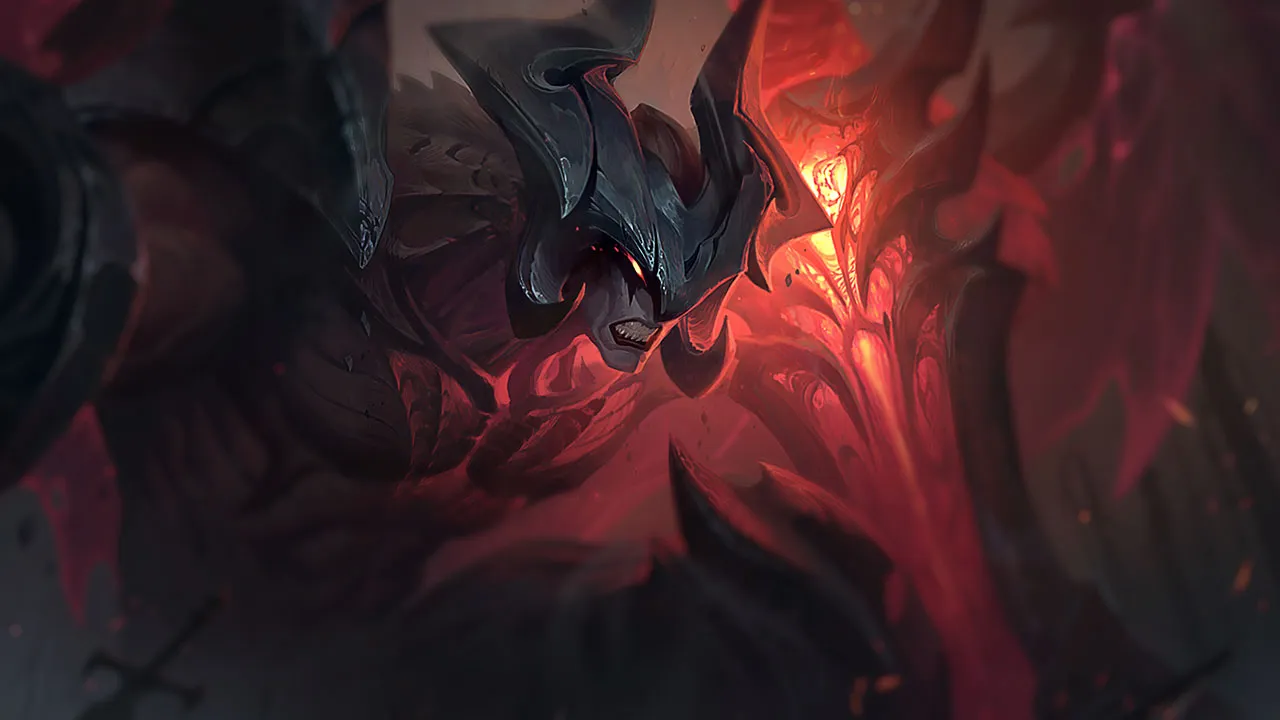
Aatrox, an AD melee bruiser, serves as a perfect example: his kit is entirely built around in-combat sustain. He can decimate entire teams if he's allowed to keep striking. Vladimir, an AP ranged mage, uses his abilities to drain enemies' life and heal himself, but he becomes fragile if caught off guard. Their strength lies in their resilience, but this very resilience becomes a critical weakness if nullified by an or a .


The true strength of these champions doesn't lie in infinite regeneration, but in their capacity to turn fights in their favor by managing attrition, which demands precise timing and a constant evaluation of the threat.
- Evaluate: Determine if the opponent has active anti-heal before every engagement.
- Adapt: Modify your combat style to prioritize short, targeted exchanges, not prolonged duels.
- Utilize: Your healing abilities for "sustain bursts" rather than as constant passive regeneration.
- Avoid: Remaining in the thick of the fight for too long if enemy anti-heal is omnipresent.
The Central Decision: Balancing Aggression and Prudence
The crucial decision for a sustain champion player facing anti-heal is knowing when to force an engagement and when to disengage. It's no longer about winning a duel through sheer sustain, but about winning through damage efficiency and managing your healing windows. Every game demands a constant re-evaluation: Can I survive this initial burst without my maximum regeneration? Do I have enough time to heal before the next damage cycle hits?
Dr. Mundo, an AD melee tank, must balance his natural tankiness with his massive regeneration. If he's under anti-heal, he needs to rely more on his raw resistances and less on his ability to "come back" in a fight. Warwick, an AD melee tank, relies heavily on his sustain below a certain health threshold. Against a , he must be far more selective in his targets and avoid diving headfirst, lest he gets burst down before he can even begin to heal.


The ability to dictate the pace of engagements, by forcing the opponent to use their key abilities before fully committing, is what separates good players from excellent ones.
- Provoke: Opponent's key abilities from a distance before engaging yourself.
- Disengage: Actively if anti-heal is applied and you cannot heal effectively.
- Prioritize: Fragile targets you can eliminate quickly, without relying on a prolonged duel.
- Calculate: The damage you can inflict before anti-heal renders your healing useless.
The Systemic Error: The Illusion of Invincibility Through Healing
The most common error, made by an estimated 80% of players, is believing that their champion is intrinsically "invincible" due to their regeneration. This mindset pushes them to take reckless risks, prolong battles that are already lost, and ignore the visual cues of anti-heal. The data is unforgiving: Vladimir's win rate of 46.11% in Master+ (patch 20260808, Nexus Core data) is a direct testament to this critical error in judgment.
It's not that Vladimir is inherently weak; it's that players fail to modify their behavior. They continue to seek trades where they should be retreating, to dive where they should be waiting, and to expect their Sanguine Pool (3rd ability) to bring them back to life even under the effects of a . This persistence in error becomes a burden for the entire team, transforming a champion with high potential into a significant liability.
The true mastery of these champions when facing anti-heal lies in humility and the ability to recognize that your kit is temporarily weakened, demanding a more strategic and less head-on approach.
- Respect: Opponent anti-heal items as a priority threat, not a minor nuisance.
- Identify: Enemy players who have purchased anti-heal and adjust your focus accordingly.
- Do not abuse: Your regeneration as your sole line of defense; combine it with resistances and evasion.
- Learn: To play in a more "hit and run" style rather than "tank and spank" when anti-heal is present.
Game Phase, Itemization, and Positioning Under Anti-Heal
Adapting to anti-heal must be holistic, touching every aspect of your gameplay. In the early game, exercise greater caution. Do not force trades if the opponent is rushing an anti-heal component. In the mid-game, your itemization must compensate for the lost sustain. In the late game, your positioning becomes paramount to avoid being the primary target and getting shut down.
Regarding itemization, an Aatrox who sees a on the enemy team should consider pure resistance items or burst damage items to compensate for his reduced healing. A Vladimir facing a might need to prioritize burst damage or mobility instead of raw sustain. For tanks like Dr. Mundo, a is an excellent choice to apply anti-heal in return, but do not rely on it to negate the enemy's anti-heal on yourself. Positioning is key: do not expose yourself unnecessarily. Soraka, for instance, must remain at the backline and use her heals surgically, without putting herself in harm's way.


The key is never to depend on a single statistic – regeneration – but to build a diversified game plan that integrates resistance, damage, and mobility to compensate for temporary weaknesses.
- Prioritize: Pure resistance items or explosive damage if anti-heal is a major issue.
- Adapt: Your positioning to avoid prolonged engagements where anti-heal penalizes you.
- Communicate: With your team to coordinate focus on targets without anti-heal or for burst.
- Initiate: Fights on your own terms, when enemy anti-heal is on cooldown or poorly positioned.
Concrete Scenario: Aatrox Against an Anti-Heal Opponent
Imagine this situation: you are Aatrox, level 7, with a Sunderer, and your top lane opponent has just completed their at minute 9. You're accustomed to taking long trades, healing off minions or the enemy. But now, every hit you take and every bit of healing you attempt is reduced by 40%. Your instinct urges you to engage, to "outplay" with your sustain, feeling like you can still brute force it.
This is a fatal error. Instead, wait for the opponent to use a key ability on minions, or for them to be poorly positioned. Use your The Darkin Blade (1st ability) for a quick poke, then immediately retreat. Do not linger for the second or third hit of The Darkin Blade if it means taking significant damage in return. Your objective is no longer to win the exchange through sustain, but to win it through raw damage and intelligent disengagement. Force the opponent to expend their resources without you having to heal excessively, then fully commit only if they are low on health and you can burst them down without relying on your regeneration.
Anti-heal is not a death sentence; it's a critical alarm bell. It forces you to evolve, to think beyond your champion's raw statistics. True power doesn't lie in an overpowered kit, but in the ability to adapt to every situation, to every enemy item choice. That is the essence of the game.
- Change: Your mentality towards anti-heal; consider it a gameplay modifier, not an absolute counter.
- Master: The phases of poking and disengaging to wear down the opponent without relying on your sustain.
- Prioritize: Survival through positioning and resistances rather than solely through regeneration.
- Analyze: Each situation to determine if a prolonged fight is viable or if a quick burst is necessary.
"The battlefield changes. If you do not change with it, you are already dead." - Blade, Mechanical & Gameplay Specialist.
Frequently asked questions
How should Aatrox adapt his gameplay when facing anti-heal?
Aatrox should prioritize quick combos of The Darkin Blade (1st ability) to deal damage and disengage, rather than seeking prolonged fights. He must wait for windows where the enemy's anti-heal is on cooldown or focus on squishier targets for a quick burst, without relying on his usual regeneration.
Does anti-heal make Soraka useless?
No, but anti-heal forces Soraka to be more cautious and strategic. She must prioritize safe positioning and use her heals more reactively and precisely, rather than spamming them. Building resistance items or cooldown reduction can help her compensate for the reduced effectiveness of her healing.
Which anti-heal items are most effective against Dr. Mundo?
Against Dr. Mundo, for AD champions and for AP champions are very effective. His passive regeneration and ultimate are significantly reduced, forcing him to rely more on his raw resistances. is also an option for opposing tanks, applying anti-heal in return.
Why is Vladimir's win rate so low in Master+ when facing anti-heal?
Vladimir's win rate of 46.11% in Master+ (patch 20260808, Nexus Core data) is low because many players do not adjust their aggressive playstyle. They rely too heavily on his ability to heal in combat, which is directly countered by anti-heal. The error is behavioral: failing to adapt to short trades and burst engagements.
How can Warwick survive anti-heal in the jungle?
Warwick must be more selective in his ganks and duels. Instead of relying on his sustain to survive skirmishes, he needs to ensure his targets are isolated or low health to eliminate them quickly. Prioritizing ganks on lanes without anti-heal and adapting his build with more damage or pure resistances can help him remain relevant.