June 2026 · Patch 7.1f
Assassin · JUNGLE · TOP

Rengar Wild Rift Counters Guide

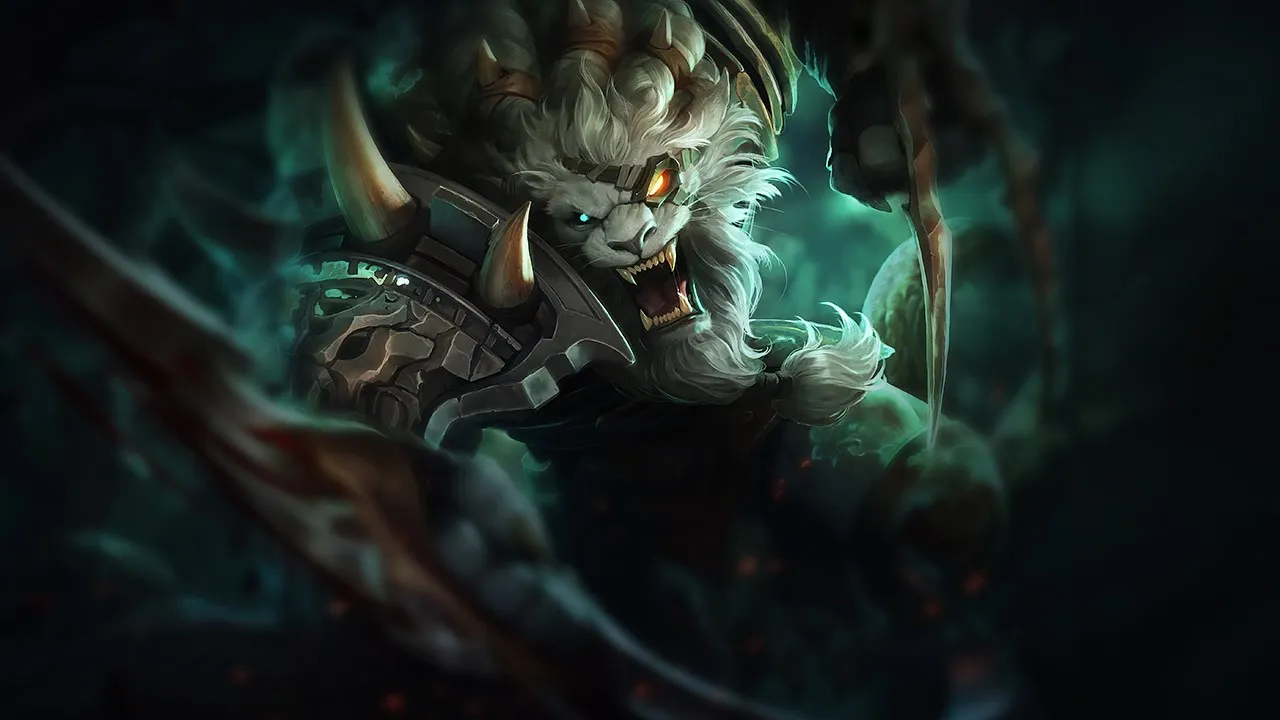
Rengar is heavily countered by dense vision that nullifies his ambushes from bushes. Tight peel compositions around carries prevent his leaps from connecting on priority targets. Oracle items and control wards are his worst enemies in the mid game.

★ JUNGLE · TOP Tier S
DMG
UTIL
TANK
DIFF
Win 50.1% #34 · ↓9pt
Pick 1.7% #35
Ban 1.4% #57

Rengar Wild Rift Counters Guide

Hard Counters 5
Unfavorable 4
Skill Matchups 3
Favorable 2

Items to Counter Rengar

Buy these items to reduce this champion's effectiveness in your games.

Edge of Night
Edge of Night Passe un contrôle clé (snare/hook) pour atteindre la backline.
Guardian Angel
Guardian Angel Sécurité indispensable quand tu dois forcer un pick risqué.
Mortal Reminder
Mortal Reminder Anti-heal contre bruisers/enchanteurs sustain.
Maw of Malmortius
Maw of Malmortius Bouclier anti-burst AP (Annie/Ahri/Akali).
Black Cleaver
Black Cleaver Shred d’armure teamwide sur tes entrées répétées.

How to counter this champion

Counter angle

Countering Rengar is not only about surviving his burst. The real goal is to remove the conditions that make his kit feel unfair: uncontrolled fog, free brush access, isolated targets, and unpunished entries. The existing counters against him do not all beat him in the same way. Some absorb him and lock him down after his leap, others force him into extended duels he does not want, and some junglers contest his tempo before he reaches his pick windows. For Rengar, the game becomes difficult when he can no longer choose the target or the timing. If he is forced to enter frontally or reveal his path too early, he loses much of his value.

Patch context

Rengar struggles against champions who break his first contact. His plan relies on an explosive entry, often from brush or ultimate, followed by a fast conversion before the enemy team can respond. Effective counters reduce that window: armor, burst mitigation, immediate crowd control, extended dueling, or faster jungle pressure. It is not only about tankiness; a champion who forces Rengar to use his empowered spell defensively instead of finishing a target already changes the sequence. As the game goes longer, good opponents can save cooldowns for his leap and make every engage costly.

Quick read

  • The best Rengar counters remove his choice: they force him into a prepared answer instead of letting him choose an isolated target.
  • Vision control is almost a counter by itself: without fog or safe brush, Rengar has to walk toward his target like a much more predictable assassin.
  • Extended dueling is dangerous for him when his initial burst is not enough, especially if the opponent can prevent him from resetting or leaving the fight.

Counter archetypes

Anti-burst and post-leap lockdown

This archetype works because it does not simply try to avoid Rengar; it waits for him. Rengar wants his leap to create a short window where the target dies before answering. Champions like Rammus or Jax make that window much less favorable by absorbing the entry, punishing contact, and turning the leap into a risky commitment. If Rengar spends his burst on a target that does not fall, he often ends up inside the enemy response without his best timing available.

How the champion adapts. Rengar should avoid treating these champions as primary targets. He needs to look for backline flanks, wait until their defensive tools are committed elsewhere, or use ultimate to force their positioning rather than jumping directly onto them.

Duelists who deny the short burst trade

Rengar prefers choosing a fight whose duration is already decided: entry, burst, kill, or exit. Duelists like Olaf, Lee Sin, or Kha'Zix disrupt that model because they can contest his jungle tempo, answer before his key items, or force him into a longer exchange than expected. If Rengar does not arrive with prepared Ferocity or vision advantage, he often loses initiative. The danger is especially high in early levels and in areas where he cannot use brush to change the duel angle.

How the champion adapts. He should avoid forced invades without information and prioritize counter-ganks, clean routes, and picks after enemy mistakes. Against this profile, Rengar rarely wins by walking straight into the duel; he wins by choosing the sequence better.

Engage and zone control around objectives

Rengar likes arriving before the fight, controlling an angle, and punishing the first target that crosses. Champions like Wukong or Jarvan IV can make that preparation harder by taking space around objectives themselves. Their presence forces Rengar to respect terrain: if he jumps too early, he can be trapped inside zone-based response; if he arrives too late, his team may already have lost position. This type of counter does not cancel him through pure dueling, but by removing his best entry corridors.

How the champion adapts. Rengar must arrive earlier to the area, sweep the sides, and avoid following the enemy engage head-on. His best answer is often to wait until the first crowd control is used, then cut off a carry’s retreat instead of entering the main zone.

Priority matchups

Rammus

Rammus is a priority matchup because he punishes exactly what Rengar wants to do: enter hard, kill fast, then leave. If Rengar jumps onto a target protected by Rammus or onto Rammus himself, his burst can turn into a trap. The right adaptation is not to force more damage, but to change the target and timing. Rengar must play around flanks, wait for Rammus to show elsewhere, or bait his reaction before looking for the real carry.

Olaf

Olaf is dangerous because he denies short, clean sequences. Rengar often wants to win through surprise, but Olaf can walk into the duel, maintain contact, and make the trade much longer than expected. The matchup requires clear discipline: do not contest early timings without advantage, avoid neutral river fights, and use Rengar to punish lanes or rotations instead of trying to prove he wins the jungle face-off.

Common mistakes against him

Common mistakes against him

  • Trying to counter Rengar only with armor while ignoring brush and river entrance control.
  • Leaving carries alone on side waves when his ultimate is available, then reacting too late to the threat marker.
  • Using defensive spells before Rengar truly commits, allowing him to wait and then return onto a vulnerable target.
  • Chasing him into brush areas after a failed trade, which is exactly where he can recreate a leap or turn the duel.
  • Forcing an objective without sweeping first, giving Rengar the perfect angle to kill before the fight even starts.

Coach notes

  • Against Rengar, the best ward is not always the one that sees the jungle camp; it is often the one that reveals the entry path toward brush or the objective flank.
  • If you play Rengar into a counter, do not try to win the matchup through ego. Try to win the map through timing, vision, and target selection.

FAQ

How do you stop Rengar from snowballing?

The most important thing is denying him simple kills before his major spike. That means deep wards, lanes respecting brush, and grouped presence around early objectives. If Rengar has to use his ultimate just to force Flash without securing a kill afterward, his tempo slows down. He becomes much less threatening when he cannot convert early entries into Youmuu's, Duskblade, or objective pressure.

Should you group against Rengar?

Yes, but not randomly. Grouping in open ground without vision can simply give him a better flank angle. The right answer is moving with structure: support or frontline close to the carry, side sweeps, and nobody crossing river alone. Grouping becomes effective when it forces Rengar to leap into a prepared response, not when it creates a disorganized cluster that is easy to bypass.

Why is brush so important against Rengar?

Brush completely changes Rengar’s real range. An area that looks safe can become dangerous if a brush lets him leap without using ultimate or recreate contact after a trade. Controlling brush is therefore not only about avoiding a gank: it reduces the part of his kit that gives him free angles. Before every objective, the brushes near river should be treated as priority threat points.

What type of champion bothers Rengar the most?

Champions who survive his first contact and prevent him from leaving are the most difficult. Rengar can handle a fragile target if the angle is good, but he struggles when his leap does not create a clear outcome. Anti-burst tanks, duelists who can extend trades, and engagers who control objective zones force him to play much more slowly. The longer he has to wait before entering, the more his impact depends on enemy mistakes.