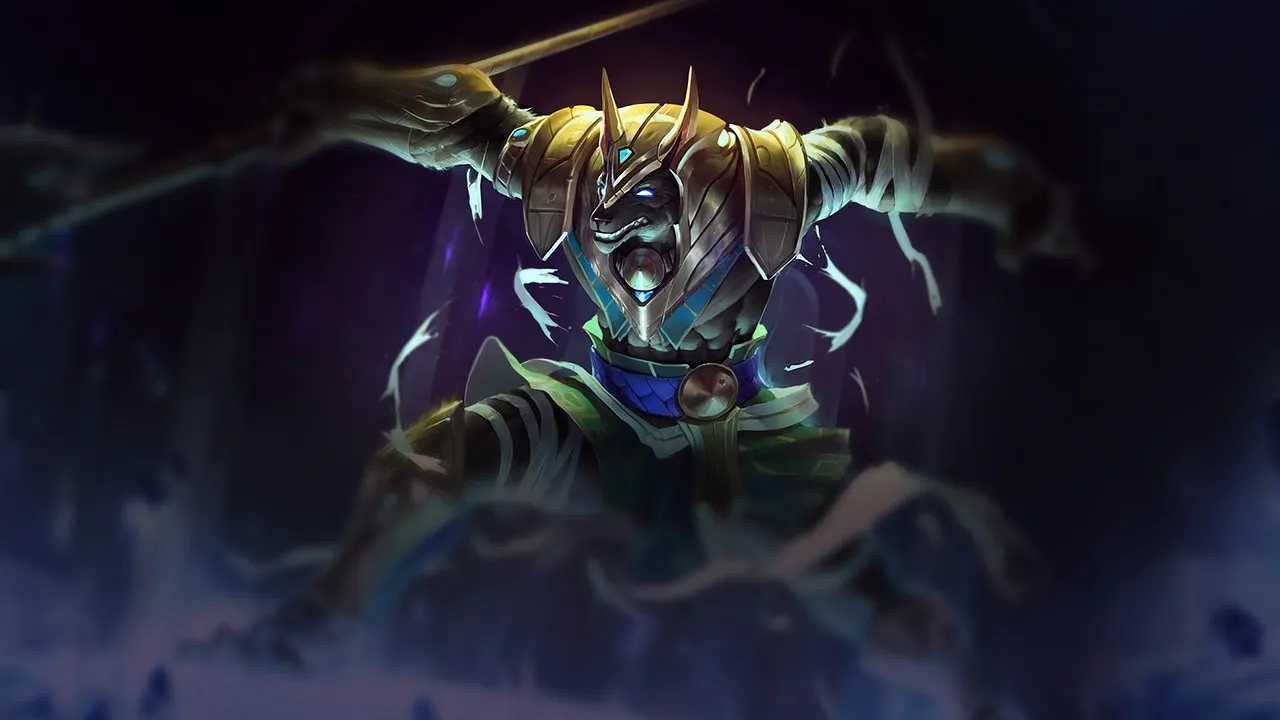
Nasus is structurally weak against compositions that poke and harass him in early to prevent stack accumulation. Champions with sustained kite or disengage reduce his impact regardless of stack count. Anti-heal and % max health damage are his greatest threats.
★ TOP · JUNGLETier C
DMG
UTIL
TANK
DIFF
Win46.4%#95 · ↓1pt
Pick5.6%#12
Ban2.9%#46
Nasus Wild Rift Counters Guide
Hard Counters
4
These champions have a build and playstyle that directly overpower yours, which can make controlling the lane and farming extremely difficult. Their kit can neutralize your core strengths or punish you the moment you try to play your usual game plan. In these matchups, the goal is often to minimize mistakes and look for ways to win outside of direct confrontation.
Hard counterSurvivalThe core issue stems from how Ragnarok completely neutralizes your defensive kit. Once Olaf activates his ultimate, your primary survival tool, Wither, is rendered entirely useless. He can run you down unimpeded, repeatedly resetting Undertow while hammering you with Reckless Swing and scaling his attack speed through Berserker Rage. Without that massive movement speed slow, you have no way to disengage.Olaf build →See details
Olaf
The interaction that decides it
Olaf's Ragnarok (R) grants him complete crowd control immunity, rendering Nasus's Wither (W) entirely useless and allowing Olaf to run him down.
Why
The core issue stems from how Ragnarok completely neutralizes your defensive kit. Once Olaf activates his ultimate, your primary survival tool, Wither, is rendered entirely useless. He can run you down unimpeded, repeatedly resetting Undertow while hammering you with Reckless Swing and scaling his attack speed through Berserker Rage. Without that massive movement speed slow, you have no way to disengage.
Lane impact
This dynamic forces you into an extremely passive defensive posture under your own turret. You must routinely sacrifice early minions and delay stacking Siphoning Strike just to stay out of Undertow range. The moment Olaf unlocks Ragnarok, the lane becomes a hazard zone; stepping past your river line is a death sentence, allowing him to freeze indefinitely or crash massive waves.
How to play
To survive this onslaught, rely on Spirit Fire from maximum range to farm safely and thin crashing waves before they reach your tower. Never pre-emptively cast Wither if he has ultimate pressure; force him to commit Ragnarok first, then use your summoner spells. If he dives you, activate Fury of the Sands immediately for the health buffer, using Soul Eater lifesteal on nearby minions to outlast him.
Magic damageEarly pressureRumble's relentless magic damage pressure makes traditional stacking impossible. You cannot walk up to the wave to use Siphoning Strike without taking massive, unavoidable burn damage. To survive this lane, you are forced to abandon your usual scaling path and max Spirit Fire first. Using this ranged zone to secure minions from a safe distance keeps you alive but completely sacrifices your early stack count.Rumble build →See details
Rumble
The interaction that decides it
Rumble's constant magic damage pressure forces Nasus to max Spirit Fire (E) for ranged farming, sacrificing early Siphoning Strike (Q) stacks.
Why
Rumble's relentless magic damage pressure makes traditional stacking impossible. You cannot walk up to the wave to use Siphoning Strike without taking massive, unavoidable burn damage. To survive this lane, you are forced to abandon your usual scaling path and max Spirit Fire first. Using this ranged zone to secure minions from a safe distance keeps you alive but completely sacrifices your early stack count.
Lane impact
This forced shift ruins your wave control. Spirit Fire constantly pushes the wave toward Rumble, leaving you vulnerable to ganks without the safety of your tower. You will bleed gold, and your delayed Siphoning Strike power spike means you cannot contest his roams or protect your tower. Soul Eater's passive lifesteal is useless because you cannot safely auto-attack to recover health.
How to play
Start with magic resistance items immediately instead of rushing cooldown reduction. Cast Spirit Fire only when multiple minions are low to minimize unnecessary wave pushing. If Rumble freezes the wave near his tower, do not walk up; instead, use Wither to slow his approach and escape. Save Fury of the Sands purely as a defensive tool to survive his diving attempts rather than looking for an all-in fight.
DiveEarly pressureVolibear completely shuts down your early scaling because his Frenzied Maul out-sustains Soul Eater in short trades. Once he marks you, his second bite tears through your health bar while keeping him healthy. This innate healing, combined with the raw dive power of Stormbringer which disables your only safe haven, makes your usual strategy of stacking Siphoning Strike under your outer turret highly dangerous.Volibear build →See details
Volibear
The interaction that decides it
Volibear's Frenzied Maul (W) sustain and dive potential with Stormbringer (R) make it incredibly difficult for Nasus to safely farm under tower early.
Why
Volibear completely shuts down your early scaling because his Frenzied Maul out-sustains Soul Eater in short trades. Once he marks you, his second bite tears through your health bar while keeping him healthy. This innate healing, combined with the raw dive power of Stormbringer which disables your only safe haven, makes your usual strategy of stacking Siphoning Strike under your outer turret highly dangerous.
Lane impact
You cannot contest the wave early, allowing Volibear to crash massive minion waves at will. When tucked under your turret, you are never safe; his Sky Splitter shields him from tower shots while slowing you, setting up a lethal dive with Stormbringer. This constant threat forces you to forfeit substantial gold, delaying your Siphoning Strike stacks and bleeding plates without receiving any jungle assistance.
How to play
To survive, never let Volibear land a second Frenzied Maul. If he bites you once, immediately cast Wither to cripple his movement speed and back away until the mark expires. Use Spirit Fire from a distance to thin out crashing waves so they do not build into massive dive opportunities. If he activates Stormbringer to dive you, immediately run behind your tier-two pathing instead of fighting back; giving up the outer turret is always better than giving him a kill and your stacks.
Wave clearEarly pressureDarius completely shuts down your early game because his passive Hemorrhage punishes any extended trade you attempt to take. Whenever you step forward to stack Siphoning Strike, Darius can pull you in with Apprehend, reset his auto-attack with Crippling Strike, and quickly stack his bleed. Nasus's passive Soul Eater cannot sustain through this early pressure, making it impossible to fight him head-on.Darius build →See details
Darius
The interaction that decides it
Freeze the wave near your tower and use Apprehend to pull Nasus when he steps up to stack Siphoning Strike.
Why
Darius completely shuts down your early game because his passive Hemorrhage punishes any extended trade you attempt to take. Whenever you step forward to stack Siphoning Strike, Darius can pull you in with Apprehend, reset his auto-attack with Crippling Strike, and quickly stack his bleed. Nasus's passive Soul Eater cannot sustain through this early pressure, making it impossible to fight him head-on.
Lane impact
If Darius freezes the minion wave near his turret, you are in extreme danger. Stepping up to secure a single stack of Siphoning Strike exposes you to Apprehend, followed by a devastating Decimate that heals him while chunking your health. You will find yourself locked out of gold, forced to take bad recall timings, and unable to assist your jungler without risking a lethal Noxian Guillotine execute.
How to play
To survive, you must surrender early gold and let the wave push into your tower. Use Spirit Fire from a safe distance to secure dying minions and prevent a permanent freeze. If Darius does catch you with Apprehend, immediately cast Wither to cripple his movement and escape before he stacks Hemorrhage. If forced to fight inside his Decimate, hug him closely to hit the handle, denying his healing until you have Fury of the Sands.
These champions have tools that generally give them the edge in a fight, without making the matchup unwinnable. They might have more range, a better ability to soak up your offense, or more ways to answer your engages. You'll need to adapt your approach and carefully pick your moments to accept a fight.
Early pressureWave clearAmbessa represents a brutal lane opponent because she exploits your early-game fragility. Her Cunning Sweep hits hard and can chip away at you even when you seek safety under your turret. Crucially, your primary self-defense tool, Wither, loses much of its value here. Since Drakehound's Step allows her to dash after using any ability, she can completely bypass your crippling movement speed slow to maintain her offensive pressure.Ambessa build →See details
Ambessa
The interaction that decides it
Abuse Nasus's weak early game by using Cunning Sweep to poke him under tower and Drakehound's Step to ignore his Wither slow by dashing.
Why
Ambessa represents a brutal lane opponent because she exploits your early-game fragility. Her Cunning Sweep hits hard and can chip away at you even when you seek safety under your turret. Crucially, your primary self-defense tool, Wither, loses much of its value here. Since Drakehound's Step allows her to dash after using any ability, she can completely bypass your crippling movement speed slow to maintain her offensive pressure.
Lane impact
This interaction forces you into a defensive stance where securing minions with Siphoning Strike becomes a hazardous chore. Ambessa will easily crash large waves to dive you or poke you under tower with Cunning Sweep. If your health drops too low, she will easily execute you using Public Execution. Your passive Soul Eater helps you recover, but you must accept losing gold to preserve your health bar.
How to play
To survive, prioritize keeping the minion wave just outside your turret range. Use Spirit Fire to thin out large groups of minions before they crash, reducing her window to poke you. Never initiate trades; instead, save Wither until she has exhausted her dashes from Drakehound's Step or attempts to disengage. Once you unlock Fury of the Sands and accumulate enough stacks on Siphoning Strike, you can finally look to turn the tide.
Early pressureScalingWave clearThis matchup is defined by how easily Aatrox can disrupt your farming loop. When you attempt to stack Siphoning Strike on minions crashing under your turret, Aatrox will routinely space his three strikes of The Darkin Blade to hit you with the sweetspots. This constant knock-up and damage completely interrupts your last-hit rhythm, turning what should be your safe farming zone into a punishing gauntlet.Aatrox build →See details
Aatrox
The interaction that decides it
Aatrox can easily interrupt Nasus's Siphoning Strike last-hits under tower by poking him with The Darkin Blade sweetspots.
Why
This matchup is defined by how easily Aatrox can disrupt your farming loop. When you attempt to stack Siphoning Strike on minions crashing under your turret, Aatrox will routinely space his three strikes of The Darkin Blade to hit you with the sweetspots. This constant knock-up and damage completely interrupts your last-hit rhythm, turning what should be your safe farming zone into a punishing gauntlet.
Lane impact
You will find yourself trapped in a vicious cycle where the enemy constantly shoves the wave to force you under tower. Because you cannot easily hold the minions against his heavy area-of-effect damage, you are forced to trade health for stacks. Siphoning Strike becomes a risky endeavor, leading to a slow bleed of your health pool that Soul Eater cannot fully offset, eventually forcing premature recalls and loss of tower plates.
How to play
To survive this lane, you must alter how you use Spirit Fire. Instead of saving it, drop it early to thin the incoming wave before it crashes, preventing Aatrox from locking you under your tower where his The Darkin Blade sweetspots are guaranteed to hit. If he commits to an aggressive forward Umbral Dash, immediately cast Wither to cripple his movement, making it incredibly difficult for him to align his subsequent strikes while you safely back away.
Wave clearEarly pressureCamille dominates the early laning phase because Tactical Sweep allows her to safely poke you from a distance while you try to stack Siphoning Strike. Her Adaptive Defenses shield absorbs your physical retaliation, reinforcing her early advantage. However, Camille's reliance on swift hit-and-run trades backfires if you catch her with Wither. Without her mobility, she cannot escape your retaliation, turning long chases into a dangerous trap for her.Camille build →See details
Camille
The interaction that decides it
Camille can freely poke Nasus with Tactical Sweep and interrupt his farm, but must avoid long chases once hit by Wither.
Why
Camille dominates the early laning phase because Tactical Sweep allows her to safely poke you from a distance while you try to stack Siphoning Strike. Her Adaptive Defenses shield absorbs your physical retaliation, reinforcing her early advantage. However, Camille's reliance on swift hit-and-run trades backfires if you catch her with Wither. Without her mobility, she cannot escape your retaliation, turning long chases into a dangerous trap for her.
Lane impact
Tactical Sweep naturally pushes the minion wave toward your tower, forcing you to farm under pressure. Because you cannot contest her early without losing massive health, you must concede priority. Missing health makes you vulnerable to a dive via Hookshot combined with The Hextech Ultimatum. If you fail to keep the wave frozen near your turret, she will freeze it instead, denying you Siphoning Strike stacks entirely.
How to play
To survive, bait Tactical Sweep by walking near dying minions, then step inside its inner half to avoid the slow and her heal. Use Spirit Fire to secure distant minions when your health is low. Never initiate trades; instead, save Wither for when she misses Hookshot or overextends. Once her mobility is down, activate Fury of the Sands and use Wither to run her down, forcing her to absorb repeated Siphoning Strike hits.
Early pressurePositioningFiora dominates the early levels by constantly using Lunge to poke and pop your Duelist's Dance vitals, which bypasses your natural sustain from Soul Eater. If she denies you early farm, you cannot stack Siphoning Strike. However, once you survive the early pressure, your Wither completely cripples her attack-speed-reliant kit, preventing her from easily popping Grand Challenge vitals during Fury of the Sands.Fiora build →See details
Fiora
The interaction that decides it
Fiora must abuse Lunge to hit vitals early before Nasus scales and cripples her with Wither.
Why
Fiora dominates the early levels by constantly using Lunge to poke and pop your Duelist's Dance vitals, which bypasses your natural sustain from Soul Eater. If she denies you early farm, you cannot stack Siphoning Strike. However, once you survive the early pressure, your Wither completely cripples her attack-speed-reliant kit, preventing her from easily popping Grand Challenge vitals during Fury of the Sands.
Lane impact
Because Fiora hunts for vitals with Lunge, she will constantly try to trade. This forces you to concede early priority and let the minions push toward your turret. If you fail to freeze the wave near your tower, her Bladework will quickly shred your health pool, forcing a bad recall that costs you turret plates. This passive stance means your jungler cannot expect any assistance in the top river.
How to play
To survive, you must position defensively to reset unfavorable Duelist's Dance vitals by walking back out of her vision. Drop Spirit Fire to help secure minions from a safe distance while maintaining a freeze. Never use Wither unless she commits her Lunge aggressively or after she wastes Riposte, as she can stun you if she parries it. If her Grand Challenge is active, hug the nearest wall to block her from hitting the final vital.
Early pressureWave clearThis matchup is a race against the clock where Irelia holds the early cards. Her passive, Ionian Fervor, allows her to shred you during the first levels if she stacks it via Bladesurge. However, your Wither directly guts her attack speed, completely disabling her primary source of damage. If she cannot snowball and build a gold lead before you accumulate stacks with Siphoning Strike, you will inevitably outscale her.Irelia build →See details
Irelia
The interaction that decides it
Nasus's Wither heavily cripples Irelia's attack speed, requiring her to secure a lead before he stacks Siphoning Strike.
Why
This matchup is a race against the clock where Irelia holds the early cards. Her passive, Ionian Fervor, allows her to shred you during the first levels if she stacks it via Bladesurge. However, your Wither directly guts her attack speed, completely disabling her primary source of damage. If she cannot snowball and build a gold lead before you accumulate stacks with Siphoning Strike, you will inevitably outscale her.
Lane impact
Expect intense pressure from the first wave. Irelia will constantly look to prep low-health minions to dash with Bladesurge, trying to catch you with Flawless Duet once her passive is fully stacked. You must let her push, keeping the wave frozen just outside your turret range. If you step up too far, she can chase you down the long lane, forcing your Fury of the Sands defensively or sending you back to base.
How to play
Your main priority is survival and farming. Never fight when she has full stacks of Ionian Fervor. Position yourself behind your own healthy minions to make her Flawless Duet predictable. If she initiates with Vanguard's Edge, immediately cast Wither to cripple her basic attacks and drop Spirit Fire under you to shred her armor. Use Fury of the Sands to survive her initial burst, then punish her with stacked Siphoning Strike attacks once her passive stacks decay.
Early pressureScalingHeimerdinger's oppressive zone control relies entirely on his H-28G Evolution Turret setup, which constantly pushes you under tower. While his ranged harass from Hextech Micro-Rockets makes farming painful, you have a unique response: Spirit Fire allows you to damage and weaken his turrets safely from a distance. This sets up easy stacks for Siphoning Strike to keep your scaling alive, even under heavy siege.Heimerdinger build →See details
Heimerdinger
The interaction that decides it
Nasus can use Spirit Fire to safely damage and clear your H-28G Evolution Turrets from a distance while stacking his Siphoning Strike.
Why
Heimerdinger's oppressive zone control relies entirely on his H-28G Evolution Turret setup, which constantly pushes you under tower. While his ranged harass from Hextech Micro-Rockets makes farming painful, you have a unique response: Spirit Fire allows you to damage and weaken his turrets safely from a distance. This sets up easy stacks for Siphoning Strike to keep your scaling alive, even under heavy siege.
Lane impact
This matchup becomes a constant race against his relentless push. Heimerdinger will park his turrets to lock you under your tower, threatening your plates while fishing for stuns with CH-2 Electron Storm Grenade. Because you are forced to use your mana on clearing his constructs rather than trading, you cannot assist your team early, sacrificing all rift priority to prevent your turret from crumbling to his UPGRADE!!! empowered pushes.
How to play
Maximize Spirit Fire early to match his push and weaken his H-28G Evolution Turrets from safety. Only walk forward to last-hit a turret with Siphoning Strike when his CH-2 Electron Storm Grenade is on cooldown, or you will be stunned and melted by his Hextech Micro-Rockets. If he activates UPGRADE!!! for a massive turret, back off immediately, use Fury of the Sands for survivability, and wait for the ultimate duration to expire before reclaiming your lane.
Wave clearEarly pressureWhile Nasus usually relies on Wither to shut down early aggression and farm safely under tower, K'Santé possesses a direct counter-measure. By activating Path Maker, K'Santé completely ignores the crippling movement and attack speed reduction of your slow. This crowd-control immunity allows him to reposition effortlessly, driving you out of safety and setting up his displacement combos even when you attempt to disengage.K'Santé build →See details
K'Santé
The interaction that decides it
K'Santé can use Path Maker to ignore the crippling slow of Nasus's Wither while positioning to knock him away from his tower.
Why
While Nasus usually relies on Wither to shut down early aggression and farm safely under tower, K'Santé possesses a direct counter-measure. By activating Path Maker, K'Santé completely ignores the crippling movement and attack speed reduction of your slow. This crowd-control immunity allows him to reposition effortlessly, driving you out of safety and setting up his displacement combos even when you attempt to disengage.
Lane impact
This interaction makes holding a freeze near your turret incredibly risky. If you step up to last-hit with Siphoning Strike, K'Santé can use Footwork to close the gap, absorb your retaliation, and use Ntofo Strikes to pull you deep into the lane. You are forced to surrender early wave control, meaning you will bleed gold and experience while constantly playing under the threat of a dive when he activates All Out.
How to play
To survive this lane, you must play defensively and conserve your mana. Never cast Wither proactively; instead, hold it until K'Santé has already committed his Path Maker channel. If he attempts to freeze the wave, use the armor reduction and area damage of Spirit Fire to break it from a safe distance. Lean heavily on your passive Soul Eater to recover your health between short trades, and only match his aggression when you have Fury of the Sands active to survive his high-damage ultimate.
Zone controlEarly pressureThis matchup is defined by how easily Mordekaiser can punish your early scaling. Every single time you step forward to secure a stack of *Siphoning Strike*, you expose yourself to *Death's Grasp*. If he pulls you in, he immediately triggers *Darkness Rise* with a quick follow-up, winning any short trade. Because your early-game health pool cannot sustain repeated pulls, his constant threat of displacement halts your stacking momentum before you can outscale him.Mordekaiser build →See details
Mordekaiser
The interaction that decides it
Mordekaiser can easily pull Nasus with Death's Grasp when he steps up to stack Siphoning Strike, forcing him out of lane before he scales.
Why
This matchup is defined by how easily Mordekaiser can punish your early scaling. Every single time you step forward to secure a stack of *Siphoning Strike*, you expose yourself to *Death's Grasp*. If he pulls you in, he immediately triggers *Darkness Rise* with a quick follow-up, winning any short trade. Because your early-game health pool cannot sustain repeated pulls, his constant threat of displacement halts your stacking momentum before you can outscale him.
Lane impact
Practically, you must surrender early priority and let the wave push toward your tower. If you contest the first few waves, a single well-placed *Death's Grasp* combined with *Obliterate* will chunk your health bar, forcing an early recall. This delay in your item spikes allows Mordekaiser to freeze the wave or crash it to dive you once he unlocks *Realm of Death*, completely isolating you from any jungle help.
How to play
To survive, you must master baiting out his pull. Walk up as if to last-hit with *Siphoning Strike*, then instantly step backward to make *Death's Grasp* miss. If he wastes it, you have a short window to safely farm. Maximize your safety by dropping *Spirit Fire* from a distance to farm from safety when your health is too low. If he traps you in *Realm of Death*, immediately use *Wither* to slow his movement and activate *Fury of the Sands* to survive the duel's duration.
Early pressureDisengageJayce dictates the pace of this lane because his Thundering Blow directly neutralizes your primary engage tool. Whenever you attempt to slow him with Wither to close the gap, Jayce will simply use his hammer form to knock you back, completely preventing you from landing your Siphoning Strike. This interaction keeps you at bay, allowing him to constantly poke you down from range.Jayce build →See details
Jayce
The interaction that decides it
Jayce must save Thundering Blow to disengage when Nasus casts Wither, preventing Nasus from sticking to him with Siphoning Strike.
Why
Jayce dictates the pace of this lane because his Thundering Blow directly neutralizes your primary engage tool. Whenever you attempt to slow him with Wither to close the gap, Jayce will simply use his hammer form to knock you back, completely preventing you from landing your Siphoning Strike. This interaction keeps you at bay, allowing him to constantly poke you down from range.
Lane impact
Because of this disengage, you cannot contest early waves. Jayce will push you under tower using Lightning Field and poke you while you try to farm. Your health bar will constantly dwindle, forcing early recalls that cost you valuable minion waves. You must accept losing outer tower health to protect your own life, sacrificing early map pressure while you slowly build up your stacks.
How to play
To survive, let the wave crash and use Spirit Fire to thin out massive groups of minions before they reach your turret. Only cast Wither if Jayce has already used his knockback tool to clear a minion or harass. If he freezes the wave near his turret, do not walk up; instead, stay back within experience range and wait for the wave to bounce, relying on Soul Eater to slowly recover.
SustainScalingSett dominates the early game because his Facebreaker can pull you in and interrupt your Siphoning Strike stacks. His double-punch passive, Pit Grit, combined with Knuckle Down, inflicts heavy damage if you walk up. However, the scaling gap closes heavily in your favor once you max Wither. This massive attack speed cripple completely neuters Sett's basic attack patterns and his overall DPS.Sett build →See details
Sett
The interaction that decides it
Sett's Facebreaker (E) can interrupt Nasus's last-hit attempts, but Nasus outscales him once Wither (W) cripples Sett's basic attack speed.
Why
Sett dominates the early game because his Facebreaker can pull you in and interrupt your Siphoning Strike stacks. His double-punch passive, Pit Grit, combined with Knuckle Down, inflicts heavy damage if you walk up. However, the scaling gap closes heavily in your favor once you max Wither. This massive attack speed cripple completely neuters Sett's basic attack patterns and his overall DPS.
Lane impact
You cannot contest early waves, as Sett will use Facebreaker to pull you into his minions and follow up with a true-damage Haymaker. This forces you to freeze the wave near your turret, utilizing Soul Eater to heal back his harass. Expect constant tower pressure; if you get greedy for a canon minion with Siphoning Strike, Sett can use The Show Stopper to slam you deep into danger.
How to play
Prioritize wave control by letting Sett push, using Spirit Fire only to secure dying minions from a safe distance without breaking the freeze. Never use Siphoning Strike on a minion if Sett has Facebreaker off cooldown, unless you are safely under your turret. If Sett dives you with The Show Stopper, activate Fury of the Sands immediately for the health boost and cast Wither on him to slow his retreat.
CC immunityEarly pressureGaren completely neutralizes your primary defensive and offensive tool, Wither, because activating Decisive Strike instantly cleanses the slow. Whenever you try to lock him down or disengage, he can break free, silence you to prevent Spirit Fire or Fury of the Sands, and spin through your minion wave with Judgment. This interaction strips away your control, forcing you into a passive state where you cannot easily retaliate.Garen build →See details
Garen
The interaction that decides it
Garen can instantly cleanse Nasus's Wither by activating Decisive Strike.
Why
Garen completely neutralizes your primary defensive and offensive tool, Wither, because activating Decisive Strike instantly cleanses the slow. Whenever you try to lock him down or disengage, he can break free, silence you to prevent Spirit Fire or Fury of the Sands, and spin through your minion wave with Judgment. This interaction strips away your control, forcing you into a passive state where you cannot easily retaliate.
Lane impact
Because Garen easily breaks your slow, you cannot freeze the wave near your turret without risking heavy damage. He will use Judgment to shove waves, triggering Perseverance to heal up any chip damage you deal. If you walk up to last-hit with Siphoning Strike, he will punish you with Decisive Strike. You will find yourself constantly pushed under turret, slowly losing plates while struggling to secure stacks.
How to play
To survive, play a patient waiting game with your cooldowns. Never cast Wither proactively; instead, wait for Garen to strike with Decisive Strike first. Once his silence ends and he spins with Judgment, drop Spirit Fire to shred his armor and retreat. Use Siphoning Strike strictly for safe farming under your turret, relying on Soul Eater to regenerate your health until you can safely survive his Demacian Justice burst.
DuelingScalingWhile Yone dominates the early laning phase with his mixed damage from Way of the Hunter, the matchup pivots entirely around his Soul Unbound windows. When Yone initiates with his spirit form, your immediate response must be Wither. This massive attack speed and movement speed slow directly cripples his ability to rapidly stack Mortal Steel, neutralizing his third-cast knockup threat and leaving his burst potential completely neutered before he snaps back.Yone build →See details
Yone
The interaction that decides it
Wither (W) severely cripples Yone's attack speed and mobility during his Soul Unbound (E) duration, preventing him from stacking Mortal Steel (Q) effectively.
Why
While Yone dominates the early laning phase with his mixed damage from Way of the Hunter, the matchup pivots entirely around his Soul Unbound windows. When Yone initiates with his spirit form, your immediate response must be Wither. This massive attack speed and movement speed slow directly cripples his ability to rapidly stack Mortal Steel, neutralizing his third-cast knockup threat and leaving his burst potential completely neutered before he snaps back.
Lane impact
Because Yone can safely poke with Spirit Cleave and secure a shield, you will constantly find yourself pushed under turret. You must rely on Soul Eater to heal back his harass between waves. If you waste Wither defensively at the wrong time, Yone will capitalize with Fate Sealed or dive you. However, managing to survive his early pressure means his lane dominance slowly bleeds away.
How to play
Freeze the wave close to your turret and focus on securing last-hits with Siphoning Strike. Never use Wither unless Yone commits forward with Soul Unbound. If he misses his third Mortal Steel strike, drop Spirit Fire to shred his armor and retaliate with a quick trade. If you are forced low, pop Fury of the Sands for the health boost and armor reduction zone, allowing you to survive his dive and turn the fight.
Early pressureSurvivalRenekton dominates the early levels by utilizing Reign of Anger to empower Ruthless Predator, inflicting devastating burst damage that bypasses Nasus's passive sustain from Soul Eater. However, this dynamic shifts dramatically as the game progresses. Once Nasus accumulates enough physical defense to survive the initial onslaught, his scaling takes over. He can safely match the health boost of Dominus with his own Fury of the Sands, turning the duel in his favor.Renekton build →See details
Renekton
The interaction that decides it
Renekton's early Ruthless Predator (W) burst chunks Nasus heavily, but Nasus outscales once he acquires armor and can match Dominus (R) with Fury of the Sands (R).
Why
Renekton dominates the early levels by utilizing Reign of Anger to empower Ruthless Predator, inflicting devastating burst damage that bypasses Nasus's passive sustain from Soul Eater. However, this dynamic shifts dramatically as the game progresses. Once Nasus accumulates enough physical defense to survive the initial onslaught, his scaling takes over. He can safely match the health boost of Dominus with his own Fury of the Sands, turning the duel in his favor.
Lane impact
During the opening minutes, you are forced to concede wave control. Renekton will use Slice and Dice to trade aggressively and push you under tower, threatening a dive with a high-fury Cull the Meek. This deprives Nasus of early Siphoning Strike stacks and locks you in lane, preventing any rotation to help your jungler. You must accept losing turret plates while focusing entirely on surviving his aggressive dive windows.
How to play
Keep a close eye on his fury bar; never step up to secure a Siphoning Strike stack when Reign of Anger is red. If Renekton uses Slice and Dice forward, immediately cast Wither to slow his attack speed and blunt the impact of Ruthless Predator. If you get chunked, drop Spirit Fire from a safe distance to secure dying minions. Only commit to an all-in once you have physical defense, matching his Dominus activation with Fury of the Sands.
PokePositioningTeemo completely shuts down your standard scaling because his Blinding Dart nullifies the damage and stack generation of your Siphoning Strike. Every time you step up to last-hit a minion, he can blind you on reaction. This interaction strips away your primary scaling tool, forcing you to abandon melee farming altogether and rely on the ranged zone of Spirit Fire just to secure basic minion gold.Teemo build →See details
Teemo
The interaction that decides it
Teemo's Blinding Dart (Q) completely negates Siphoning Strike (Q) damage and stacks, forcing Nasus to rely on Spirit Fire (E) to farm from a distance.
Why
Teemo completely shuts down your standard scaling because his Blinding Dart nullifies the damage and stack generation of your Siphoning Strike. Every time you step up to last-hit a minion, he can blind you on reaction. This interaction strips away your primary scaling tool, forcing you to abandon melee farming altogether and rely on the ranged zone of Spirit Fire just to secure basic minion gold.
Lane impact
This dynamic destroys your early wave control, pushing you under tower while Teemo harasses you freely with Toxic Shot. Trading back is impossible since your melee attacks miss during Blinding Dart. You will bleed health and be forced into early, inefficient recalls, giving Teemo free reign to chip your tower and lock you in lane, preventing any early-game map rotations or Teleport plays.
How to play
To survive, pivot your entire strategy by maxing Spirit Fire first and purchasing early magic resistance. Drop Spirit Fire to clear waves from safety, completely ignoring melee stacks until you have defensive items. Only cast Wither if your jungler arrives, as using it defensively is ineffective against his Move Quick. If you get chunked too low, sacrifice minion gold entirely and stay in experience range to let your passive Soul Eater slowly regenerate your health under tower.
Early pressureSurvivalRiven dominates the opening levels by chaining Broken Wings and Ki Burst to execute fast, high-damage trades before you can stack. Her ultimate, Blade of the Exile, amplifies this lethal burst, threatening to dive you. However, her reliance on rapid animations makes her highly vulnerable to Wither, which cripples her attack speed and mobility, allowing your Siphoning Strike to eventually outscale her aggressive kit once you secure some armor.Riven build →See details
Riven
The interaction that decides it
Riven's high mobility and burst with Blade of the Exile (R) can crush Nasus early, but Wither (W) and armor items quickly turn the tide in Nasus's favor.
Why
Riven dominates the opening levels by chaining Broken Wings and Ki Burst to execute fast, high-damage trades before you can stack. Her ultimate, Blade of the Exile, amplifies this lethal burst, threatening to dive you. However, her reliance on rapid animations makes her highly vulnerable to Wither, which cripples her attack speed and mobility, allowing your Siphoning Strike to eventually outscale her aggressive kit once you secure some armor.
Lane impact
Early on, Riven will use Valor and Broken Wings to zone you off the wave, forcing you to farm passively under tower. You must sacrifice early minions, utilizing Spirit Fire to secure what you can while preserving your health bar. If you survive her initial Blade of the Exile power spike without dying, the lane shifts; your lifesteal from Soul Eater and growing Siphoning Strike stacks will neutralize her pressure.
How to play
Prioritize survival by holding Wither specifically for when Riven commits her third strike of Broken Wings or activates Blade of the Exile to disengage. Do not contest early waves; let her push and use Soul Eater to sustain under your turret. If she freezes, use Spirit Fire from a distance to break it. Once you have armor, wait for her to waste Valor's shield before launching a counter-all-in with Fury of the Sands.
PokePositioningVayne's ranged advantage with Night Hunter and Tumble allows her to bully Nasus, while Silver Bolts shreds his health. However, her safety relies on Condemn to push Nasus away. If Nasus can successfully apply Wither, it severely cripples both her movement and attack speed, neutralizing her kiting ability and allowing him to close the distance despite her mobility.Vayne build →See details
Vayne
The interaction that decides it
Vayne can easily self-peel with Condemn (E), but once Nasus lands Wither (W), her attack speed and mobility are crippled enough for him to close the gap.
Why
Vayne's ranged advantage with Night Hunter and Tumble allows her to bully Nasus, while Silver Bolts shreds his health. However, her safety relies on Condemn to push Nasus away. If Nasus can successfully apply Wither, it severely cripples both her movement and attack speed, neutralizing her kiting ability and allowing him to close the distance despite her mobility.
Lane impact
You will constantly be pushed under your turret, suffering poke whenever you try to stack Siphoning Strike. Vayne will try to trigger Silver Bolts under your tower, threatening your health bar and forcing early recalls. She will gain a massive CS lead early on. However, once you unlock Fury of the Sands, the threat of your all-in prevents her from mindlessly overextending without her ultimate, Final Hour.
How to play
Maximize your sustain early by relying on Soul Eater and using Spirit Fire from a safe distance to secure minions you cannot reach. Never walk directly towards Vayne unless you have baited out Condemn or have Wither ready to slow her down. If she uses Tumble aggressively, immediately retaliate with Wither to shut down her DPS, then activate Fury of the Sands to run her down before she can escape.
These matchups are above all duels of execution: both champions have credible ways to gain the upper hand. Dodging one key ability, anticipating an engage correctly, or a single positioning mistake can be enough to tip the duel one way or the other. Knowing the matchup and recognizing the right windows to act are especially important here.
ScalingEarly pressureThis matchup is a direct contest of resources where Gragas cannot easily deny your Siphoning Strike stacks due to his high mana costs on Barrel Roll and the passive healing of Soul Eater keeping you healthy. However, whenever you attempt to punish him by slowing him with Wither, he can instantly negate your engage by casting Body Slam to dash away safely or using Explosive Cask to blow you back.Gragas build →See details
Gragas
The interaction that decides it
Gragas can easily disengage from Nasus's Wither using Body Slam, but struggles to prevent Nasus from stacking Siphoning Strike.
Why
This matchup is a direct contest of resources where Gragas cannot easily deny your Siphoning Strike stacks due to his high mana costs on Barrel Roll and the passive healing of Soul Eater keeping you healthy. However, whenever you attempt to punish him by slowing him with Wither, he can instantly negate your engage by casting Body Slam to dash away safely or using Explosive Cask to blow you back.
Lane impact
Because Gragas can disengage at will, you cannot easily force solo kills, turning this lane into a pure farm battle. Gragas will use Barrel Roll to chip at your health and push the wave, but this allows you to freeze near your turret. Your goal is to secure stacks under tower while using Spirit Fire to match his clear speed, ensuring he cannot roam to impact the map while you scale.
How to play
To succeed, never waste Wither proactively unless Gragas has already wasted Body Slam to clear minions or trade. If he charges forward with Body Slam, immediately activate Fury of the Sands to absorb the burst and use the increased attack range to land a boosted Siphoning Strike. If he tries to disengage with Explosive Cask, walk back to the wave, drop Spirit Fire to shred his armor, and focus entirely on stacking your passive until you outscale his tankiness.
SlowsPositioningThis even matchup is a race against time dictated by how you manage Gwen's early aggression. While she attempts to shred you with A Thousand Cuts, your scaling potential is immense. The critical pivot in every trade is Wither. By severely crippling her attack speed, you prevent her from quickly stacking Snip Snip!, stripping away her main burst and healing before she can execute you.Gwen build →See details
Gwen
The interaction that decides it
Nasus's Wither severely cripples Gwen's attack speed, preventing her from stacking Snip Snip! quickly in duels.
Why
This even matchup is a race against time dictated by how you manage Gwen's early aggression. While she attempts to shred you with A Thousand Cuts, your scaling potential is immense. The critical pivot in every trade is Wither. By severely crippling her attack speed, you prevent her from quickly stacking Snip Snip!, stripping away her main burst and healing before she can execute you.
Lane impact
Gwen will naturally look to push the wave with Skip 'n Slash to pressure you under turret. You must focus on freeze management; letting her crash waves too quickly forces you to farm under pressure where she can poke with Snip Snip!. Keep the minions just outside your tower range, sacrificing early priority to secure safe stacks with Siphoning Strike without bleeding too much health.
How to play
Never initiate trades. Instead, let Gwen slide forward with Skip 'n Slash. The moment she commits, immediately cast Wither to shut down her auto-attacks, then retaliate with Siphoning Strike. If she activates Needlework, use the massive slow from Wither to disengage and walk away, or activate Fury of the Sands to match her survivability. Save Spirit Fire strictly for armor reduction when she is trapped in your slow.
Wave clearSlowsThis matchup is a pure battle of scaling and ability timing. Jax relies on Relentless Assault to shred you, but your Wither completely cripples his attack speed, neutralizing his offensive output. However, Jax can entirely block your Siphoning Strike with a well-timed Counter Strike. Since both of you scale incredibly well, the lane remains highly competitive and depends on who baits the other's defensive tool first.Jax build →See details
Jax
The interaction that decides it
Jax can block Siphoning Strike with Counter Strike, but Nasus's Wither severely cripples Jax's attack speed during all-ins.
Why
This matchup is a pure battle of scaling and ability timing. Jax relies on Relentless Assault to shred you, but your Wither completely cripples his attack speed, neutralizing his offensive output. However, Jax can entirely block your Siphoning Strike with a well-timed Counter Strike. Since both of you scale incredibly well, the lane remains highly competitive and depends on who baits the other's defensive tool first.
Lane impact
Because of this delicate balance, wave control dictates the early game. If Jax pushes too hard, you can safely stack Siphoning Strike under your turret. However, if the wave freezes near his tower, Jax can use Leap Strike to jump on you and force short trades, denying your stacks. You cannot afford to lose your health pool early, meaning you must keep the minions close to your side to scale safely.
How to play
When Jax initiates with Leap Strike and activates Counter Strike, do not attempt to hit him with Siphoning Strike. Instead, immediately cast Wither to slow his movement and attack speed, then walk backward to minimize the stun damage. Once his defensive spin ends, drop Spirit Fire to shred his armor and retaliate with an empowered Siphoning Strike. If he plays passively, focus entirely on last-hitting near your tower.
ScalingTanksThis matchup revolves entirely around the interaction between your ultimates. Jarvan IV wants to trap you with Cataclysm, forcing you to activate Fury of the Sands to survive his initial burst and gain the bonus health. Once you commit your ultimate, he will immediately use Demacian Standard followed by Dragon Strike to escape over his arena walls, leaving you stranded with a wasted ultimate and no targets for Siphoning Strike.Jarvan IV build →See details
Jarvan IV
The interaction that decides it
Jarvan IV can trap Nasus inside Cataclysm to force out Fury of the Sands, then E-Q away to waste the ultimate's duration.
Why
This matchup revolves entirely around the interaction between your ultimates. Jarvan IV wants to trap you with Cataclysm, forcing you to activate Fury of the Sands to survive his initial burst and gain the bonus health. Once you commit your ultimate, he will immediately use Demacian Standard followed by Dragon Strike to escape over his arena walls, leaving you stranded with a wasted ultimate and no targets for Siphoning Strike.
Lane impact
Because Jarvan IV can easily disengage from your Fury of the Sands, you cannot afford to let him dictate the wave state. His Dragon Strike naturally pushes the lane while trying to poke you. You must use Spirit Fire strategically to freeze the minions just outside your turret range. This keeps you safe from his heavy Cataclysm engage, allows secure Siphoning Strike stacking, and prevents him from roaming to impact the map.
How to play
When matching Jarvan IV, your main rule is to monitor his Demacian Standard and Dragon Strike cooldowns. Never activate Fury of the Sands the split second he uses Cataclysm if his mobility combo is still available; instead, wait out the initial wall or use Spirit Fire to shred his armor inside the ring. If he uses his flag-drag combo to engage, immediately cast Wither to slow him down, pop your ultimate, and punish him with Siphoning Strike while he has no escape tool left.
Map pressureMalphite relies on chipping away your health bar with Seismic Shard, but your passive Soul Eater completely nullifies this strategy. Every time he attempts to poke, you can simply heal back the damage by auto-attacking the wave. Because his mana pool is limited and your lifesteal is constant, his harass fails to create a health disadvantage, leaving both of you in a passive farm lane.Malphite build →See details
Malphite
The interaction that decides it
Nasus easily sustains through Malphite's poke using Soul Eater, turning the lane into a passive farm contest where Malphite must impact map fights before Nasus outscales.
Why
Malphite relies on chipping away your health bar with Seismic Shard, but your passive Soul Eater completely nullifies this strategy. Every time he attempts to poke, you can simply heal back the damage by auto-attacking the wave. Because his mana pool is limited and your lifesteal is constant, his harass fails to create a health disadvantage, leaving both of you in a passive farm lane.
Lane impact
Since neither of you can easily execute the other early on, the lane becomes a test of wave control. You must hold the minions near your turret to safely stack Siphoning Strike and deny Malphite easy roaming opportunities. If you freeze the wave successfully, Malphite is forced to choose between wasting Unstoppable Force trying to dive you or abandoning the lane to find impact elsewhere on the map.
How to play
Focus purely on freezing the wave just outside your turret range. Avoid using Spirit Fire on the wave, as this will push the lane and expose you. If Malphite uses Thunderclap or Ground Slam on minions, let his area damage push the wave toward you. Should he abandon the lane to roam with Unstoppable Force, immediately ping your team and fast-push using Siphoning Strike to punish his absence by taking his tower plates.
DuelingPositioningThis skill matchup revolves around Urgot's need to circle you to trigger his Echoing Flames passives while firing with Purge. Because Wither cripples his movement speed, it directly neutralizes his ability to orbit around you. Without those shotgun leg procs, his DPS falls flat during extended duels, allowing your passive Soul Eater lifesteal to keep you healthy while you trade back.Urgot build →See details
Urgot
The interaction that decides it
Urgot's Purge (W) fires at a fixed rate, but Wither (W) drastically slows his movement speed, preventing him from circling Nasus to trigger Echoing Flames (P) passives.
Why
This skill matchup revolves around Urgot's need to circle you to trigger his Echoing Flames passives while firing with Purge. Because Wither cripples his movement speed, it directly neutralizes his ability to orbit around you. Without those shotgun leg procs, his DPS falls flat during extended duels, allowing your passive Soul Eater lifesteal to keep you healthy while you trade back.
Lane impact
Urgot will pressure early with Corrosive Charge to force you under turret. If he misses Disdain, his main defensive tool is gone, opening a window to trade. You must use Spirit Fire carefully to thin waves without ruining your freeze. Post-level 5, activating Fury of the Sands grants the crucial health boost needed to stay above the execution threshold of his Fear Beyond Death.
How to play
Position yourself away from your own dying minions to avoid the splash damage from his Echoing Flames passives. Never initiate with Wither; instead, hold it until Urgot commits to activating Purge. If he successfully grabs you with Disdain, immediately cast Fury of the Sands to soak the incoming burst, then run him down with Siphoning Strike while his movement is crippled and his shotgun legs are on cooldown.
Map pressureScalingThis matchup revolves entirely around how you handle Shen's Spirit's Refuge. Because this defensive zone completely blocks your Siphoning Strike, blindly engaging will nullify your main source of damage and healing from Soul Eater. Since you cannot interrupt his global teleport, Stand United, with your kit, the lane becomes a strict race between his map-wide plays and your ability to punish his absences.Shen build →See details
Shen
The interaction that decides it
Shen's Spirit's Refuge (W) blocks Nasus's Siphoning Strike (Q) entirely, requiring Nasus to bait out the zone before committing to a trade.
Why
This matchup revolves entirely around how you handle Shen's Spirit's Refuge. Because this defensive zone completely blocks your Siphoning Strike, blindly engaging will nullify your main source of damage and healing from Soul Eater. Since you cannot interrupt his global teleport, Stand United, with your kit, the lane becomes a strict race between his map-wide plays and your ability to punish his absences.
Lane impact
Every trade is dictated by baiting. If Shen blocks your Siphoning Strike, he wins the exchange using Twilight Assault and Ki Barrier. However, if you freeze the wave near your turret, you force him to choose: stay and lose his roam windows, or cast Stand United and leave you to freely stack on minions and shred his tower. His departures give you massive, uninterrupted scaling windows.
How to play
Walk up and bait his defensive zone by starting a trade with basic attacks or Spirit Fire, saving Siphoning Strike until Spirit's Refuge expires. If Shen initiates with Shadow Dash, use Wither immediately to curtail his empowered attacks. When you see him channeling Stand United, do not waste time trying to stop him; instead, activate Fury of the Sands immediately to maximize your attack speed and demolish his tower before he can return.
These champions generally struggle to answer your main strengths, which lets you approach the matchup with more freedom. You often have several ways to pressure them and force trades that go in your favor. Use this advantage to dictate the pace rather than giving them time to get back into a comfortable position.
ScalingSlowsKennen relies on Thundering Shuriken and Electrical Surge to wear you down from range while stacking Mark of the Storm. However, your passive Soul Eater easily sustains through this early poke. The matchup swings heavily in your favor because Wither completely neutralizes Kennen's mobility. By slowing his movement and attack speed, you force him to burn Lightning Rush defensively, stripping away his safety and leaving him vulnerable.Kennen build →See details
Kennen
The interaction that decides it
Nasus can neutralize Kennen's ranged pressure with W (Wither), slowing him down enough to force a defensive E (Lightning Rush) or run him down under R (Fury of the Sands).
Why
Kennen relies on Thundering Shuriken and Electrical Surge to wear you down from range while stacking Mark of the Storm. However, your passive Soul Eater easily sustains through this early poke. The matchup swings heavily in your favor because Wither completely neutralizes Kennen's mobility. By slowing his movement and attack speed, you force him to burn Lightning Rush defensively, stripping away his safety and leaving him vulnerable.
Lane impact
Because you can shrug off his ranged harass, you easily dictate the wave's position. Freeze the minions just outside your turret range where Kennen is forced to overextend to secure last hits. The moment he steps past the river line, he loses all pressure. He cannot trade effectively against your Siphoning Strike stacks, and the constant threat of you activating Fury of the Sands forces him into a defensive, passive lane state.
How to play
Let Kennen push the first few waves while you safely stack Siphoning Strike under turret. Once the wave is stabilized, bait his Thundering Shuriken. The moment he misses, cast Wither to close the gap. If he panics and activates Lightning Rush to flee, do not chase; simply let him waste his energy and escape tool. When Wither comes off cooldown, engage again with Fury of the Sands to run him down, using Spirit Fire to shred his armor.
Early pressureScalingNasus naturally dominates this matchup through sustain, but chasing kills is a trap. While your Wither heavily cripples her movement speed, it does not stop Akali from using Shuriken Flip or Perfect Execution to easily escape or reposition. This mechanical reality turns the lane into a pure tempo race, where your goal is to force her to stay top while you dictate map movements.Akali build →See details
Akali
The interaction that decides it
While Wither (W) severely slows your movement, it does not stop you from using Shuriken Flip (E) or Perfect Execution (R) to escape or reposition.
Why
Nasus naturally dominates this matchup through sustain, but chasing kills is a trap. While your Wither heavily cripples her movement speed, it does not stop Akali from using Shuriken Flip or Perfect Execution to easily escape or reposition. This mechanical reality turns the lane into a pure tempo race, where your goal is to force her to stay top while you dictate map movements.
Lane impact
Akali will rely on Twilight Shroud to disrupt your Siphoning Strike stacking and Five Point Strike to poke you. By focusing your Spirit Fire on the minion waves, you quickly neutralise her waveclear. This forces her to expend energy farming under turret, giving you a massive lead in map pressure. You can secure superior recall timings and roam to skirmishes while she is trapped defending her tower.
How to play
Never activate Fury of the Sands to force a fight if Akali still has Shuriken Flip or Perfect Execution ready, as she will simply dash away. Instead, focus on pushing. If she decides to abandon her lane to roam, immediately pop Fury of the Sands to spam Siphoning Strike and demolish her turret plates. When a teamfight breaks out elsewhere, use your teleport immediately to match her impact, utilising your massive health pool to shut her down.
ScalingSlowsNasus's scaling outpaces Dr. Mundo's defensive kit. Crucially, Dr. Mundo's passive Goes Where He Pleases only blocks hard crowd control, meaning Nasus's Wither completely bypasses it to inflict its massive slow. This allows Nasus to repeatedly stick to Dr. Mundo. As Siphoning Strike stacks accumulate, Dr. Mundo's natural tankiness is easily shredded, and he cannot outrun Nasus's superior scaling power in prolonged duels.Dr. Mundo build →See details
Dr. Mundo
The interaction that decides it
Nasus's Wither is not blocked by Goes Where He Pleases since it is a slow, allowing Nasus to easily run Mundo down once he stacks Siphoning Strike.
Why
Nasus's scaling outpaces Dr. Mundo's defensive kit. Crucially, Dr. Mundo's passive Goes Where He Pleases only blocks hard crowd control, meaning Nasus's Wither completely bypasses it to inflict its massive slow. This allows Nasus to repeatedly stick to Dr. Mundo. As Siphoning Strike stacks accumulate, Dr. Mundo's natural tankiness is easily shredded, and he cannot outrun Nasus's superior scaling power in prolonged duels.
Lane impact
During the early levels, Dr. Mundo will try to poke you with Infected Bonesaw and clear waves using Blunt Force Trauma. By freezing the wave near your turret, you deny him run-down opportunities while safely farming your Siphoning Strike. Dr. Mundo cannot safely contest your wave control because any overextension lets you run him down. This lane is decided once you have enough stacks to ignore his Maximum Dosage.
How to play
Stand behind your own minions to block Infected Bonesaw while focusing entirely on last-hitting with Siphoning Strike. Drop Spirit Fire when he attempts to clear with Blunt Force Trauma to shred his armor. Save Wither for when he steps past the midway point; since his Goes Where He Pleases won't block it, you can activate Fury of the Sands and chase him down. If you get chunked early, rely on Soul Eater to sustain under tower.
Map pressureMaokai simply lacks the raw damage to push you out of lane or contest your Soul Eater passive sustain. He cannot prevent you from stacking Siphoning Strike on every single minion wave. However, his point-and-click Twisted Advance is highly lethal when combined with an enemy jungler, easily locking you down due to your lack of mobility and leaving you completely exposed to coordinated ganks.Maokai build →See details
Maokai
The interaction that decides it
Maokai cannot stop Nasus from stacking Siphoning Strike, but can easily set up ganks with Twisted Advance due to Nasus's lack of mobility.
Why
Maokai simply lacks the raw damage to push you out of lane or contest your Soul Eater passive sustain. He cannot prevent you from stacking Siphoning Strike on every single minion wave. However, his point-and-click Twisted Advance is highly lethal when combined with an enemy jungler, easily locking you down due to your lack of mobility and leaving you completely exposed to coordinated ganks.
Lane impact
This matchup guarantees you a safe scaling phase near your own turret. Maokai's Sapling Toss often pushes the minion wave directly into your zone, securing easy stacks. The real threat lies in Maokai abandoning the lane to roam with Nature's Grasp, attempting to impact other skirmishes while you are locked in your lane scaling up your damage.
How to play
Freeze the minion wave close to your turret to render his Twisted Advance gank setup useless. Once you unlock Fury of the Sands and have stacked your main ability, force direct duels whenever he steps up. If he tries to disengage using Bramble Smash, immediately apply Wither to shut down his escape. When he leaves to assist his team, do not follow his roams; demolish his turret and secure an insurmountable scaling lead instead.
FarmingScalingPoppy relies on short, bursty trades and cannot match Nasus over time. Her low sustained damage means Nasus can easily heal back any buckler poke using Soul Eater on the minion wave. This total lack of threat grants you an incredibly safe environment to continuously farm and build permanent damage stacks on Siphoning Strike without fearing a lethal all-in.Poppy build →See details
Poppy
The interaction that decides it
Poppy's lack of sustained DPS allows Nasus to easily shrug off her poke using Soul Eater (P) and freely stack Siphoning Strike (Q).
Why
Poppy relies on short, bursty trades and cannot match Nasus over time. Her low sustained damage means Nasus can easily heal back any buckler poke using Soul Eater on the minion wave. This total lack of threat grants you an incredibly safe environment to continuously farm and build permanent damage stacks on Siphoning Strike without fearing a lethal all-in.
Lane impact
Wave control is entirely in your hands. Because Poppy cannot burst you down, you can freeze the wave right outside your turret. This positioning completely neutralizes her wall-slam potential while allowing you to stack safely. If she leaves the lane to impact other maps, you can quickly clear waves using Spirit Fire and demolish her tower, punishing her absence by scaling even faster.
How to play
Focus on maintaining a freeze near your tower to deny Poppy any wall-stun angles. Use Siphoning Strike strictly for last-hitting to keep the wave static. If she overextends to break this freeze, slow her with Wither and drop Spirit Fire to shred her tanky armor. Once her health is chipped down, activate Fury of the Sands to run her down in a long chase. If she escapes, immediately go back to stacking.
DuelingScalingThis matchup is highly advantageous because Wither completely shuts down Yasuo's offensive engine. By crippling his attack speed and decaying his movement, you strip away the mobility of Sweeping Blade and drastically slow down his Steel Tempest casts. Meanwhile, your Soul Eater constantly heals back his early poke. Once you have Fury of the Sands active, Yasuo simply cannot match your stat-check power in close quarters.Yasuo build →See details
Yasuo
The interaction that decides it
Wither (W) completely neutralizes Yasuo's mobility from Sweeping Blade (E) and cripples his attack speed, making him an easy target post-6.
Why
This matchup is highly advantageous because Wither completely shuts down Yasuo's offensive engine. By crippling his attack speed and decaying his movement, you strip away the mobility of Sweeping Blade and drastically slow down his Steel Tempest casts. Meanwhile, your Soul Eater constantly heals back his early poke. Once you have Fury of the Sands active, Yasuo simply cannot match your stat-check power in close quarters.
Lane impact
During the early levels, Yasuo will aggressively dash through your wave with Sweeping Blade to trigger Way of the Wanderer and poke with Steel Tempest. However, your passive healing lets you shrug off this pressure while stacking Siphoning Strike. Once you reach level six, the lane dynamic flips entirely; Yasuo can no longer safely push or contest the wave, as stepping past the midpoint makes him highly vulnerable to an all-in.
How to play
Always pop Yasuo's Way of the Wanderer shield with Spirit Fire or a quick basic attack before committing to a trade. Hold your Wither until he commits to a dash sequence with Sweeping Blade, ensuring he cannot escape your Siphoning Strike. If he charges his Steel Tempest tornado, back off slightly to bait the throw before activating Fury of the Sands. Remember that his Wind Wall is entirely useless against your melee attacks and area damage.
DuelingScalingNasus naturally dominates this matchup through superior health regeneration from Soul Eater, turning trades into a war of attrition Wukong cannot win. While Wukong can use Warrior Trickster to trick you into wasting a fully stacked Siphoning Strike on a clone, his offensive threat evaporates under Wither. This crippling slow completely neutralizes the mobility and attack speed he relies on to deliver his Cyclone damage, rendering his ultimate useless.Wukong build →See details
Wukong
The interaction that decides it
Wukong's Warrior Trickster (W) can decoy Nasus's Siphoning Strike (Q), but Wither (W) completely shuts down Wukong's ultimate DPS.
Why
Nasus naturally dominates this matchup through superior health regeneration from Soul Eater, turning trades into a war of attrition Wukong cannot win. While Wukong can use Warrior Trickster to trick you into wasting a fully stacked Siphoning Strike on a clone, his offensive threat evaporates under Wither. This crippling slow completely neutralizes the mobility and attack speed he relies on to deliver his Cyclone damage, rendering his ultimate useless.
Lane impact
Because your passive healing keeps you healthy, Wukong is forced to deplete his mana trying to poke you down. Since you hold the sustain advantage, you can comfortably freeze the wave near your turret. Wukong cannot safely contest minions without exposing himself to deep freezes. Once you force him to recall through relentless pressure, you can quickly dismantle his turret or freely stack on incoming waves while he loses gold.
How to play
To secure this advantage, never initiate trades with Siphoning Strike when his Warrior Trickster is available; instead, bait his clone out with simple basic attacks or Spirit Fire. If he initiates with Nimbus Strike followed by Cyclone, immediately cast Wither on him to kill his momentum and walk out of his knock-up radius. Should you accidentally waste your main strike on his decoy, retreat under your turret and let your passive lifesteal restore your health before fighting again.
SlowsEarly pressureGnar relies entirely on his Mini form's mobility and the attack speed from Hyper to harass you. However, Wither completely shuts down this dynamic. By drastically reducing both his movement and attack speed, Wither prevents Gnar from proc'ing Hyper or kiting you effectively. Once Gnar is slowed, his Hop becomes a predictable, sluggish leap, leaving him completely vulnerable to your Siphoning Strike.Gnar build →See details
Gnar
The interaction that decides it
Nasus's Wither cripples Mini Gnar's movement and attack speed, making it impossible to trigger Hyper or kite effectively.
Why
Gnar relies entirely on his Mini form's mobility and the attack speed from Hyper to harass you. However, Wither completely shuts down this dynamic. By drastically reducing both his movement and attack speed, Wither prevents Gnar from proc'ing Hyper or kiting you effectively. Once Gnar is slowed, his Hop becomes a predictable, sluggish leap, leaving him completely vulnerable to your Siphoning Strike.
Lane impact
Because Gnar cannot safely harass you under your turret, you can freeze the wave perpetually. This wave control forces Gnar to walk up in Mini form, exposing himself to lethal run-downs. As the scaling gap widens, Gnar's Rage Gene becomes a liability; you can simply ignore Mega Gnar's high cooldowns, wait for him to shrink, and immediately zone him off all gold and experience.
How to play
Let Gnar push early while you secure stacks using Siphoning Strike under tower, aided by Soul Eater sustain. Never cast Wither while Gnar is in Mega form; instead, save it for the exact moment he reverts to Mini Gnar. If he attempts to escape with Hop, wait out the jump's initial trajectory before casting Spirit Fire to shred his armor and executing him with Fury of the Sands active.
FarmingScalingAlthough Ornn gains massive late-game tankiness via Living Forge, his low early-game kill pressure is a blessing for you. Since he lacks the burst to zone you out, you can continuously farm Siphoning Strike on every minion wave. Any chip damage he inflicts with Volcanic Rupture is effortlessly negated by your innate lifesteal from Soul Eater, turning this lane into a free stacking simulator.Ornn build →See details
Ornn
The interaction that decides it
Ornn's passive scaling is strong, but his lack of early kill pressure allows Nasus to freely stack Siphoning Strike (Q) and sustain through trades with Soul Eater (P).
Why
Although Ornn gains massive late-game tankiness via Living Forge, his low early-game kill pressure is a blessing for you. Since he lacks the burst to zone you out, you can continuously farm Siphoning Strike on every minion wave. Any chip damage he inflicts with Volcanic Rupture is effortlessly negated by your innate lifesteal from Soul Eater, turning this lane into a free stacking simulator.
Lane impact
You dictate the lane by freezing the wave right outside your turret. Ornn must use Volcanic Rupture and Bellows Breath to contest, which naturally pushes the minions toward you. This denies him comfortable use of Searing Charge against your tower and ensures you can stack Siphoning Strike in absolute safety, completely neutralizing his roaming threat and keeping him stuck in a lane he cannot win.
How to play
Always stand away from the pillar created by Volcanic Rupture to deny Ornn his Searing Charge knock-up. When he attempts to forge or clear, drop Spirit Fire to shred his armor before striking. If he engages with Call of the Forge God, immediately activate Fury of the Sands to survive the crowd control, then cast Wither to slow his retreat, allowing you to chase him down with empowered Siphoning Strike blows.
SustainScalingGraves relies heavily on Quickdraw to kite and New Destiny to cycle his high-damage shots. However, casting Wither cripples both his movement and his attack speed, which directly delays his reload animation. Once his mobility is stripped away, Graves cannot kite back effectively, leaving him completely exposed to a sequence of empowered Siphoning Strike attacks that he cannot escape or out-damage.Graves build →See details
Graves
The interaction that decides it
Nasus's Wither neutralizes Graves's mobility and reload speed, allowing Nasus to run him down with Siphoning Strike.
Why
Graves relies heavily on Quickdraw to kite and New Destiny to cycle his high-damage shots. However, casting Wither cripples both his movement and his attack speed, which directly delays his reload animation. Once his mobility is stripped away, Graves cannot kite back effectively, leaving him completely exposed to a sequence of empowered Siphoning Strike attacks that he cannot escape or out-damage.
Lane impact
Because Graves's New Destiny attacks naturally push the wave due to their cone splash, you can easily freeze the lane near your turret. This long lane state prevents him from safely using End of the Line against walls. By denying him safe positioning, you force him to choose between overextending for farm or dropping gold, giving you total control over the lane's pace and free stacks.
How to play
Let Graves push early using his passive pellets. Walk up to farm only when his ammo is empty. Once the wave is frozen on your side and you have a few stacks on Siphoning Strike, wait for him to waste Quickdraw offensively or to clear a minion. Immediately cast Wither to lock him down, drop Spirit Fire to shred his Quickdraw armor, and run him down the long lane for an easy kill.
SlowsPositioningThis matchup is highly favorable because your Wither acts as a complete shutdown to Kayle's entire kit. Kayle relies heavily on the attack speed ramps from Divine Ascent and the movement speed boost of Celestial Blessing to safely kite and deal damage. By applying Wither, you cripple both her mobility and her DPS, making it impossible for her to run away or out-trade you once you close the distance.Kayle build →See details
Kayle
The interaction that decides it
Nasus's Wither drastically reduces Kayle's attack speed and movement speed, rendering her unable to kite or DPS him.
Why
This matchup is highly favorable because your Wither acts as a complete shutdown to Kayle's entire kit. Kayle relies heavily on the attack speed ramps from Divine Ascent and the movement speed boost of Celestial Blessing to safely kite and deal damage. By applying Wither, you cripple both her mobility and her DPS, making it impossible for her to run away or out-trade you once you close the distance.
Lane impact
During the early levels, Kayle will attempt to poke you with Starfire Spellblade and Radiant Blast. However, because her early wave clear is weak, you can easily freeze the minion wave right outside your turret range. This forces Kayle to overextend into a long lane where she is constantly vulnerable to your all-ins, completely removing her ability to safely farm and scale up.
How to play
Let the wave push to you initially, focusing solely on securing stacks with Siphoning Strike under your turret. Once you reach level five, look to freeze the wave. If Kayle steps up to last hit, immediately cast Wither. Activate Fury of the Sands to gain bonus health and range, then chase her down the long lane. If she uses Divine Judgment to block your initial burst, simply walk with her and delay your final Siphoning Strike until her invulnerability ends.
FarmingScalingSion relies on charging Decimating Smash to threaten the wave, but its highly predictable direction makes it incredibly simple for you to walk out of and safely stack Siphoning Strike. Since his primary tool is so easily avoided, any chip damage he lands via Roar of the Slayer or Soul Furnace is quickly neutralized by your natural lifesteal from Soul Eater, turning this lane into a free scaling haven.Sion build →See details
Sion
The interaction that decides it
Sion's predictable Decimating Smash (Q) allows Nasus to easily dodge and safely stack Siphoning Strike (Q) while sustaining any poke with Soul Eater (P).
Why
Sion relies on charging Decimating Smash to threaten the wave, but its highly predictable direction makes it incredibly simple for you to walk out of and safely stack Siphoning Strike. Since his primary tool is so easily avoided, any chip damage he lands via Roar of the Slayer or Soul Furnace is quickly neutralized by your natural lifesteal from Soul Eater, turning this lane into a free scaling haven.
Lane impact
This matchup guarantees you complete control over the minion wave's positioning. Because Sion's abilities naturally push the lane when he tries to contest you, you can easily freeze the wave right outside your turret range. This denies him the safety to stack his own health pool, forces him to overextend, and lets you farm under tower completely unbothered while keeping yourself safe from any ganks.
How to play
Position yourself constantly near dying minions, baiting out his Decimating Smash before stepping aside to secure the last-hit. If Sion activates Soul Furnace to block your damage, immediately drop Spirit Fire to shred his armor and pop the shield before it can detonate. Keep Wither ready for whenever he tries to run away or when he uses Unstoppable Onslaught to disengage, ensuring you can run him down once you activate Fury of the Sands.
Hard counterDuelingThis matchup is heavily skewed in your favor because Wither directly shuts down Tryndamere's entire source of damage. By crippling both his attack speed and movement, you prevent him from building or maintaining his critical strikes from Battle Fury. Even when he activates Undying Rage to survive death, your slow completely neutralizes his threat, leaving him unable to auto-attack you or escape your incoming Siphoning Strike bursts.Tryndamere build →See details
Tryndamere
The interaction that decides it
Wither (W) is the ultimate counter to Tryndamere, reducing his attack speed and movement to a crawl so he cannot utilize Battle Fury (P) or escape during Undying Rage (R).
Why
This matchup is heavily skewed in your favor because Wither directly shuts down Tryndamere's entire source of damage. By crippling both his attack speed and movement, you prevent him from building or maintaining his critical strikes from Battle Fury. Even when he activates Undying Rage to survive death, your slow completely neutralizes his threat, leaving him unable to auto-attack you or escape your incoming Siphoning Strike bursts.
Lane impact
Laning revolves around a war of attrition where your passive Soul Eater easily matches his healing from Bloodlust. Since you scale infinitely, Tryndamere is forced to make aggressive moves with Spinning Slash to break the freeze. Whenever he commits his dash forward and fails to secure a quick trade, he exposes himself to a devastating counter-attack during his long cooldown window, losing massive tower pressure and lane control.
How to play
To secure your advantage, never initiate with your slow. Always hold Wither until Tryndamere uses Spinning Slash offensively or triggers Undying Rage. When he commits, drop Spirit Fire under his feet to shred his armor, then repeatedly bonk him with Siphoning Strike. If he turns his back to cast Mocking Shout and run away, activate Fury of the Sands to match his ultimate's duration, keeping him locked down and helpless until his invulnerability expires.
FarmingScalingSinged thrives on clearing waves with Poison Trail and proxying behind your turret to avoid direct combat. This playstyle plays perfectly into your hands. With no lane pressure to disrupt your farming, you are granted a completely free lane to stack Siphoning Strike under your tower. Any minor poison damage you take is instantly neutralized by the passive lifesteal from Soul Eater, turning his proxy strategy into your scaling engine.Singed build →See details
Singed
The interaction that decides it
Singed's proxy playstyle plays directly into Nasus's hands, letting him freely stack Siphoning Strike (Q) under tower without any lane pressure.
Why
Singed thrives on clearing waves with Poison Trail and proxying behind your turret to avoid direct combat. This playstyle plays perfectly into your hands. With no lane pressure to disrupt your farming, you are granted a completely free lane to stack Siphoning Strike under your tower. Any minor poison damage you take is instantly neutralized by the passive lifesteal from Soul Eater, turning his proxy strategy into your scaling engine.
Lane impact
The entire laning phase revolves around freeze control near your turret. Since Singed constantly shoves the wave, you can hold it safely in front of your tower. He cannot dive or harass you safely; attempting a Fling under your tower risks him getting trapped by Wither under turret fire. You dictate the tempo of this lane, converting his lack of direct combat pressure into an unstoppable, free-farming scaling phase.
How to play
Never chase him through his Poison Trail, as this is his main baiting tool. Focus entirely on securing your stacks. If he triggers Insanity Potion and attempts to engage, immediately cast Wither to neutralize his mobility and step backward. Use Spirit Fire to weaken massive minion waves before they crash, and save Fury of the Sands for moments when he tries to execute a dive, turning his aggression into an easy kill.
Edge: Wild Rift Core canonical verdict (−3 to +3), shown from the point of view of the champion named in the row. Win rate and pick rate: the opponent's own rate in this role — Wild Rift CN · Challenger, Patch 7.3c. Not a head-to-head win rate.
How to counter this champion
Counter angle
Understanding Nasus counters is not just about who beats him in lane, but why certain profiles break his scaling rhythm. Nasus relies on gradually stacking power through his Q, meaning any champion that disrupts his access to waves or forces extended trades early becomes a structural threat. Effective counters are not just those who win trades, but those who prevent him from executing his game plan. Matchups must be analyzed through tempo, wave control, and denial of his spikes.
Patch context
Nasus is vulnerable to champions who impose a fast pace and push him out of his comfort zone. Aggressive duelists can force extended trades he cannot sustain without stacks. Ranged champions can poke and deny farming. Mobile champions can avoid his Q windows and reduce his impact in fights. The key point is always the same: limit his scaling rather than just killing him.
Quick read
Punishing his early is more effective than beating him late.
Denying stacks is more valuable than kills.
Kiting and mobility reduce his impact.
Counter archetypes
Early dominant bruisers
These champions impose a pace Nasus cannot match early. They force extended trades, punish every farming attempt, and can snowball quickly. Their constant pressure prevents safe stacking, significantly delaying his spikes.
How the champion adapts. Play defensively, prioritize stacking under tower, and avoid extended trades.
Mobile duelists
These champions exploit Nasus by dodging his Q and forcing duels he cannot control. Their mobility allows them to reset trades and regain advantage. They make safe scaling extremely difficult.
How the champion adapts. Limit interactions, play around the wave, and avoid direct duels.
Ranged poke and kiting
Constant poke prevents Nasus from approaching waves without losing resources. Kiting reduces the effectiveness of Wither and prevents his Q from reaching key targets. These matchups slow his scaling indirectly but very effectively.
Darius is one of the worst matchups for Nasus as he combines early pressure with constant threat in extended trades. Every stacking attempt can be punished, and a single mistake can lead to unstoppable snowball. Nasus must play extremely passive and accept losing farm to survive.
Fiora completely disrupts Nasus' duel pattern. She can dodge his Q, punish his timings, and prevent controlled trades. Even in late game, she remains a side lane threat, severely limiting Nasus' ability to split effectively.
Common mistakes against him
Common mistakes against him
Underestimating his mid game scaling.
Failing to punish his stacking phase.
Forcing fights while his ultimate is active.
Ignoring his side lane pressure.
Misusing kiting against him.
Coach notes
Against Nasus, timing matters more than kills.
Every denied stack is a win.
FAQ
How do you beat Nasus in lane?
The key is controlling the wave and limiting his stacks. It's not just about killing him, but preventing proper farming. Forcing trades when he tries to stack and maintaining pressure is essential.
Should you roam against Nasus?
Roaming can be risky if it gives him free farm. If you can't punish elsewhere, it's often better to stay in lane and keep limiting his stacks.
Why does Nasus become unmanageable in late game?
Because his stacks massively amplify his damage. If he reaches thresholds unpunished, he can quickly eliminate targets while remaining hard to kill.
How do you deal with Nasus in teamfights?
You must deny him easy targets. Kiting and zone control are key. If he reaches a carry freely, the fight is often lost.