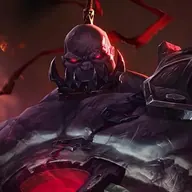
Urgot Counters
Why
Gwen is a structural hard counter to Urgot because she turns your default plan into a trap. Urgot wants to hold a zone, keep you in his W cone, and win through sustained DPS into R execution. Gwen thrives in extended duels, has damage that cuts through your durability, and enough sustain to break your execute thresholds. Your kit rewards sticking to targets and maintaining pressure. Gwen punishes every extra second you stay attached: the longer the trade, the more she ramps, and the more you lose control of lane tempo.
Lane impact
In lane, you can survive early with clean spacing, but once first items appear, standard trades become losing: she out-DPSes you and forces you to back off when you want to keep firing. If you miss a clean burst window (E + passive procs), you get dragged into a long duel where your sustain quality is simply worse. Midgame, she also threatens side lanes: insisting on 1v1 gives Gwen her ideal scenario, and you bleed tempo around objectives while Urgot is supposed to bring reliable zoning and threat in grouped fights.
How to play
Shift the goal: you don’t need to “win the duel”, you need to deny her the perfect duel. Position to take ultra-short trades (poke → reset), and keep E for a clear punish when she oversteps, not to start an endless brawl. Key timing: before level 5, play stability and wave; after level 5, respect her spike and avoid all-ins without a clear advantage (HP lead, jungler, wave). Decision-making: if Gwen freezes to keep you side, break the script with map tempo (objective move, smart reset, jungler ping to crash wave) instead of ego-holding a long 1v1.
Why
Fiora is hard into Urgot because she turns your key tool (E) into a losing mindgame if you’re predictable. Your engage is readable: you want E to stick and lock. She can parry the entry timing, stun you, flip the trade, then shred you through vitals + true damage. Urgot has strong dueling presence, but Fiora is built to beat bruisers/frontlines in side lane lanes. The later the game goes, the more you become “healthy material” for her to farm.
Lane impact
In lane, every trade becomes a patience test: if you commit into parry, you lose tempo, HP, and often the wave. Even when E lands, she can extend, kite around vitals, and force an extended fight you don’t actually want. Mid/late, she drags you into split responses. If you stay, she takes towers; if you match, you fight on her terms. Either way, you arrive late to objectives or you gamble on a low-EV 1v1.
How to play
Best adjustment: don’t donate your E. Use it as threat, not as autopilot. Positioning: keep an exit path and avoid tight wall corridors without vision (Fiora loves punishing narrow lanes). Key timing: track resets—Fiora is most punishing around her first real spike while you’re still short on armor + HP. Decision-making: if she anchors side, often you play opposite side (force objective / 5v4 fight) rather than accepting a long duel; if you must defend, come to clear and reset, not to chase.
Why
Vayne is hard into Urgot because she hits all three pain points: she plays range, punishes your forward steps (Condemn), and %HP true damage breaks the entire concept of being a durable bruiser. Urgot wants to stabilize and chip; Vayne wants you to chase… then shred you. Even when you touch her, her kit converts short trades into winning ones because you can’t truly stick without getting kited.
Lane impact
In lane, you can lose a lot of CS purely due to threat range: step up to last-hit and she pokes while repositioning. Your E becomes a high-stakes resource—waste it and you have no way to punish, so you bleed. Midgame, top Vayne becomes a side-lane menace and a resource magnet. Without a team plan (ganks, dives, rotations), you end up ‘surviving’ instead of playing to win.
How to play
Positioning: play near turret and use wave as a shield, because the real danger is a clean Condemn angle. Your goal isn’t to chase, it’s to shrink space and force her to overextend. Key timing: at level 5, all-ins become a discipline check—engage without jungle info and you can lose lane off one mistake. Decision-making: call jungler on waves where Vayne must push (big wave states) and play crash + dive timings; otherwise accept dropping some CS rather than giving a kill that opens the map.
Why
Jayce is hard because he flips the lane script: you don’t choose when trades happen—you eat poke and must respond while already chipped. Urgot needs an HP threshold to all-in cleanly and convert into R; Jayce removes that threshold before fights even start. He also has tools to break your approach: long-range poke, then knockback/escape exactly when you try to commit.
Lane impact
In lane, you often lose prio, farm under pressure, and miss clean recall windows. Any failed trade becomes expensive because Jayce can snowball through plates and tempo. Midgame, he can rotate fast and force responses: if you’re low and have to reset, you leave holes on the map.
How to play
Positioning: play the wave, not the champion. Stay behind minions to reduce direct poke value, and focus on keeping HP high enough to threaten E when he steps up. Key timing: once Jayce burns major cooldowns (gate/accel burst), you get a short window—prepare it with wave state (light freeze or wave near you). Decision-making: if you can’t catch him in lane, convert the game into objective tempo—crash, reset, show up to dragon/herald with ult ready rather than getting chipped endlessly.
Why
Teemo is hard into Urgot because he targets your identity: W is a major part of your DPS and trade pressure, and blind sharply reduces the value of those windows. You can engage, but if your auto-based burst lands into blind timing, your trade quality collapses. He also plays a nuisance lane: poke, poison, then mushrooms that break paths and make your all-ins riskier.
Lane impact
In lane, you get chipped on last-hits, lose wave control, and are forced into bad recalls. If you’re trapped in a trade while blind is up, you lose the trade and the wave. Past level 5, mushrooms make vision and rotations punishing: you arrive late to objectives or you must spend resources clearing paths.
How to play
Positioning: play wave edges and keep a clear retreat line—Teemo wins when you chase without a plan. Prioritize short, calculated trades over extended pursuit. Key timing: look for windows when blind is down; if Teemo uses it “for free” to poke, you can threaten an engage. Decision-making: midgame, don’t waste 20 seconds walking into trapped fog—group, play structured fights, and leverage your execute threat on frontlines instead of trying to ‘catch’ Teemo blindly.
Why
Darius is unfavorable into Urgot because he forces strict respect of threat range. Urgot wants to position and keep firing; Darius wants to pull you in, keep you close, stack passive, and win the extended trade. If you play “normally”, you often end up in his script. Your E can flip duels, but if you miss, you lose your safety button—and Darius needs only one good window to snowball.
Lane impact
In lane, a single spacing mistake is costly: one pull rotation and you must recall or die. He can also deny full waves when you’re low, delaying your spikes. Midgame, Darius thrives in messy fights: if your frontline steps up without structure, he can chain resets and turn wins into losses.
How to play
Positioning: play behind minions and keep distance so pull isn’t free. Without jungle info, avoid mid-lane trades with no exit plan. Key timing: level 5 gives you all-in windows, but only if conditions are right (HP, wave, pull down). Decision-making: if Darius freezes, don’t exhaust yourself contesting without vision—reset, call jungler to crash, and favor objective fights where your R executes chipped targets rather than dueling full-stack Darius.
Why
Olaf is unfavorable because he breaks your control patterns. Urgot likes to lock a target (E) and keep them in his DPS zone. Olaf wants to run straight at you, force extended duels, and his ultimate heavily reduces the value of your control at the critical moment. Without a clear lead before he commits, you end up backpedaling into a champion who feeds on long trades.
Lane impact
In lane, Olaf punishes medium-HP trading: he can all-in on a window, force your flash, then keep you under pressure. If he gains an edge, he becomes hard to dislodge because your reset is slower and he can chase. Midgame, he can also run through frontline and force a raw fight—if your team lacks kite, your R becomes hard to land cleanly.
How to play
Positioning: keep wider spacing than usual and use the wave as a buffer. If Olaf wants in, make him pay by crossing bad ground, not by taking a fair duel. Key timing: at level 5, respect that his ult changes all-in dynamics. Decision-making: think cross-map—if Olaf tries to anchor you side, you can accelerate objectives with your team and avoid the straight-line 1v1 he wants.
Why
Renekton is unfavorable because he beats you on early tempo: he chooses short, explosive trades and can stun to break your setup. Urgot wants time to keep targets in range and spin W; Renekton denies that time. Even if you scale, losing too much HP early removes your ability to manage wave and take clean recalls.
Lane impact
In lane, he can push you under turret and deny prio. If you mis-engage, he bursts then exits, making your trades inefficient. An early kill often snowballs into plates. Midgame, with a lead, he threatens flanks onto carries, forcing you to peel instead of pressure.
How to play
Positioning: respect his zone when cooldowns + fury are available. Your job is to deny free trades; keep wave in a spot where you can retreat without getting chased. Key timing: around level 5, track his all-in windows (ult + fury): low HP means no aggression. Decision-making: answer bully with stability + objective timing—reset clean, show up with ult, and look for high-value executions rather than ‘proving’ lane.
Why
Sett is unfavorable because he flips trades you think you win. Urgot likes to chip then finish; Sett accepts damage, builds grit, and returns a massive W that can swing an all-in at the worst moment. Since he’s naturally tanky and lethal in melee, you can’t just assume W wins by default.
Lane impact
In lane, trading without an exit plan risks eating a full W and losing recall tempo. Sett also punishes you when you’re close to your wave (he likes to grab and force fights inside minions). In fights, he can turn front-to-back into chaos by grabbing and dunking targets into your team, forcing you to reposition and rethink execute windows.
How to play
Positioning: short trades, and back off before his W is fully ‘charged’. If he has high grit, it’s not all-in time—it’s reset time. Key timing: at level 5, track his engage windows and ability to force long duels. Decision-making: if no clean window, manage wave, reset, and use your ult in grouped fights where Sett can’t optimize W value in a pure 1v1.
Why
Malphite is unfavorable because he can neutralize you without taking risks. He pokes with Q, slows your approach, and naturally stacks armor, reducing the raw value of your AD DPS. You can threaten him, but he doesn’t have to give you an angle. The issue isn’t dying in lane; it’s losing tempo and being prevented from playing the lane as a stable bully.
Lane impact
In lane, you get chipped slowly: Q → back off, and he keeps wave in a safe zone. If you force too hard, you risk ganks or all-ins while already down 30% HP. Midgame, his ultimate also shifts dynamics: if you must stay near your backline, you have fewer offensive angles for execution plays.
How to play
Positioning: accept a ‘cold’ lane. Don’t chase Malphite; play wave, keep HP, and take clean recalls to show up strong to fights. Key timing: at level 5, respect his ult threat—low HP means you can’t stay extended. Decision-making: if he neutralizes you, convert into team impact: rotate/group and use R on squishier targets rather than trying to break a safe-playing tank.
Why
Camille is a skill matchup because both champions play around sharp windows. She wants a precise entry (Hookshot + burst), you want to punish that commit with E lock. If you read her angle, you break her trade; if you get surprised, she chunks and exits. It’s a discipline duel: who forces the other to use their mobility button at the wrong time.
Lane impact
In lane, a clean Hookshot can make you lose wave control. But if Camille jumps without setup, you can flip the trade and create an execute window. Midgame, she threatens carries through isolation; you can punish if she dives into your team and you keep a clean path to land R.
How to play
Positioning: respect wall geometry—Camille literally plays off walls. Don’t stand where she gets free Hookshot angles, and save E for her real entry. Key timing: at level 5, all-ins get sharper—if she commits without flash and you land E, you can convert; if you miss, she can reset and re-enter. Decision-making: in fights, if Camille tries to isolate a carry, often you win by front-to-back punishment (lock + execute) rather than chasing inside her ult.
Why
Irelia is a skill matchup because her power heavily depends on wave state. With low HP minions, she has dash angles and can stick; with a clean wave, she loses options. Urgot can punish over-commits, but only with strict spacing. This matchup isn’t “who is stronger”, it’s “who controls the environment”.

Lane impact
In lane, if you allow a big enemy wave, you hand her free stepping stones. She can then force extended trades and make you burn defensive tools. Midgame, she looks for resets and messy fights: if you catch her in clear lock, you can execute; if you let her in-and-out, she takes tempo.
How to play
Positioning: don’t stand inside low HP minions. Manage wave to reduce her angles, and save E for real commits, not for ‘testing’. Key timing: at level 5, a good engage can snowball her lane; but if you stabilize, you become harder to break. Decision-making: when Irelia has a perfect wave, back off and accept some CS loss; your real punish windows are neutral waves or forced entries without setup.
Why
Riven is a skill matchup because she can burst you if you give a window, but she must commit to do it. You want opponents to commit into your W + passive value zone. If you land E at the right time, you break her combo; if you miss, she can blow you up and reset. It’s a read matchup: is she feinting, or truly committing?


Lane impact
In lane, Riven can take repeated short trades to set up an all-in. She can also play around walls to dodge your line. Conversely, if she rushes, you can flip the exchange and threaten R execution. Midgame, she looks for flanks; you must anticipate angles, because she can avoid your firing lane if you’re poorly positioned.
How to play
Positioning: keep spacing where you can see her entry and retreat without being chased. Don’t hug walls without vision—jungle + Riven punishes that. Key timing: at level 5, one bad trade can become lethal. Decision-making: if Riven disappears, ping flank and back off; your goal isn’t to chase her, it’s to force her into a structured fight where your lock and execute are more reliable.
Why
Jax is a skill matchup because he has a tool that breaks your windows (Counterstrike), but he’s not auto-winning if you play around it. Urgot can punish his entries with spacing, yet Jax can also force you to mistime and lose trades. The matchup tightens over time: without a lead, Jax becomes a side-lane monster.
Lane impact
In lane, if you get impatient and trade into his E, you lose value. But if he wastes it, you can punish hard, especially when he’s extended and you can lock. Midgame, he wants to split and pull responses. Matching him in a duel without a plan risks getting slowly ground down.
How to play
Positioning: treat his E like a red light. When it’s up, play safer; when it’s down, take space. Keep a retreat path—he can chase for a long time. Key timing: level 5 and first real item spike increase his threat; your best window is often before he’s fully online. Decision-making: answer split with objective/fight tempo when possible; if you must defend, come for waveclear + reset rather than accepting a long duel.
Why
Yasuo is often favorable for Urgot because you punish melee champions who want to stay in range. Yasuo likes to dance around wave and find extended trades; Urgot turns entries into prison with E and then runs W. With discipline, Yasuo is forced into honest trades, and that’s where your kit is more stable.
Lane impact
In lane, you threaten him whenever he steps too far. If he dashes without enough wave setup or commits naively, you can flip trades. Even if close, your R gives a real conversion condition. Midgame, structured fights punish him too: Yasuo wants backline access, but if you lock him on entry, you simplify the fight.
How to play
Positioning: track wave state since his dashes depend on minions. Keep space to back off if needed, but stay in a zone where E can connect. Key timing: at level 5, your execute becomes a true ‘fight finisher’. Decision-making: if Yasuo tries to force awkward trades, you can refuse and play wave; wait for real commit, then punish cleanly (lock + W) rather than chasing a Yasuo kiting through minions.
Why
Garen is often favorable because his plan is linear: short trades, regen, repeat. Urgot can apply stable pressure, break regen windows by tagging him, and keep a more credible all-in threat through E + R. You don’t need perfection; you need consistency and to avoid donating a free all-in.
Lane impact
In lane, clean spacing forces Garen to expose for last-hits. Oversteps get punished. When he trades, you can usually respond and regain prio. Midgame, his entry is simple—he runs—so your repositioning and lock decisions are clearer, especially if your team follows.
How to play
Positioning: keep constant spacing and tag him often enough to stop regen. Don’t chase under turret—win lane through wave and tempo. Key timing: at level 5, your execute punishes overconfident Garens who think they can ‘reset’ out. Decision-making: if he plays safe, accept neutral lane and convert into objectives; you are strong in structured fights and he has fewer tools to outplay a clean lock.
Why
Nasus is often favorable because you can attack his plan before it exists: he wants free stacks and a point where he runs you down. Urgot punishes early, denies stacks, and removes lane comfort. If you gift him a free lane, it flips. If you set the pace, you control the script.
Lane impact
In lane, you can deny ‘free’ stacks by tagging him on key last-hits. He can’t threaten you the same way early, so you can generate prio and take clean recalls. Midgame, he’s still dangerous with stacks; but if you slowed him down, he reaches fights without expected DPS, and your ult keeps high conversion value on chipped targets.
How to play
Positioning: stand between Nasus and the wave, punish important last-hits. Goal isn’t necessarily to kill him—it’s to deny him his game. Key timing: before level 5 you have real oppression windows; use them to build tempo. Decision-making: if Nasus gets too tanky, shift to map plan—group objectives and force Nasus to choose between side stacking and showing up.
Why
Sion is often favorable because he offers an ‘honest’ target: a tank who wants to step up and take space. Urgot punishes that profile well through constant pressure, entry control, and a real execution threat when he’s chipped. Sion likes long fights, but he doesn’t automatically win them against a champion who converts HP thresholds into guaranteed kills.
Lane impact
In lane, you can prevent free trades: when he charges, spacing lets you punish misses. You often control wave and deny easy chip patterns. Midgame, Sion is a big frontline; your role is clear: keep him manageable, chip him, and convert R either on him or on another target that falls under threshold.
How to play
Positioning: stay where you can back off his engage but remain close enough to punish steps forward. Don’t get trapped in narrow corridors without vision. Key timing: at level 5, you gain a real ‘finish the tank’ win condition. Decision-making: if Sion plays for push and chaos, answer with objective tempo—you don’t need to chase him everywhere; you need to be at the right place, at the right time, and convert a high-value execute.