
Assassin in Wild Rift: The true skill is knowing when NOT to engage
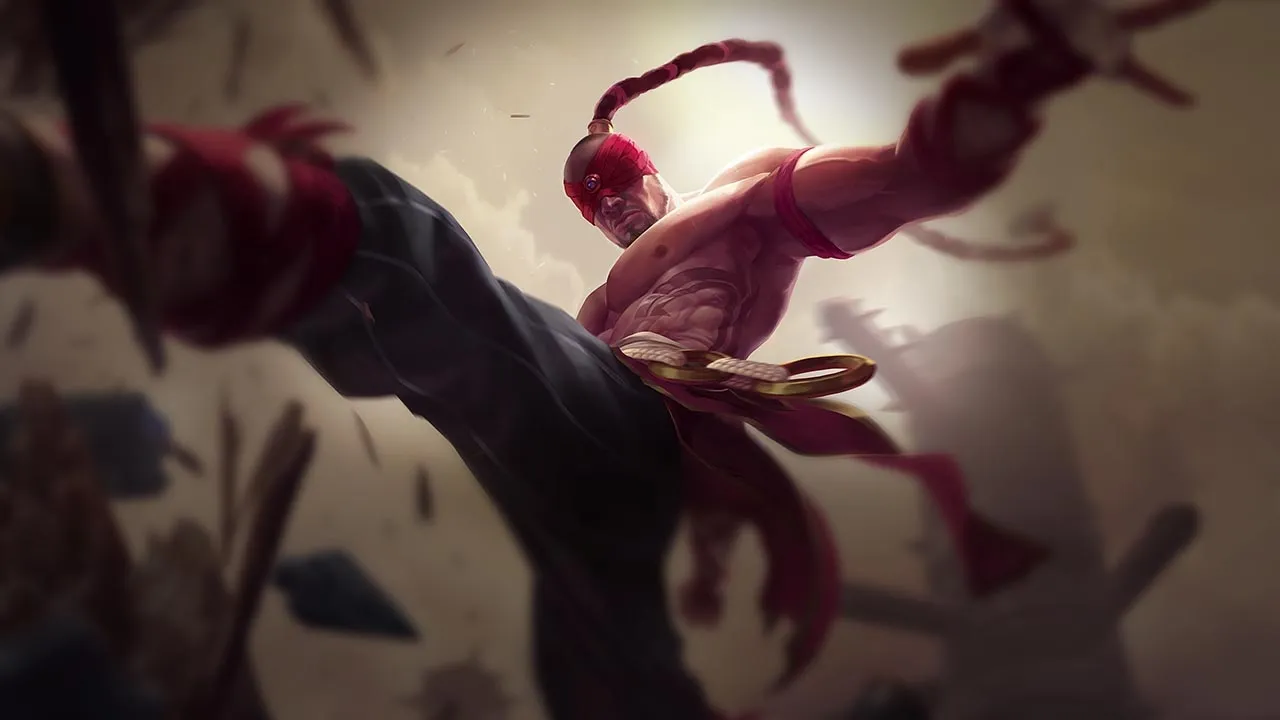
The assassin is a solitary predator, designed to quickly eliminate an isolated priority target. Their role is to convert a temporary numerical advantage into a major objective. Yet, 45.9% of Lee Sin players in Master+, patch 20260731 (Nexus Core data), struggle to convert their aggression into victory. The true skill isn't the combo, but mastering the timing of engagement and disengagement.

Too many assassin players dive headfirst, blinded by the allure of an easy kill. This misplaced aggression is the primary cause of their underperformance at all levels of play. A Zed diving under a tower without vision or information on other enemy positions, an Evelynn attempting a 1v2 duel against stronger champions – these are almost certain deaths that cost the opponent far more than just a simple kill.


Every assassin's death grants a colossal tempo advantage to the opposing team, turning a potential elimination into a major objective loss, such as a Dragon, a Rift Herald, or a tower. The cost isn't just your respawn timer, but also the lost map pressure, gold and experience given to the enemy, and the opportunity for the opposing team to regroup or secure an objective uncontested. For instance, a Kayn dying while attempting a risky gank when Rift Herald is available gives a direct and immediate advantage to the enemy team, who can then secure it and use it to destroy a tower. This is a vicious cycle where an individual error impacts the entire team, transforming a winnable game into a crushing defeat. This error in judgment is the primary barrier preventing assassin players from climbing the ranks.

Defining the Assassin: Strengths and Limitations
An assassin is a champion designed to quickly eliminate a single, fragile target, often a carry, through high burst damage and mobility. They cannot initiate a frontal team fight or sustain a prolonged siege.
The assassin excels in the art of target selection and swift execution. Champions like Zed and Akali are masters of burst damage on isolated targets, capable of reducing a carry's health bar to zero in seconds. Others, like Nocturne and Pyke, excel at punishing positioning errors at medium range, lunging at a misplaced enemy to take them out of the fight.



Their strength lies in their ability to appear, eliminate, and disappear before the enemy can react, creating a constant sense of threat across the map. However, they are inherently fragile and lack crowd control to engage in prolonged fights or protect their allies. Attempting to play an assassin like a tank or an initiator is a fundamental mistake that leads to predictable defeats, as they possess neither the resilience nor the necessary utility.
For example, a Master Yi who engages the front line without vision or support will be instantly neutralized by enemy crowd control, wasting his damage potential. His 49.28% winrate in Master+, patch 20260731 (Nexus Core data), despite high snowball potential, often reflects these unfortunate engagements.
The true power of an assassin lies in their ability to dictate the pace of skirmishes by exploiting windows of vulnerability, rather than forcing disadvantageous engagements that would put them at risk.
- Identify fragile and isolated targets before each engagement.
- Evaluate enemy retaliation capabilities before exposing yourself.
- Use your mobility to enter and exit combat without taking unnecessary damage.
- Avoid prolonged fights where your burst damage is no longer sufficient.
The Central Decision: Patience or Aggression?
The central decision for any assassin is the trade-off between aggression and patience: when and how to engage to secure the kill without dying, and when to wait for a better opportunity.
Every game is a series of critical micro-decisions for an assassin. A Lee Sin must constantly evaluate whether their insec will secure a priority target without leaving them vulnerable to the rest of the enemy team, or if they should instead bide their time for a better opportunity. A Yone must weigh the risk of their offensive dash against the enemy's ability to punish them with crowd control or massive damage. The difference between a good and a bad assassin lies in this ability to read the map, anticipate enemy movements, and choose the optimal moment to strike.

It's risk management that differentiates a snowballing player from a feeding one. A Pyke who engages too early wastes their resources and their life, becoming an easy target. Conversely, a patient Pyke can wait for allies to weaken the enemy team before entering to execute multiple low-health targets, maximizing their impact. Data shows that Pyke's 50.93% winrate in Master+, patch 20260731 (Nexus Core data), is often the result of this calculated patience and surgical execution.
The winning assassin is not the one with the most kills, but the one who minimizes their deaths while maximizing the impact of each elimination on map objectives and enemy morale.- Carefully observe enemy positions before revealing your presence.
- Prioritize survival after eliminating your target.
- Adapt your engagement plan based on enemy crowd control abilities.
- Calculate your exit path even before entering combat.
The Systemic Error: The Trap of Over-Aggression
The most common systemic error among assassins is to overestimate their ability to survive after a risky engagement, leading to unnecessary deaths that undermine their team's tempo and grant decisive advantages to the opponent.
Many assassin players, even at high tiers, fall into the trap of excessive aggression and overconfidence. They spot an isolated target, ignore the positions of other enemies or their retaliation capabilities, and commit, believing their burst will solve everything. This explains winrates like Lee Sin's 45.9% in Master+, patch 20260731 (Nexus Core data), despite his devastating early game potential. This 'all-or-nothing' approach often turns a potential advantage into a net disadvantage for the entire team.
A Zed who uses all his offensive resources for a kill and finds himself without an escape or defensive ability is an easy target for the rest of the enemy team. He grants a shutdown, free respawn time for the enemy, and a window to take objectives. The inability to recognize moments when to retreat, even if a kill seems within reach, is the hallmark of an inexperienced assassin who hasn't understood the value of their own life. The data is clear: assassins who die less have a much greater positive impact on the game, even with fewer raw kills, because their mere presence is a threat.
The constant pressure exerted by a living assassin, who threatens to appear at any moment to punish the slightest positioning error, is often more impactful than a risky kill followed by a certain death.- Forfeit a kill if it means an almost certain death.
- Use vision to spot enemy rotations and avoid traps.
- Communicate your intentions to your team to coordinate engagements.
- Learn to zone the enemy without fully committing.
Assassin Positioning and Game Phases
An assassin's positioning should always be out of enemy vision, ready to flank or seize a pick-off opportunity on an isolated target.
In the early game, an assassin like Kayn must prioritize information gathering through vision and opportunistic ganks, without forcing an engagement if conditions are not optimal. His 51.38% winrate in Master+, patch 20260731 (Nexus Core data), is often linked to good management of his first minutes, where he avoids unnecessary risks. The goal is to farm efficiently to quickly reach his power spikes.
In the mid-game, your role evolves towards actively seeking isolated targets who venture too far to place vision or split-push. Never show yourself on the map if you don't intend to engage, as this reveals your position and negates the element of surprise, which is your primary weapon. Use objective timings to position yourself and surprise the enemy.
In the late game, your role is to neutralize the enemy team's primary threats (ADC or mage carries) before major team fights, or to clean up weakened targets after your tanks' initial engagement. Itemization should always prioritize amplifying your burst and mobility for entering and exiting, while also incorporating defensive tools if the situation demands it, such as an anti-heal item against champions with high healing or defensive boots against specific crowd control.
An effective assassin is a ghost who only reveals themselves to strike with deadly precision, and whose undetected presence is a constant, psychological threat to enemy carries.- Remain invisible on the map until an engagement opportunity arises.
- Flank enemies from the sides or rear to bypass their front line.
- Adapt your build to maximize burst against priority targets.
- Use the fog of war to create zones of uncertainty for the enemy.
How to Play Against an Assassin
To counter an assassin, you must deny their windows of opportunity through good positioning, constant vision, and coordinated crowd control, thereby forcing them to take reckless risks.
If you're facing an assassin like Akali or Zed, the first golden rule is never to isolate yourself. Stay grouped with your team, especially if you are a fragile carry like Jhin, Ezreal, or Miss Fortune. The assassin's strength lies in picking off solitary targets, so by staying grouped, you significantly reduce their opportunities.



Use vision proactively to spot flanking paths and areas where the assassin might be waiting for you. Well-placed wards can reveal their movements and negate the element of surprise. Champions with instant crowd control, such as a stun, a silence, or a knock-up, are major threats to assassins, as they can interrupt their combo and leave them vulnerable to your retaliation. Coordinate with your team to target the assassin as soon as they expose themselves.
Don't panic when an assassin engages; focus your burst on them if they are exposed and you have the numerical advantage, or use your abilities to push them back and disengage. A Lucian, with his 49.15% winrate in Master+, patch 20260731 (Nexus Core data), can survive assassins if he intelligently uses his dash to dodge key damage and retaliates with his own burst, forcing them to retreat.
Against an assassin, the best defense is a coordinated offense that forces them to defend or flee, rather than confronting them alone and offering an easy kill.
- Buy vision to detect enemy flanking movements.
- Stay grouped and do not expose yourself alone.
- Save your crowd control abilities to interrupt the assassin's engagement.
- Focus your damage on the assassin if they over-expose themselves.
Scenario: Zed's Surgical Execution
Imagine: 12th minute of the game, you are Zed, level 9, and the Elder Dragon has just spawned. Your team is pushing mid-lane, forcing enemies to defend. You know the enemy carry, a Miss Fortune, is isolated in the bot lane clearing minion waves and does not have Flash. Instead of joining the mid push, you use the jungle's fog of war to flank and position yourself behind her.
You wait for her to use her ability to clear the wave, leaving her without immediate resources. This is the window. You engage, burst her down, and use your shadow to return to safety before the rest of the enemy team can react. This kill frees up the Dragon for your team and puts immense pressure on the map, transforming a simple elimination into a major strategic advantage.
To master the art of assassination, you must first master the art of survival. Every decision must be calculated, every engagement a maximized opportunity. Forget kills for kills' sake; aim for impact.
- Analyze: Identify priority targets and their escape routes.
- Be Patient: Wait for the perfect window of opportunity, without rushing.
- Execute: Strike quickly and precisely to neutralize the threat.
- Disengage: Leave combat as swiftly as you entered it, alive.
"Death is not an option. The battlefield is a clock, and every second you spend dead is a second the enemy gains. Be the knife, not the target." - Blade, Mechanics & Gameplay Specialist.
Frequently asked questions
How should an assassin manage the early game to avoid falling behind?
In the early game, an assassin should prioritize gathering information and opportunistic ganks rather than forcing risky engagements. Focus on efficient farming of the jungle or lane, and look for isolated or overextended targets. A successful gank on a target without Flash can generate a crucial snowball advantage without unnecessarily exposing yourself. Patience is your best ally.
What is the best strategy for an assassin against a highly grouped team?
Against a grouped team, an assassin must avoid frontal engagements. Instead, look to flank or wait for enemy tanks to engage and key crowd control abilities to be used. Your objective is to find a weakness in their formation to reach the backline carries, or to pick off an isolated enemy attempting to place vision. Patience is paramount.
How can an assassin increase their winrate without necessarily getting more kills?
To increase your winrate as an assassin, focus on reducing your deaths. Every death costs dearly in tempo and objectives. Prioritize survival after the kill, even if it means not taking a risky kill. A living assassin exerts constant pressure on the map, forcing the enemy to play more cautiously and creating opportunities for your team.
What is the impact of good positioning for an assassin in the late game?
In the late game, good positioning is crucial for an assassin. You must remain invisible and flank the enemy team, waiting for the perfect moment to eliminate a key carry. If you are visible, the enemy can easily target and neutralize you. Your role is to transform a balanced team fight into a decisive numerical advantage even before the confrontation fully begins.
Should an assassin always prioritize kills over objectives?
No, an assassin should not always prioritize kills over objectives. Your primary goal is to create a numerical advantage to secure major objectives like Dragon, Baron, or towers. A kill is a means to achieve this goal, not an end in itself. If a risky kill prevents you from participating in securing an objective, it is often better to forgo the kill to better contribute to the objective.