The Great Divide: Why Pro Wild Rift Meta Will Make You Lose in Ranked
You copy ThunderTalk Gaming's build, you try J Team's macro, and yet, you lose. You wonder why the strategies that crush the WSL don't work in your ranked games. The answer is simple: you're not playing the same game. This guide won't give you a miracle build; it will deconstruct the abyssal strategic gap that separates the professional game from your SoloQ experience.
The feeling is familiar: you watch a Wild Rift Super League (WSL) final, you see a Gragas support dominate the map, a Ziggs ADC hold his lane alone, and a Fiora toplaner receive all the resources. You try to replicate this pattern, but the result is catastrophic. Your support gets punished, your ADC gets dived repeatedly, and your toplaner fails to convert their advantage. The frustration is immense because the pro meta seems not only inaccessible but counter-productive. This isn't a matter of mechanical skill. It's a matter of system. The Asian pro ecosystem, with its voice communication, pinpoint coordination, and shared economic goals, operates under radically different rules than the chaotic, non-verbal environment of SoloQ. Trying to apply one strategy to the other without understanding its foundations is a guaranteed recipe for losing LP. This article will break down those foundations so you can finally understand the 'why' behind the pros' choices, and more importantly, what you can *actually* take away for your own games.

The ADC Sacrifice: Why Pros Abandon the Duo Lane
The most shocking difference between the WSL and SoloQ is the treatment of the duo lane. In ranked, the ADC is king. In pro play, they are often a sacrificed pawn. Elite teams overwhelmingly favor siege mages like Ziggs or Karma. Why? Because these champions can clear minion waves from an extremely safe distance. This autonomy is crucial because, in the pro meta, the support leaves their lane after the first minute to create a numbers advantage elsewhere. A traditional ADC like Kai'Sa or Vayne, left alone, would be an easy victim. The mage, however, absorbs pressure, survives, and enables their team to play the map.

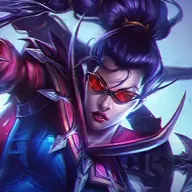
The goal is not to win the duo lane, but to neutralize it to win the map.
- Do NOT play a mage bot if your support stays glued to you. The strategy only works if they use their freedom to impact the jungle or mid lane.
- In SoloQ, if you're an ADC and your support roams, don't fight. Your sole objective becomes to survive and collect gold under your turret.
- Understand that the 'real' carry of the pro composition is no longer in the duo lane. They are elsewhere.
- If you're playing against a mage bot, ask your jungler to dive them. Their 1v2 survival is much lower than a mobile ADC's.
The Initiator Support: The Sacrificial, Indestructible Tank
In SoloQ, enchanter supports like Lulu or Nami are popular because they protect their ADC. In the WSL, this is an unacceptable vulnerability. The holy trinity of pro supports is Gragas, Galio, and Nautilus. These champions offer colossal resilience and, most importantly, the autonomous ability to dictate the exact moment of engagement. They aren't there to buff an ally; they are the frontline. Their builds reflect this philosophy: they rush pure tank items like Warmog's Armor, ignoring traditional support items. A pro support isn't a healer; they are a sacrificial tank who soaks up enemy ultimates, secures deep vision, and creates engage opportunities.
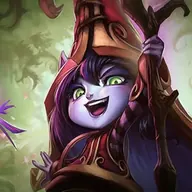

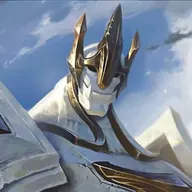
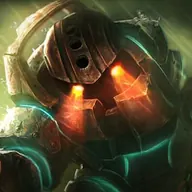
The pro support doesn't protect their carry; they ARE their team's engage condition.
- If your team lacks initiation, consider a tank support even if you prefer enchanters. A good engage is often worth more than an extra shield.
- Don't blame your tank support if they don't stay behind you. Their role is to create space and pressure on the map.
- As a tank support, your KDA is irrelevant. Your value is measured by how many enemy ultimates you absorb and the fights you initiate.
- If you're playing against an enchanter support, force fights. They won't be able to handle the pressure like a tank, and their team will lack a reliable frontline.
The Top-Centric Universe: The True Win Condition of the Meta
Since the duo lane is sacrificed and the support is a tank, where does the damage come from? The answer is simple: the top lane. The professional meta is 'top-centric'. The power vacuum left by the ADC is filled by the toplaner and jungler. The top lane is no longer an isolated 1v1; it's often an intense 2v2 involving the roaming support. The team's resources (ganks, vision, pressure) are invested in bruisers like Fiora, Jax, or Gwen. These champions, once ahead, can take complete control of the game through split-pushing. The team that wins this war in the northern part of the map secures the Heralds and dictates the game's pace. The toplaner is no longer an island; they are the continent.
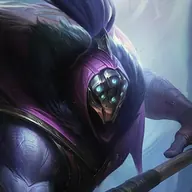

In the pro meta, the toplaner isn't a tank; they are the team's true carry.
- If you're a toplaner and your team has a mage bot, expect help. Communicate your needs for ganks or vision.
- As a jungler, understand that ganking for a toplaner who can split-push often has more value than helping a duo lane that has to play passively.
- If the enemy team invests heavily in their toplaner, don't try to fight them 1v1. Force objectives on the opposite side of the map.
- Learn to play around a split-pushing toplaner: don't force a 4v5 fight. Use their pressure to take turrets or neutral objectives.
Practical Example: The Yuumi Paradox
The case of Yuumi perfectly illustrates this gap. In SoloQ, she is often seen as a weak, passive champion and an easy target. Yet, in the WSL, she is considered a top-tier threat. Why? Because professional teams build an entire system to negate her weaknesses. Yuumi's vulnerability to early-game dives is countered by perfect macro-management: the jungler specifically alters their pathing to 'shadow' the duo lane at critical moments, and other laners hold their Teleport with strict instructions to intervene at the slightest aggression. Protected in this way, Yuumi can safely reach her late-game potential, where she attaches to a bruiser like Jax or Gwen to create an unstoppable statistical abomination. This level of preventive coordination is simply unattainable in the non-verbal chaos of SoloQ, where every player acts for themselves. It's proof that a champion's value in pro play is not intrinsic but depends on the system surrounding them.

Trying to copy the WSL meta in SoloQ is a mistake. Your goal is not to imitate, but to understand the principles to make smarter decisions. Here's what you need to remember:
- Don't sacrifice your ADC if your support doesn't know how to create an advantage elsewhere. In SoloQ, a protected ADC remains a reliable win condition.
- Adapt the support role: if your team lacks engage, a tank will often have more impact than an enchanter, even if it's not the meta at your rank.
- Identify your REAL carry: is it your ADC or your toplaner who has the most potential to carry the game? Allocate resources to them accordingly.
- Think in terms of pressure: even if you can't synchronize a perfect split-push, learn to trade one objective for another.
The gap will never close, but by understanding the pros' logic, you'll make smarter decisions than 99% of the players at your rank.
You don't lose because of your team, you lose because of your decisions.
Frequently asked questions
Why don't pros play ADCs in Wild Rift?
They do, but they often prefer siege mages (Ziggs, Karma) because they can farm safely alone, which frees up the support to create a numbers advantage on the rest of the map. A traditional ADC would be too vulnerable.
Should I play Gragas support in SoloQ?
Yes, it's an excellent choice if your team lacks initiation. However, your role will be to create opportunities on the map (roams, deep vision) rather than passively staying in your lane. This requires good game sense.
What is Fearless Draft in esports?
Fearless Draft is a format where a champion played by a team cannot be picked by that same team for the rest of the series. This forces players to have a very wide champion pool and makes the draft phase much more strategic.
Who is the best esports team in Wild Rift?
Currently, ThunderTalk Gaming (TT) is dominating the Chinese scene (WSL). However, teams like J Team (JT) and KeepBest Gaming (KBG) are historically major powerhouses with top-tier macro-management.