
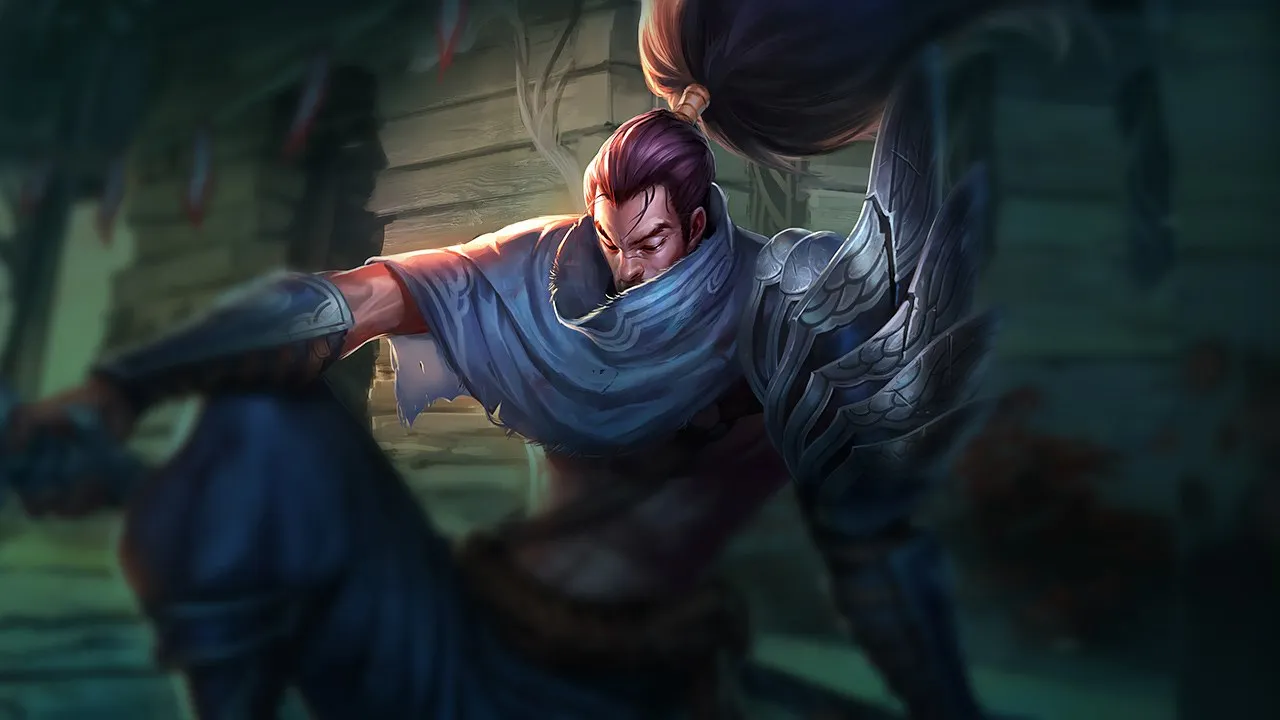
Wind Wall: Block Projectiles, Not Mistakes
The Wind Wall of Yasuo and Yone is a unique ability designed to intercept projectiles. Unfortunately, most players use it suboptimally, which costs them games. Understanding its limitations is crucial to transform this shield into a tool of domination. Currently, Yasuo has a winrate of 48% in Master+, patch 20260808 (Nexus Core data), a figure that reveals a significant margin for improvement in the execution of his key mechanics.


The fundamental mistake with Wind Wall lies in an incomplete understanding of its mechanics. Many players deploy it reactively against any aggression, believing it grants invulnerability. However, this ability does not block enemy champions, neutralize ongoing area damage, or non-projectile attacks. For instance, an already launched Miss Fortune ultimate will not be canceled, and an Nautilus can still hook you by passing through it.


The cost of this misunderstanding is direct and brutal: a poorly placed wall wastes a major defensive resource, leaving you exposed to real threats. This can turn a winning duel into certain death, or worse, cause a crucial objective like Dragon to fail. A Yasuo who uses his wall to block a basic attack when a Zeri is about to engage him with her dash loses an opportunity for protection against a much more lethal threat. This wasted ability directly contributes to average performances, such as Yasuo's 48% Master+ winrate, patch 20260808 (Nexus Core data), because every mistake is exploited by more seasoned opponents.

Defining the Limits: What Wind Wall Can and Cannot Do
The Wind Wall is a directional shield that intercepts projectiles. It is designed to nullify ranged attacks and abilities that travel through space, such as Ashe's arrows or Ziggs' bombs. Its strength lies in its ability to create a temporary safe zone against ranged threats.


However, it is crucial to understand its limitations. The Wind Wall does not block champions, already-triggered area damage (like Brand's bouncing ultimate), melee attacks, or abilities that are not projectiles (like Lulu's shield or Thresh's grab that passes through). A Yone who deploys his wall against a melee Mordekaiser wastes his only major defensive ability, as Mordekaiser does not use projectiles. This is a costly mistake that can leave him vulnerable.



The Wind Wall is a protection against projectile-based ranged threats, not an impenetrable barrier against all forms of damage or engagement.
- Identify: Recognize enemy champions whose primary damage comes from projectiles (Ezreal, Caitlyn, Jhin).
- Anticipate: Place the wall before the projectile is launched, not after.
- Ignore: Do not waste the wall against melee champions or non-projectile abilities.
- Observe: Monitor enemy spell animations for optimal placement.



Tactical Arbitration: When and Why to Deploy the Wall
The central decision for a Yasuo or Yone player is to arbitrate between immediate protection and preservation for a future threat. Each deployment of the Wind Wall is a commitment that must be considered, as its long cooldown makes it precious. The goal is not to block the most projectiles, but the most dangerous ones.
A Yasuo must constantly evaluate whether the current threat justifies using his wall, or if he should save it for a Jinx ultimate or a Miss Fortune ultimate. For example, blocking a basic attack from an Ezreal might seem useful, but if his ultimate is approaching, the wall would have been far more impactful. Similarly, a Yone facing a Twisted Fate must decide whether to block a crucial Gold Card or wait for the latter's ultimate. This is a matter of threat prioritization based on potential damage or crowd control. Successful players, such as those who maintain Yone's 51.38% Master+ winrate, patch 20260808 (Nexus Core data), excel at this arbitration.


Mastery of the Wind Wall relies on the ability to identify the most impactful enemy ability and neutralize it, rather than reacting to every minor projectile.
- Prioritize: Block key ultimates and crowd control before minor damage.
- Conserve: Save the wall for the most lethal threats or critical engagements.
- Evaluate: Judge the value of the enemy projectile relative to your wall's cooldown duration.
- Adapt: Adjust wall usage based on the enemy team composition and the state of the game.
The Systemic Error: Mis-Targeted Wind Wall
The most widespread error, committed by a majority of players, is deploying the Wind Wall defensively and reactively against non-projectile threats or unavoidable damage. This often manifests as a wall placed to protect against a champion dashing through it or an area of damage that cannot be intercepted. Data confirms this trend: despite the wall's ability to negate key threats, Yasuo and Yone's winrates struggle to climb for many players.
For example, a Yasuo player might panic and place his wall against an approaching Thresh, even though Thresh can simply pass through it and use his Flay. The wall will have blocked no real threat, leaving Yasuo vulnerable to Thresh's crowd control and damage. This inefficient use of the wall contributes to a global winrate of 48.24% for Yasuo, patch 20260808 (Nexus Core data), and 51.08% for Yone, showing that even if Yone performs better, there's still significant room for improvement in understanding this mechanic. Master+ players are less prone to these errors, leading to sometimes positive or less negative discrepancies, but the majority of players continue to underperform.
The perception that Wind Wall is a universal shield is a costly illusion that leads to ineffective placements and increased vulnerability.
- Educate: Learn the exact list of abilities that are or are not projectiles.
- Challenge: Question every use of your wall: does it truly block this threat?
- Train: Practice wall placement in training mode against bots using various abilities.
- Analyze: Review your replays to identify poorly placed walls and understand why.
Mastering Space and Time: Wall Placement and Timing
The positioning and timing of the Wind Wall are as crucial as the target itself. In the laning phase, a well-placed wall can negate entire trades for the opponent or secure creeps. In the late game, it becomes a strategic tool for objective control or protecting carries.
Against a champion like Caitlyn, a Yasuo must position himself to intercept her ultimate or her trap, thereby protecting an ally or himself. The wall must be placed between the projectile's source and its target. In a teamfight, a Yone can use his wall to block the line of fire from a Jhin or a Sivir, creating an opportunity window for his team. Players who excel at this level of play contribute to higher winrates for their team, such as Sona's 54.22% Master+ winrate, patch 20260808 (Nexus Core data), because they understand the importance of protecting carries. Itemization, without naming specific items, should focus on items that allow survival against non-projectile threats, thereby complementing the wall's protection.


An effective Wind Wall is the result of precise anticipation, strategic positioning, and an understanding of the enemy team's priority threats.
- Protect: Place the wall to cover your most vulnerable allies from enemy projectiles.
- Zone: Use the wall to divide the battlefield and isolate ranged threats.
- Advance: Deploy the wall offensively to allow your team to engage without taking damage.
- Disengage: Use the wall to create a safe retreat path under enemy fire.
Decisive Scenario: The Game-Changing Wall
Imagine a classic situation: you are Yasuo, level 9, 12 minutes into the game. Your team is contesting the Dragon. The enemy team, composed of an Ezreal and a Miss Fortune, is trying to prevent you from taking the objective. Ezreal is channeling his ultimate, Trueshot Barrage, which travels across the entire map and can deal massive damage to your team.
Instead of panicking and placing your wall as soon as you see Ezreal's animation, you wait. You know his ultimate takes a short moment to launch. At the precise moment the energy projectile is about to cross the Dragon pit wall, you deploy your Wind Wall. Ezreal's ultimate is intercepted, dealing no damage to your team. Your team secures the Dragon without issue. A few seconds later, Miss Fortune launches her Bullet Time, but thanks to your still-active Wind Wall, the initial volleys are also blocked, significantly reducing its impact. This precise wall placement not only saved the Dragon but also allowed your team to gain the advantage in the subsequent teamfight.
Mastering the Wind Wall isn't just about timing; it's a deep understanding of threats and the value of each ability. Stop wasting it and start using it as the strategic tool it is.
Here are your next steps to dominate the Rift:
- 1. Analyze: Study enemy compositions to identify priority projectile sources.
- 2. Anticipate: Develop your sense of timing to block key abilities before they reach their target.
- 3. Protect: Use the wall to defend your most vulnerable allies from ranged threats.
- 4. Engage: Create aggressive openings by negating enemy projectile retaliation.
"The wind doesn't just blow; it tears through your enemies' plans. Use it wisely."
Frequently asked questions
Does Yasuo's Wind Wall block Miss Fortune's ultimate?
The Wind Wall blocks Miss Fortune's ultimate projectiles if placed between her and its target at the moment of firing. However, if the ultimate is already in progress and the projectiles are already generated, the wall will not instantly cancel all of them. It is crucial to deploy it at the very beginning of the channel for maximum effectiveness.
Can Thresh's hook be blocked by Yone's Wind Wall?
No, Thresh's hook is not considered a projectile interceptable by the Wind Wall. Thresh can pass through the wall with his Death Sentence and use his crowd control abilities. It is essential not to waste Yone's wall on abilities that are not projectiles, such as Thresh's Flay.
Does the Wind Wall protect against area damage like Brand's ultimate?
The Wind Wall does not block already-triggered area damage or abilities that are not projectiles. Brand's ultimate, if already launched, will bounce through the wall and deal its damage. The wall is effective against direct projectiles, not persistent area effects or post-impact damage.
Why does Yasuo have a Master+ winrate of 48% despite his powerful wall?
Yasuo has a winrate of 48% in Master+, patch 20260808 (Nexus Core data), because many players underestimate the complexity of his kit. The Wind Wall is often misused, wasted on minor or non-projectile threats, which makes him vulnerable. A better understanding of its limitations and timing is necessary to optimize his performance.
Should Yone use his Wind Wall differently from Yasuo?
The fundamental principles of Wind Wall usage are the same for Yone and Yasuo. Yone, with his 51.38% Master+ winrate, patch 20260808 (Nexus Core data), may have a slightly more aggressive playstyle, but the wall should always be used to block key projectiles and protect allies, not to defend against non-interceptable threats.
Does the Wind Wall block basic attacks from all ranged champions?
Yes, the Wind Wall blocks basic attacks from all ranged champions, as they are considered projectiles. This includes champions like Caitlyn, Ezreal, Jhin, or Sona. This is one of its most basic uses, but it's important to ensure the threat is significant enough to justify its deployment.