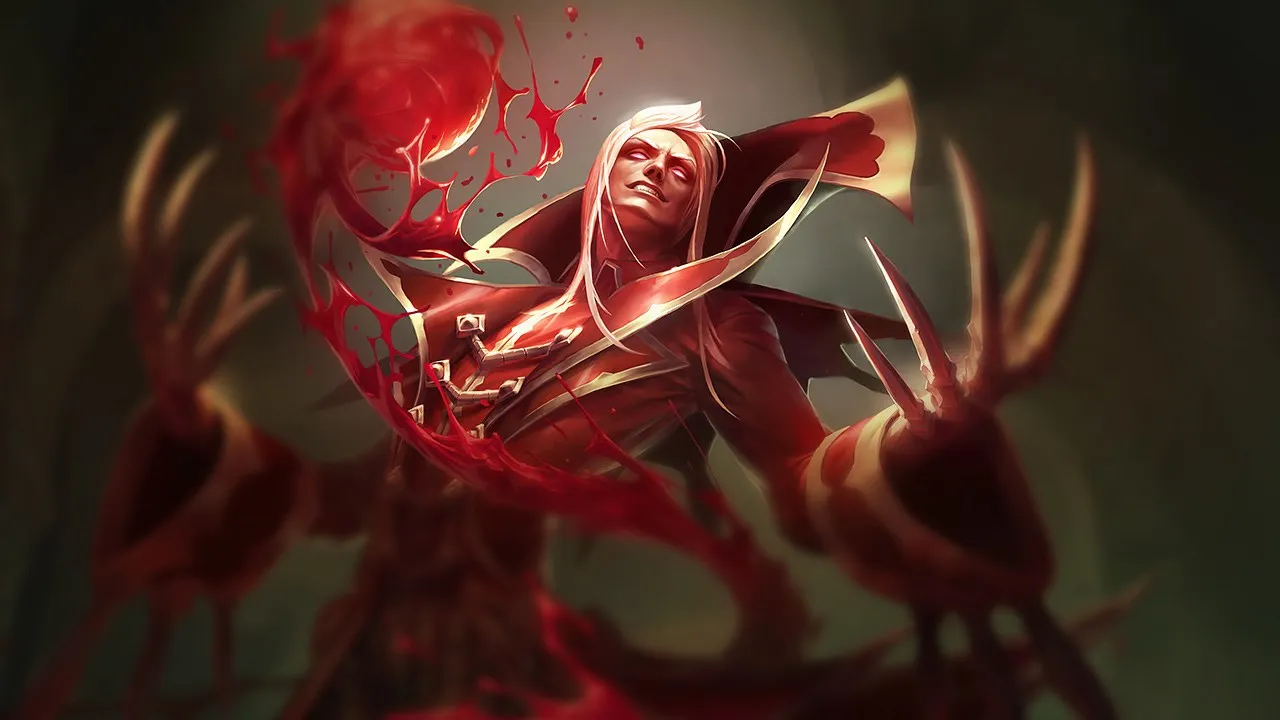
Vladimir Counters
Why
Orianna applies clean pressure: range, steady poke, and wave control. Vladimir wants to farm safely and take short trades to heal up. Orianna shrinks your windows by hitting you on last-hits and denying free sustain.
Lane impact
You can end up low without a clean reset, lose prio, and get out-rotated. Her kit keeps you at a spacing where sustain can’t erase constant zoning pressure.

How to play
Play a slower lane: prioritize survival, last-hit under tower, and aim for spikes (level 5 ult + first item) rather than ego trades. If she overpushes, use pool to secure a safe wave reset and roam on a clean timing.

Why
Syndra punishes every step-up: enough burst to turn a single CS into huge HP loss, plus stun to break your tempo. Vladimir hates being forced into defensive pool early.
Lane impact
If you spend pool just to live, you lose the window to trade or dodge ganks. She can also hold wave mid and threaten you whenever you show.
How to play
Play at range, respect spheres, and save pool for stun or gank—not random poke. Goal is leaving lane with stable tempo: clean recalls, wave resets, then scaling.
Why
Jayce forces survival mode: poke, push, and deny breathing room. Vladimir wants time; Jayce’s plan is to remove that time.
Lane impact
You often lose prio, farm under tower, and get chipped before first recall. If he pushes you too low, you lose the ability to reach your scaling window.
How to play
Cut free damage: play behind wave, take safe CS, and drop the expensive ones. Wincon becomes anti-snowball: keep sums, avoid deaths, then become relevant in grouped fights.
Why
Ziggs is a range-check: long-range poke and waveclear without exposure. Vladimir wants to punish step-ups; Ziggs refuses that and forces you to absorb pressure.
Lane impact
You can lose plates/prio because he shoves fast. Forcing fights means eating zones/mines and losing HP, delaying scaling.
How to play
Don’t turn lane into a fistfight: farm, take early recalls, and look for flanks around objectives. Your ult has more value in teamfights than trying to solo-kill him in lane.
Why
Zoe forces respect for one spell: sleep. Pool too early and she waits; too late and you get one-shot. Vladimir wants tempo control; Zoe makes you play on her timings.
Lane impact
Lane becomes tense: you can’t afford to be low. A sleep in river can also lose an objective fight before it starts.
How to play
Play angles: stay off her direct line, use wave as a shield, and save pool to answer sleep—not random damage. Midgame, flank Zoe instead of front-facing her.
Why
Akali is hard once her all-in timings arrive: she can force a duel you didn’t choose. Sustain won’t save you if she bursts then stalls with shroud.
Lane impact
The real cost is loss of pace control. Taking fights outside your window forces a defensive wave cycle and weaker rotations. Concrete reference: Vladimir vs Akali (MID).
How to play
Avoid long mid waves without vision. Save pool to break her combo, and recall before you’re low. Survive to items, then play grouped fights where your ult matters.
Why
Fizz becomes lethal once he can force all-ins. His untargetable breaks your trade and denies direct punishment. Vladimir hates opponents who decide fights with one button.
Lane impact
You can die in a short window if you’re half HP. If you pool to dodge burst, you may become vulnerable to gank or re-engage.
How to play
Strict HP management: recall before entering his kill range. Save pool for the key moment (ult/engage), not poke. If you stay stable, your scaling becomes your weapon again.
Why
Yasuo pressures through wave: minion dashes let him stick to you. The issue isn’t only damage, it’s turning spacing into chaos—Vladimir hates chaos.
Lane impact
Concretely, you must protect lane structure: wave state, health buffer, and cooldown timers. If one lever collapses, the opponent converts into plates, roam, or objective pressure. Concrete reference: Vladimir vs Yasuo (MID).
How to play
Wave management: avoid big clumps of low HP minions that give him routes. Prefer smaller wave near you. If lane is rough, convert ult into teamfight value rather than dueling.
Why
This duel is not neutral against Taliyah in mid lane: the duel is structurally favorable for them. Without clean reads on mechanical discipline, you are forced into reactive rather than proactive play.
Lane impact
You’re forced into bad choices: follow roams while low (bad), or let side lanes get punished. Constant tempo tax.
How to play
Think macro: early pings, wards, and sometimes drop wave rather than die. Goal is minimizing damage and arriving to objective fights with ult ready.
Why
Vex punishes step-ups: fear + burst and you lose HP. Even with pool, she can force defensive usage, reducing your freedom.
Lane impact
During lane phase, clean tempo is everything. Miss a key timing and you give up space, then arrive late to river contests. Concrete reference: Vladimir vs Vex (MID).
How to play
Respect threat timing: don’t take expensive CS. Save pool for fear/engage, and aim for wave resets before she can catch you on a bad timer.
Why
TF may not hard-win 1v1, but he’s hard for your plan: he accelerates the map. Vladimir wants time; TF converts time into kills elsewhere.
Lane impact
You can farm ‘fine’ and still lose because side lanes get punished. Gold card also stops your approach if you try to force.
How to play
Deep wards + pings. If you can’t kill him, limit roams: shove when possible, take plates, and arrive early to objectives where your ult is huge.
Why
Galio is unfavorable because he denies your kill pressure: tankiness, anti-AP tools, and CC that prevents clean trades. He also plays the map well.
Lane impact
Concretely, you must protect lane structure: wave state, health buffer, and cooldown timers. If one lever collapses, the opponent converts into plates, roam, or objective pressure. Concrete reference: Vladimir vs Galio (MID).
How to play
Don’t force duels: manage wave, limit roams with vision, and save ult for fights where you can hit multiple squishier targets.
Why
Ryze is unfavorable because he wins clean trades: point-click root, sustained DPS, and waveclear. You can sustain, but he keeps you in range and taxes you over time.
Lane impact
During lane phase, clean tempo is everything. Miss a key timing and you give up space, then arrive late to river contests. Concrete reference: Vladimir vs Ryze (MID).
How to play
Don’t give extended trades. Keep waves near you and move with vision. Your ult is strong, but you must arrive early so he can’t cut you off.
Why
Kassadin is unfavorable in slow games: you scale, he scales harder vs AP. He can survive then outpace you after level 9+.
Lane impact
Concretely, you must protect lane structure: wave state, health buffer, and cooldown timers. If one lever collapses, the opponent converts into plates, roam, or objective pressure. Concrete reference: Vladimir vs Kassadin (MID). Reading context: unfavorable section.
How to play
Accelerate before he becomes untouchable. Shove, take plates, force objectives when your ult is up. Don’t give him a free game.
Why
Lissandra is unfavorable because she can lock you down: you pool, she waits, then repeats. She also creates picks and accelerates map tempo.
Lane impact
Even if you survive lane, she can win through tempo via roams/ults. Greedy spacing gets you caught with limited counterplay.
How to play
Be disciplined with vision and wave. If you can’t get prio, compensate by arriving early to objectives and saving ult for 5v5 rather than duels.
Why
Morgana mid is unfavorable mostly through utility: easy waveclear + root that forces pool, plus Black Shield reducing your team’s conversion on engages.
Lane impact
You can end up in a mirrored farm lane with limited kill pressure while she secures prio and protects allied roams/plays.
How to play
Don’t waste pool on light roots if jungle can chain. Play vision, and in fights, time your impact after shield is consumed.
Why
Ahri is unfavorable when played clean: charm forces pool, mobility makes your engages less reliable, and she often plays map better early.
Lane impact
The real cost is loss of pace control. Taking fights outside your window forces a defensive wave cycle and weaker rotations. Concrete reference: Vladimir vs Ahri (MID).
How to play
Manage wave, hold pool for charm + follow-up, and choose flanks with vision. If you can’t kill her, punish roams with plates/objectives.
Why
Skill matchup because your pool can break her burst—only if saved for the real commit. Katarina hunts timing mistakes; Vladimir must stay patient.
Lane impact
Concretely, you must protect lane structure: wave state, health buffer, and cooldown timers. If one lever collapses, the opponent converts into plates, roam, or objective pressure. Concrete reference: Vladimir vs Katarina (MID).
How to play
Control wave and limit easy daggers. In fights, don’t show too early: wait for her commit on someone, then counter-engage with ult + damage.
Why
Skill because it’s a read duel: Zed wants to force your pool, you want to save it for his ult. Misread and you die; read well and you nullify him.
Lane impact
HP and timing management is key: low Vlad becomes a target. But Zed also exposes on commit, so you can punish with ult + rotation if you survive.
How to play
Buy early survivability (armor/HP depending on build), save pool for burst moment, and play around sums. Turn his all-in into a losing trade.
Why
Irelia forces Vladimir out of normal autopilot in mid lane: the duel is structurally favorable for them. mechanical discipline is the central lever that gates every engage window.
Lane impact
Bad wave management breaks your spacing. Midgame she forces fast skirmishes where your sustain can’t ‘work’ yet.
How to play
Thin waves, avoid big stacks. Save pool for her sticky moment. If you survive first impact, your teamfight ult often matters more than her burst.
Why
Skill because both play windows: Ekko bursts then ults to reset; you want to survive the spike and punish once he has no exit.
Lane impact
If you get caught by W setup, you lose a big trade. But if he overcommits, you can punish post-ult with sustain.
How to play
Game plan: take short, conditional trades, bait a defensive response first, then re-engage on confirmed cooldown windows. Keep wave in a safe zone and avoid forcing without jungle info. Concrete reference: Vladimir vs Ekko (MID).
Why
Before his real timings, Kassadin is exploitable: low waveclear, low pressure. Vladimir can often get the calm lane he wants and exit with strong scaling.
Lane impact
Concretely, you must protect lane structure: wave state, health buffer, and cooldown timers. If one lever collapses, the opponent converts into plates, roam, or objective pressure. Concrete reference: Vladimir vs Kassadin (MID). Reading context: favorable section.
How to play
Game plan: take short, conditional trades, bait a defensive response first, then re-engage on confirmed cooldown windows. Keep wave in a safe zone and avoid forcing without jungle info. Concrete reference: Vladimir vs Kassadin (MID).
Why
Veigar is often favorable if you respect cage: low mobility, and poke doesn’t stop your scaling. Vladimir loves grouped fights; Veigar can be punished by well-timed flanks.
Lane impact
You can sustain through lane, and if you avoid being trapped, you reach midgame with an ult that’s stronger in clumped fights.
How to play
Don’t ego-walk into cage: save pool to exit cleanly. Then fight from side angles—Veigar hates being attacked outside his zone.
Why
Lux is favorable when played clean: her plan is root + burst. Your pool breaks that pattern and sustain makes small poke less valuable.
Lane impact
The real cost is loss of pace control. Taking fights outside your window forces a defensive wave cycle and weaker rotations. Concrete reference: Vladimir vs Lux (MID).
How to play
Play behind minions, bait root, then take short trade while she’s on cooldown. Aim for midgame where your ult is more decisive than a snipe.