
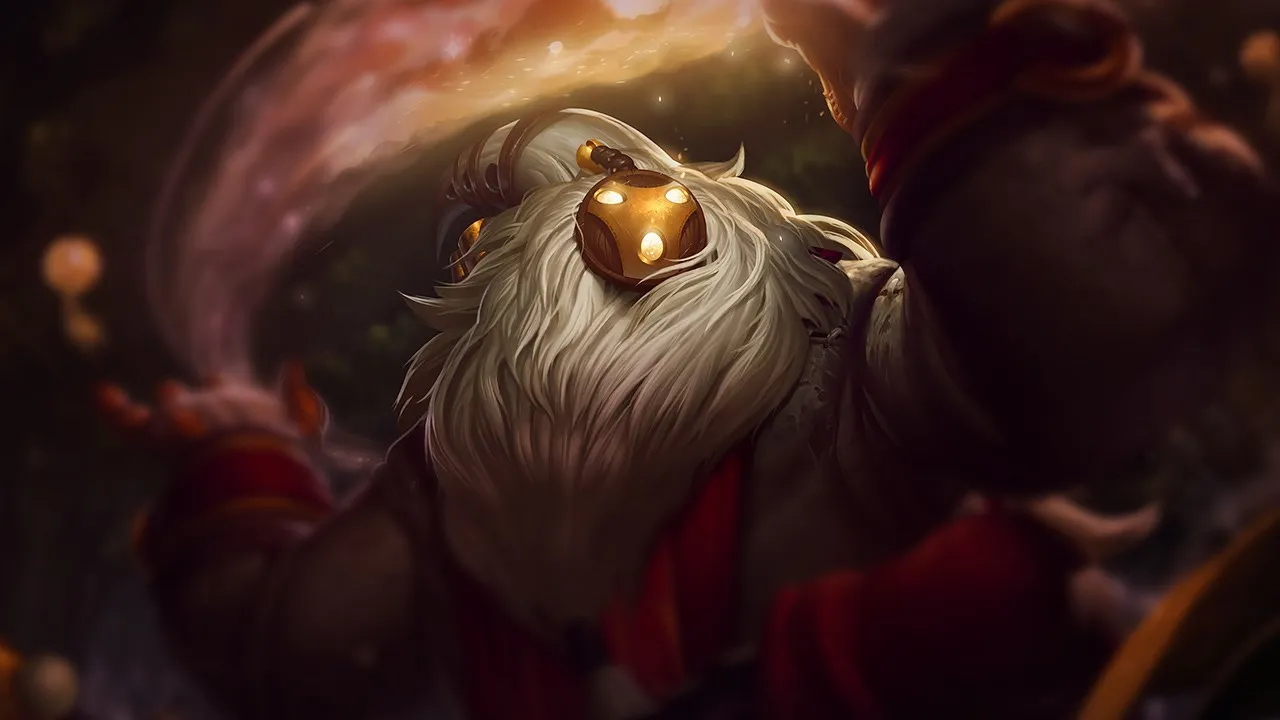
Bard Wild Rift Guide: Mastering the Wandering Caretaker

Bard's Unique Identity: A Mobile and Strategic Support
Bard is a support who doesn't just react; he initiates. His identity is built upon exceptional mobility and a unique ability to create opportunities across the map. With a mobility score of 4/5 and hard CC of 4/5, he is the archetype of a playmaker support. His difficulty is rated 3/5, primarily because his overall impact hinges on the precise execution of his abilities and astute macro decision-making. He isn't designed to deal raw damage (2/5), but rather to provide massive utility (4/5) and possesses low resilience (1/5), making him highly vulnerable and punishable if he is caught out of position. Understanding that Bard is fundamentally a rotation and pick-off support, rather than a traditional ADC "babysitter," is the absolute key to unlocking his unique potential and dominating games. His entire kit is meticulously designed for manipulating terrain and controlling objectives, offering versatile tools for both engaging (3/5) fights and peeling (3/5) for allies. While classified as an Enchanter, his aggressive and proactive playstyle sets him apart from many of his more passive counterparts, allowing him to dictate the pace of engagements and create unexpected advantages for his team.Mastering Bard's Combos: The Language of Chimes
The combos of Bard are not just simple spell sequences, but tactical opportunities that change the course of a game. Each ability integrates into a global strategy of control and surprise. The precise execution of these sequences is what separates a good Bard from a Bard who dominates the Rift by creating unexpected picks.Main Combos
- Main engage combo:
 Tempered Fate (R) → AA →
  Cosmic Binding (Q) → Flash → AA → AA — freezes an enemy area with the ult, re-engages with Q on wake-up for the stun, Flash to stay in range.
 - Q wall combo: Cosmic Binding (Q) → (aim at wall behind enemy) — Cosmic Binding passes through the first target and stuns if it hits a wall or a second target behind — maximize angles with walls.
- Double stun Q combo: Cosmic Binding (Q) launched at 2 aligned enemies — stuns both simultaneously if the projectile passes through them in a line.
- Roam E:
 Magical Journey (E) to quickly cross walls and appear in a surprise lane for a gank.
Mechanical Tips
- Cosmic Binding (Q): the projectile stuns if it hits a wall (behind the target) or a second target — always aim for positions with a wall or an enemy in line.
- Tempered Fate (R): the ult freezes enemies AND allies in the area — do not use it on your own allies actively fighting, but on approaching enemies or objectives (Baron, Dragon).
- Meeps (passive): collected chimes increase the power of Meeps — roam often to collect chimes and increase AA damage.
- Magic Portal (E): create the portal in a bush or behind a wall for unpredictable roams to mid lane or jungle.
- Caretaker's Shrine (W): place shrines in advance in bushes so allies can benefit without being in danger.
Common Mistakes
- Using Tempered Fate (R) on allies actively fighting — freezes them and wastes the timing.
- Forgetting to roam to collect chimes — losing the scaling of the
 Traveler’s Call passive.
 - Casting Q without an angle on a wall or a second target — losing the stun.
Notable Interactions
- R can freeze Baron/Dragon to prevent the enemy from stealing or killing it — advanced objective contest technique.
- Bard can use E to cross terrain and assist any lane without Teleport.
- Meeps apply an AoE slow in late game with high stacks.
Build and Skill Order: Optimizing Bard's Impact
The build for Bard must adapt to the situation, but there is a solid foundation to maximize his poke and control impact. Choosing the right item path and prioritizing appropriate skills is essential for Bard to dictate the pace of the game and amplify his team's strengths. The Black Mist Scythe is your starting item for gold generation and poke. are indispensable for managing your mana and supporting your roams. The skill order prioritizes
 Cosmic Binding (Q) for its stun and poke potential, followed by
  Caretaker’s Shrine (W) for sustain and speed, then Magical Journey (E) for mobility and ganks. The ultimate Tempered Fate (R) is, of course, taken at levels 5, 9, and 13.
Skill Order
Priority: Q > W > E
Levels: Q, W, E, Q, R, Q, Q, W, R, W, W, E, R, E, E
Runes
- Keystone:
 Electrocute — to maximize burst on short trades and picks.
 - Minors:
 Sudden Impact (for lethality and magic penetration after a dash or exiting stealth),
  Empowered Attack (for bonus damage on empowered attacks, synergizes with Meeps),
  Zombie Ward (for vision control),
  Bone Plating (for lane survivability).
Recommended Builds (patch 20260910)
Boots:
Standard — poke & pressure


This build maximizes your damage and poke potential, turning Bard into an offensive threat capable of punishing positional errors.
Utility — carry support


A build more focused on pure support, increasing your healing and shields to keep your carry alive and strengthen team fights.
Safety — vs dive/assassins

This item path offers better survivability against burst threats or diving champions, allowing you to remain relevant longer in fights.
Situational Items
- Against healing (Soraka, Aatrox, lifesteal…): Morellonomicon — to drastically reduce enemy healing.
- Against 2+ tanks / HP stackers: Liandry's Torment — to deal additional sustained damage to high-health targets.
- Against AD burst (assassins, Zed, Rengar…): — to stall damage and survive all-ins.
- Against AP burst (Syndra, Fizz, Evelynn…): Banshee's Veil — to block a key ability and gain magic resistance.
- Against excessive mobility: Rylai's Crystal Scepter — to apply a constant slow and facilitate "catches".





 ››
››
››
››
Power Spikes: Bard's Key Moments
Understanding Bard's power spikes means knowing when to hit the gas and when to play cautiously. These key moments define your windows of aggression and allow you to capitalize on your advantages to take control of the game.Power Curve
Bard has a very stable power curve, with notable peaks that make him relevant at all stages of the game. He starts strong in the early game, maintains a good presence in the mid-game, and remains impactful in the late game, especially thanks to his utility and potential picks.
Level and Item Spikes
- Level 4 (Q rank 2): Your Cosmic Binding (Q) gains damage and stun reliability, making your lane trades much more threatening. This is the time to look for aggressive angles.
- Level 6 (): The acquisition of your first support item, , significantly increases your gold generation and poke potential. This is a crucial step for your economic scaling and lane pressure.
- Level 11 (): The arrival of multiplies your auto-attack damage after a spell, making your "Meep-empowered" attacks devastating. This is a major spike for your pick-off and burst capabilities.
Bard is effective at all phases (Early: 3/5, Mid: 3/5, Late: 3/5), but he excels at turning his spikes into map-wide advantages thanks to his mobility.
Macro, Lane, and Roam: The Art of Global Presence
Macro-management with Bard is a constant dance between lane, jungle, and other lanes. Your ability to influence the map beyond your lane is the determining factor in your success, turning skirmishes into decisive advantages.Lane Phase (Early Game)
Your objective is to secure the lane and create roaming windows. Caretaker’s Shrine (W) should be placed behind you for safe sustain, and you should poke with your Meep-empowered auto-attacks and your Cosmic Binding (Q). As soon as the wave is pushed or the enemy recalls, look to collect chimes and roam towards mid lane or the jungle to help your jungler.
Mid Game
This is the phase where Bard shines the most. Your priority is vision control and creating numerical advantages. Use your Magical Journey (E) for quick rotations and surprise ganks. Place deep wards in the enemy jungle to spot potential picks. Your Tempered Fate (R) is a powerful tool to initiate objective fights or isolate an enemy carry.
Late Game
In the late game, your role is to protect your main carry while looking for wombo-combo opportunities with your R. Look for the perfect angle for an R → Q on the enemy front line, or use your E for unexpected flanks. Coordination with your team is paramount.
Gameplay Tips
- Chime Management: Don't lose waves: collect chimes when your bot lane is safe (wave under tower or pushed).
- Q and Walls: Look for corridors/walls to convert Q into a reliable stun.
- Level 1 Spike: Very strong level 1 spike: short trade with Meep + Electrocute.
- Announce Ultimate: Always announce R (ping + voice) : many griefs come from bad timing.
Synergies
Bard excels with champions who can capitalize on his crowd control and ability to create opportunities:
- Jhin:
 Q from Bard → W from Jhin almost guaranteed; poke + pick duo. Very strong level 1–2 window, play around walls to secure Q.
 - Miss Fortune:
 R from Bard freezes the front line → R from Miss Fortune channels full damage. Get deep vision for portal angles.
 - Orianna:
 R from Bard groups/freezes → Shockwave on wake-up. Look for objective regroupings for wombo.
 - Varus: Long-range poke + root, perfect for converting a
 Q from Bard into a kill. Spikes at 2 items.
 - Wukong: Portal for flanks → knock-ups converted into clean-up; fog of war plays.
- Ashe: Long-range arrow for initiation, you pursue via portals. Early spike but depends on follow-up.






Matchups and Counters: Adapting to the Enemy
Knowing Bard's strengths and weaknesses against other supports is crucial for the draft phase and in-game adaptation. Each matchup is an opportunity to adapt your playstyle, either by exploiting an enemy weakness or by minimizing threats to maintain your impact.Hard Counters
- Blitzcrank: Blitzcrank puts Bard under constant pressure: your champion wants to roam and play timings, but the hook forces constant respect. A single positioning error can cost a kill before you can even influence the map. Deep vision and strict bush management. Keep your portal for saving, not for engaging. Roam only after securing the wave and vision.
- Nautilus: Nautilus has reliable and easy-to-execute crowd control. Bard prefers dynamic skirmishes, but Nautilus turns every mistake into a forced engage. Play in sequences: bait key ability, retreat, then quick punishment. Stabilize the wave before looking for a long duel, and coordinate your timings with river vision.
- Leona: Leona excels in prolonged all-ins. Bard prefers short trades and mobility. Once engaged, she neutralizes your ability to disengage. Prioritize discipline: proper spacing, entering on a real window, immediate exit after gaining an advantage. If conditions are not met, play for tempo reset rather than all-in.
- Pyke: Pyke rivals Bard in mobility and roaming, but adds an execution threat. He can turn every skirmish into a snowball. Short entry on a valid window, immediate exit, then clean reset. Re-engage only after checking cooldowns and vision.
- Thresh: Thresh rivals Bard in playmaking. He can create a pick and save his ADC, which reduces the impact of your catches. Play in sequences: bait key ability, retreat, then quick punishment. Stabilize the wave before looking for a long duel, and coordinate your timings with river vision.
- Alistar: Alistar disrupts Bard's standard support plan: the duel is structurally favorable to him. The matchup is mostly decided by mechanical discipline, with very little room for error on a bad window. Adapt your execution: fewer frontal commits, more angles and timings. You win this matchup by selecting the right trades, not by multiplying attempts.




Unfavorable Matchups
- Lulu: Lulu forces Bard out of his usual support playstyle: the duel is structurally favorable to her. The central point remains mechanical discipline, which conditions each entry. Protect your lane structure: wave state, HP, and spell timers. If one of these levers fails, the opponent quickly converts it into a plate, roam, or objective.
- Karma: Karma exerts constant pressure and protects targets with speed and shields, reducing the effectiveness of your engages. Prioritize discipline: proper spacing, entering on a real window, immediate exit after gaining an advantage. If conditions are not met, play for tempo reset rather than all-in.
- Janna: Janna forces Bard out of his usual support playstyle: the duel is structurally favorable to her. The central point remains mechanical discipline, which conditions each entry. Short entry on a valid window, immediate exit, then clean reset. Re-engage only after checking cooldowns and vision.



Skill Matchups
- Rakan: Rakan forces Bard out of his usual support playstyle: the duel is structurally favorable to him. The central point remains mechanical discipline, which conditions each entry. Protect your lane structure: wave state, HP, and spell timers. If one of these levers fails, the opponent quickly converts it into a plate, roam, or objective.
- Senna: Senna disrupts Bard's standard support plan: the duel is structurally favorable to her. The matchup is mostly decided by mechanical discipline, with very little room for error on a bad window. Prioritize discipline: proper spacing, entering on a real window, immediate exit after gaining an advantage. If conditions are not met, play for tempo reset rather than all-in.


Favorable Matchups
- Soraka: Soraka lacks mobility and depends on her positioning. Bard can create quick picks and prevent her healing from having value. Adapt your execution: fewer frontal commits, more angles and timings. You win this matchup by selecting the right trades, not by multiplying attempts.
- Sona: Sona disrupts Bard's standard support plan: the duel is structurally favorable to her. The matchup is mostly decided by mechanical discipline, with very little room for error on a bad window. Prioritize discipline: proper spacing, entering on a real window, immediate exit after gaining an advantage. If conditions are not met, play for tempo reset rather than all-in.

Items Against Bard
- Mercury's Treads: Reduces the duration of Q stun and CC chain.
- : Purges crowd control to escape a Bard setup.
- : Counters Tempered Fate and buys time against enemy engages.
- : Cuts Caretaker’s Shrine's healing.
- Force of Nature: Reduces his magic poke when he plays AP utility.
- Spirit Visage: Boosts your sustain vs poke + slows.



Practical Scenario: The First Dragon Contest
Imagine the situation: you are in the mid-game, the first Dragon is about to spawn, and your team has a slight advantage. The enemy team is grouping around the objective. Your ADC is safely pushing the bot lane, and your jungler is in position. This is the ideal moment for Bard to make a difference with a decisive action that can snowball the game.You placed deep vision in the enemy jungle 30 seconds ago, spotting the enemy support and jungler heading towards Dragon. Rather than rushing headfirst, use your
Magical Journey (E) through the wall near the raptor camp to flank. Your ADC pings that they are coming after pushing their wave. As soon as the enemy jungler starts the Dragon, cast your Tempered Fate (R) to freeze the jungler and the Dragon. This forces the enemy team to reposition or wait. While they are disoriented, your jungler can secure the Dragon or your team can engage a favorable fight on the frozen or isolated enemies. Follow up with a Cosmic Binding (Q) on enemies coming out of stasis, aiming for a wall or a second champion for a guaranteed stun. This sequence of vision, flank, and objective control is the essence of Bard's gameplay, turning a neutral contest into a major advantage.
- Prioritize roams: Don't stay static in lane. Constantly look for windows to gank mid or help your jungler.
- Master Cosmic Binding (Q) angles: Practice stunning with the bounce off walls or secondary targets. This is key to your picks.
- Use Magical Journey (E) offensively and defensively: Create gank opportunities, but also escape routes for your team.
- Communicate your Tempered Fate (R): Always ping your ultimate and announce your intentions. A poorly coordinated R can do more harm than good.
- Adapt your build: Don't blindly follow an item path. React to enemy threats and your team's needs (poke, sustain, survivability).
- Collect chimes: Your passive is a constant source of power. Don't ignore it; it strengthens your Meeps and gives you advantages.
If you lose your trade, it's not bad luck.
Frequently asked questions
What is Bard's main role on Wild Rift?
Bard is a playmaker support who excels in map control thanks to his mobility (Magical Journey), his ability to create picks (Cosmic Binding), and to manipulate objectives (Tempered Fate). His role is to initiate actions and offer massive utility to his team.
How to optimize Bard's roams in the early game?
To optimize your roams, ensure your ADC is safe (wave under enemy tower or recalled). Collect chimes along the way and use Magical Journey for quick rotations to the mid lane or jungle, looking to help your jungler or gank another lane.
What are the essential items for Bard Support?
Essential items include for gold generation and poke, for mana and mobility. Then, items like , , , or are chosen based on team composition and match needs.
How to counter an aggressive Bard in lane?
To counter an aggressive Bard, pressure him in lane to prevent him from roaming and collecting his chimes. Play with strong all-in supports like Blitzcrank or Nautilus who can punish his positioning. Break his vision before objectives to limit his portals and rotations.
When to use Bard's ultimate, Tempered Fate?
Tempered Fate is versatile. Use it to isolate an enemy carry, initiate a team fight by freezing the front line, or contest a major objective like Baron or Dragon by freezing it to prevent the enemy from stealing or killing it. Always announce its use to your team.